How Much Should I Budget For Food Per Day In Rome?
A structure-first answer to budgeting for food in Rome: which meals are cheap by design, which are not, the two-price coffee mechanic, the coperto ban, and the fixed prices of food tours and cooking classes.
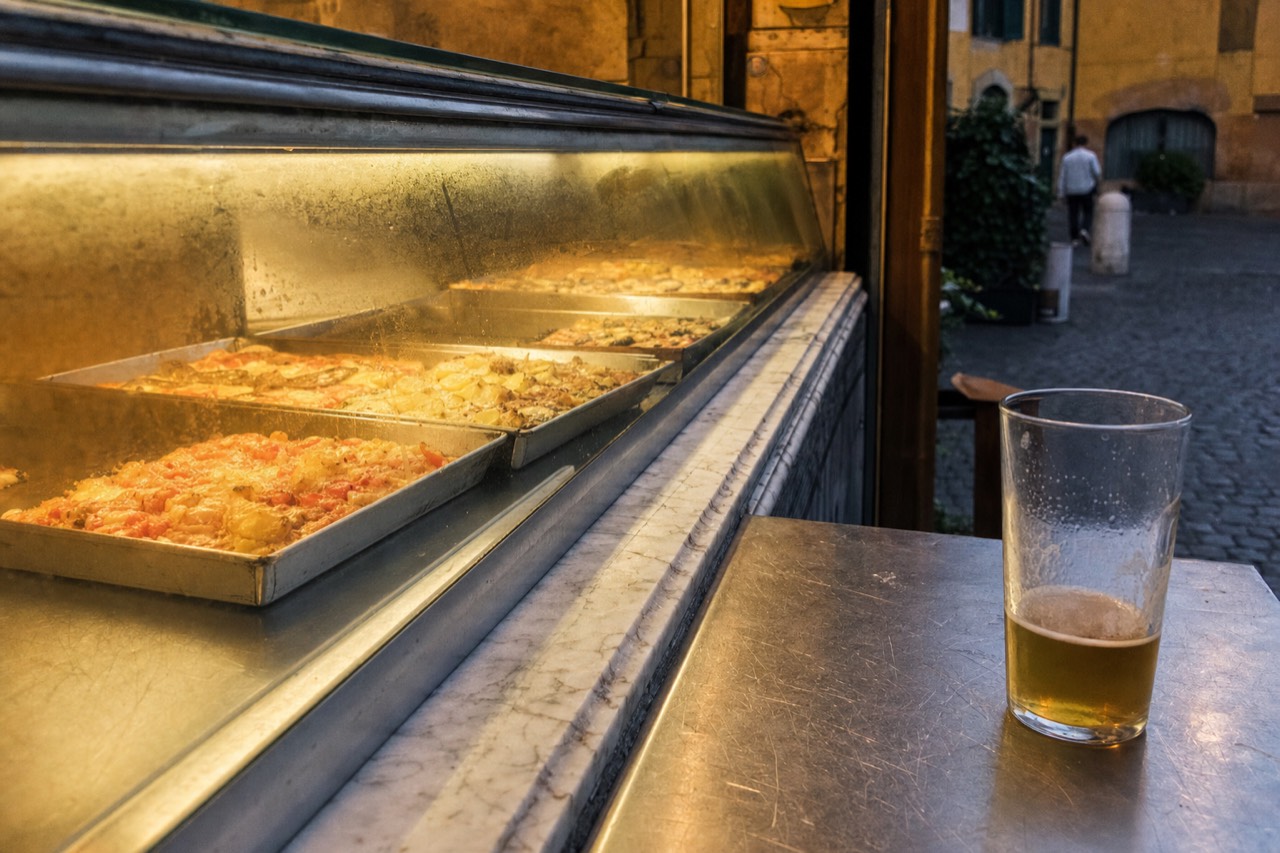
Rome is a city where the same espresso can cost two different amounts in the same bar, depending on whether you drink it standing or sitting, and where a regional law bans the cover charge that most of Italy charges legally. That is why the honest answer to a per-day food budget is not a single number. It is a structure: breakfast is cheap by design, lunch can be made cheap by design, and dinner is where the money goes, in ways you can see coming if you know the mechanics. This page builds the budget from those mechanics, and from the one category where firm, printable prices genuinely exist: the city's food tours and cooking classes.
The average price of a pizza plus a drink in a Roman pizzeria is 11.45 euro, per a national price survey, which already tells you dinner is the expensive meal of the day. The average espresso at the bar across the province of Rome was 1.14 euro in a trade-body count, which tells you breakfast barely counts. Everything between those two poles is a decision you make.
Why There Is No Single Per-Day Food Number For Rome
Any page that hands you one flat figure for a day of eating in Rome is compressing wildly different days into one number. A traveller who breakfasts at a bar counter, eats pizza by weight at lunch and has a full trattoria dinner at 20:00 spends a fraction of what a traveller who takes every meal at a seated terrace table near a monument. The structure of the day, not the city, sets the bill.
The honest way to budget is meal by meal, because each meal in Rome has its own pricing mechanic. Breakfast at a bar is a counter transaction measured in single euros. Lunch can be a market box, a slice of pizza al taglio sold by weight, or a seated plate, and those are three different price worlds. Dinner is a table transaction, with table prices, and in the evening the cheap counter options thin out.
What makes Rome unusual is how much of the pricing is visible before you commit. Bars post two prices for the same drink, one for the counter and one for the table, and the law requires the price list to be available before you order. Pizza al taglio is priced per kilo and weighed in front of you, so the size of the piece you point at sets the price. A food tour or cooking class is booked at a fixed price before you leave home.
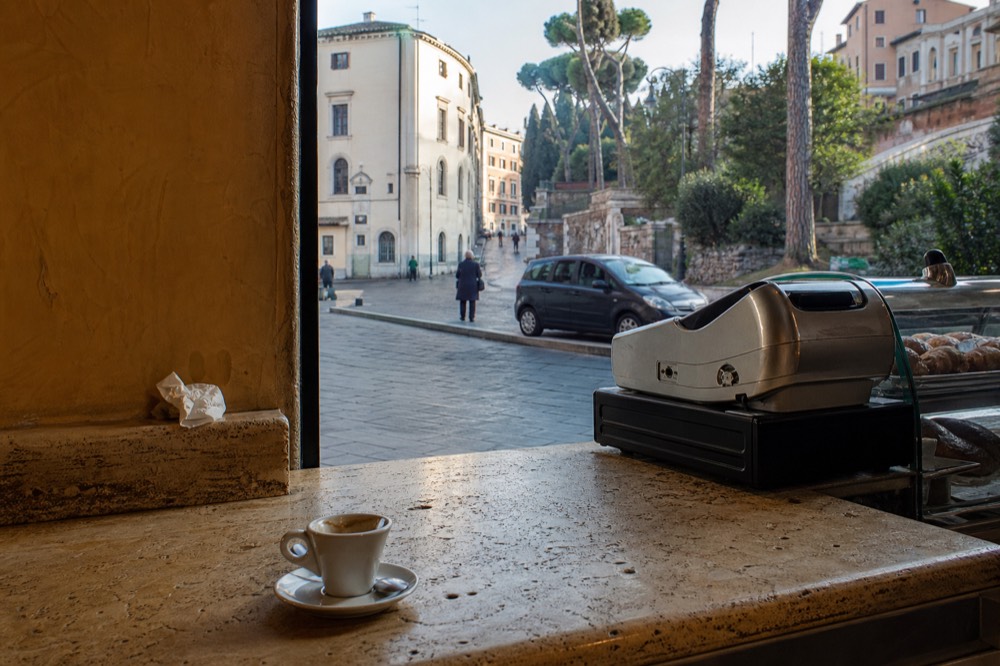
The fixed-price category deserves emphasis, because it is the one genuinely predictable food spend in the city. A booked tasting walk costs what the listing said it would cost, covers several counters in one outing, and removes the reservation problem that makes individual restaurant dinners expensive in time as well as money. The roster below is the cheapest way to cover two quarters of the centre in one evening.
Why The Same Coffee Costs Two Different Prices In Rome
Every Italian bar, including every bar in Rome, can lawfully charge two different prices for the identical drink: one if you stand at the counter, and a higher one if you sit at a table. The price list must show both before you order. This single mechanic, applied across a whole trip, moves the daily food bill more than any other decision you make.
The two-price system is called al banco for the counter and al tavolo for the table, and it is not a tourist surcharge. It is the ordinary structure of Italian bar pricing, and locals use it deliberately: the Roman in a suit at 08:00 drinks standing, pays the counter price, and leaves. The visitor who sits down at the same bar for the same coffee pays the table price, which includes the service of the table.
The law behind the disclosure is Lazio regional law 21/2006, article 16, which requires the price list to be available before ordering and to make any service component clearly comprehensible. The same article does something else that matters to a budget: it prohibits a separate coperto charge outright, which is covered further down this page.
| Transaction | Where the price is set | How you control it |
|---|---|---|
| Espresso al banco | Counter price, posted at the bar | Drink standing at the counter |
| Espresso al tavolo | Table price, includes table service | Sit down knowing it costs more |
| Cornetto at the counter | Posted price with the pastries | Take it to the counter, not the table |
| Coffee at a monument-square bar | Location premium in the table price | Walk two streets off the square |
The national picture helps calibrate expectations. An espresso at the counter averaged 1.14 euro across the province of Rome in the trade-body count for April 2025, and a national survey puts Rome among the few big-city provinces where the counter average remains under 1.20 euro, against a national average of 1.29, as reported by Corriere della Sera. Breakfast, done the Roman way, is a rounding error in a daily budget (see Roman Breakfast).
The same logic extends to water, which in Rome is close to free. The city's water utility maintains more than 3,000 public drinking fountains, the nasoni, with over 200 in the historic centre alone, per ACEA's own count. Carrying a bottle and filling it removes a recurring line from the day's spending that in other capitals adds up fast.
Which Meals Are Structurally Cheap In Rome
Breakfast standing at a bar, a slice at lunch, a market box and a gelato cone are cheap by the design of the city, not by luck. They are counter transactions, priced and paid in minutes. A terrace table, a tasting menu and a bottle of wine at dinner are expensive by the same design. Budget by moving meals between the two columns, not by trimming inside one of them.
The cheap column is genuinely cheap. A Roman breakfast is a coffee and a cornetto taken at the counter. Lunch can be pizza al taglio, sold by weight, or a panino from a market stall, or a supplì from a fry counter, all transactions where you order, pay and eat within a few minutes. The expensive column is anything that involves a waiter, a table, and a location premium, and the premium scales with the view: a table overlooking a honeypot monument prices the view into the menu.
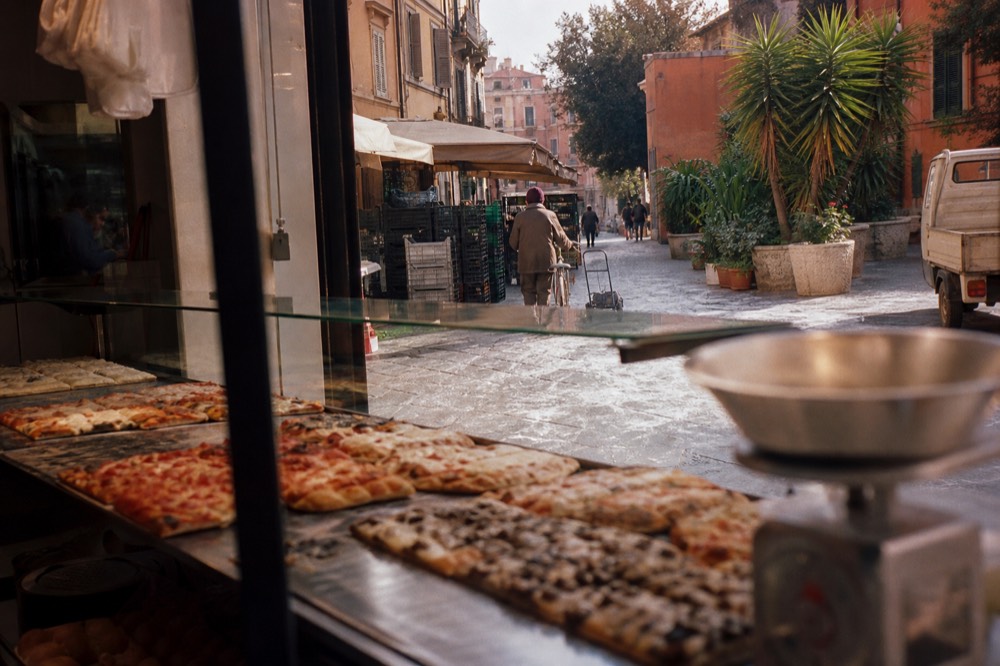
The street-food walk is the one dinner-shaped exception to the expensive column, because it is a counter crawl at a fixed price. The 2.5-hour two-quarter walk from $48.37 per person (checked September 2026), rated 4.9 across 4,191 reviews, covers street-food tastings including pizza, supplì, gelato and sandwiches across Trastevere and Campo de' Fiori, with free cancellation available. That is a full evening of eating, in the two quarters where visitors spend most, at a price fixed before you go.
The five-fried-tastings walk through the historic centre, from $51.10 per person (checked September 2026) and rated 4.9 across 1,331 reviews, does the same job on the other side of the river, covering supplì, pizza, porchetta panini and fried artichoke in 2.5 hours. Both walks replace a dinner's variable spend with a number you already know.
Between the columns sits the trattoria dinner, which is where most visitors want to spend at least once. That is a reasonable plan, and the mechanics of that meal, from the coperto ban to service hours, are worth knowing before you sit down. The timing matters too: Romans eat dinner later than most visitors expect, and arriving at 19:00 rather than 21:00 changes both the wait and the room, a question covered in full in what time Romans eat dinner.
If the goal for one evening is to lock the spend down completely, the two-quarter walk is the listing that does it: a fixed price, free cancellation, and a full route through the two most-visited food quarters in one outing.
How Pizza Al Taglio Pricing Lets You Set Your Own Price
Pizza al taglio in Rome is sold by weight, priced per kilo, and cut to the size you point at. The counter weighs the piece in front of you and the price follows from the weight. This means the customer, not the shop, sets the size of the bill: a small piece at lunch is a snack, a large piece is a meal, and the per-kilo price is the same either way.
The mechanic is worth understanding because it is the opposite of fixed menu pricing. Different toppings carry different per-kilo prices at the same counter, so a plain pizza rossa costs less per kilo than a loaded slice at the same shop. You ask for the size, the scissors or blade come out, the scale does the arithmetic, and you pay. A minority of counters sell pre-cut slices at a flat per-piece price instead, which is the one case where you know the cost before anything is weighed.
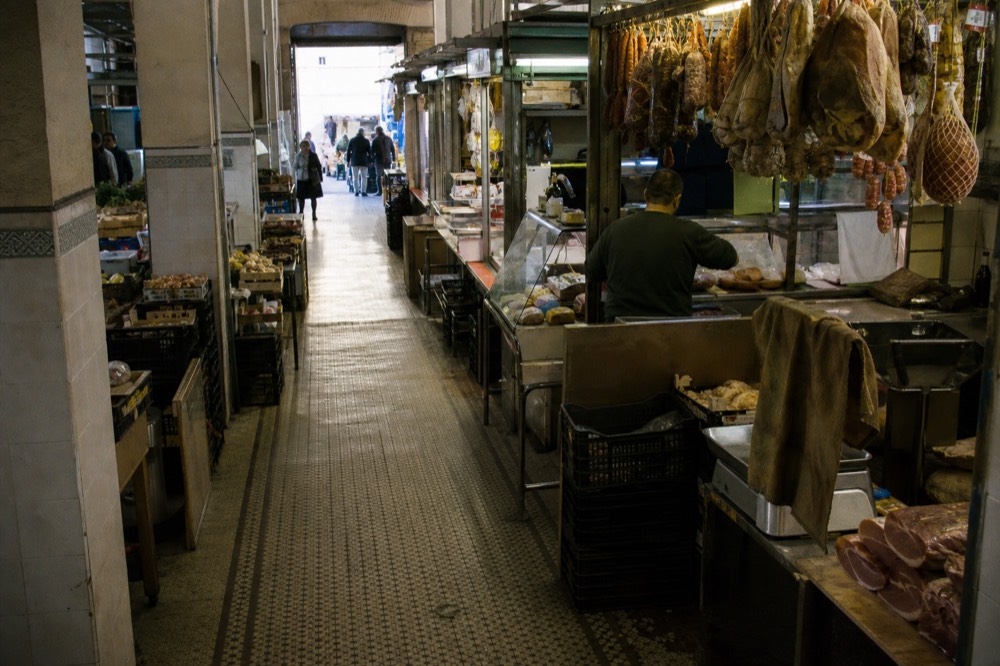
The market box is the other self-priced lunch. Inside the Nuovo Mercato Testaccio, open Monday to Saturday 07:00-15:30 per the market's own site, stalls sell panini and fried food over a counter, and the whole transaction is a queue and a handover. The constraint is the clock, not the price: it is a lunch market, never a dinner one, and the stalls finish before most visitors have thought about eating. The market mechanics, hours and stall culture are laid out in the Rome food markets guide.
What the by-weight system does for a budget is remove surprise. Nobody has ever been handed an unexpectedly large bill for a slice they pointed at, because the scale is in front of them and the per-kilo price is on the board. That is the same principle that makes a booked food tour predictable, and it is the reason the fixed-price categories on this page are treated as budget tools rather than as luxuries.
What The Coperto Ban Means For Your Restaurant Bill
In Rome and the whole of Lazio, a separate per-person cover charge is banned by regional law. Lazio regional law 21/2006, article 16, states it outright: it is forbidden to apply additional costs for the coperto. What a restaurant may lawfully charge instead is a servizio component, and only where the price list shows it before you order.
This is the inverse of the generic-Italy advice most guides repeat, and it matters to a budget because it changes what belongs on your bill. A coperto line on a Roman bill should not be there at all. A servizio line can be there, lawfully, provided the price list, available before you order, discloses it clearly. The disclosure duty is the diner's protection: an undisclosed charge is the violation, not the charge itself.
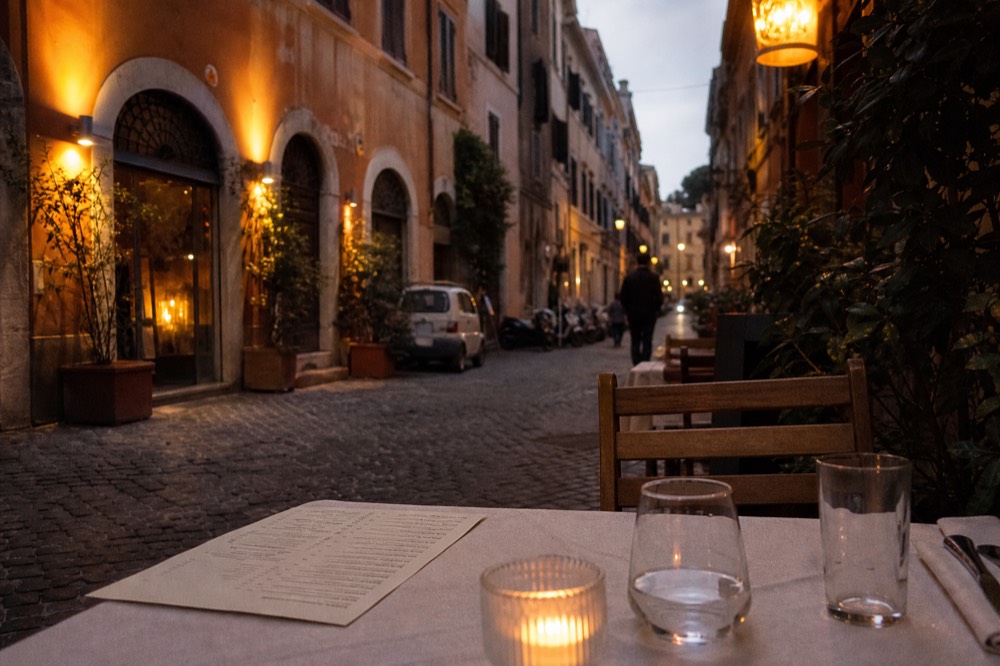
The honest second half, documented in the Italian press, is that some Rome restaurants charge a coperto regardless of the ban. The practical budget move is the one the law already gives you: read the price list before ordering, ask about anything labelled servizio, and treat the pre-order list as the contract it legally is. The full text of the law is published by the Lazio regional council.
Tipping sits on top of this, and Rome keeps it simple: a tip is optional and is not expected for ordinary service. Italians commonly leave nothing, round up, or leave small change for genuinely good service. There is no percentage standard to budget for, so the line item simply does not exist until you decide it does, a question unpacked further in whether it is rude not to tip in Rome.
What Food Tours And Cooking Classes Cost, Fixed In Advance
This is the one category in Rome where firm, printable prices genuinely exist, because a booked tour is sold at a fixed rate before you travel. The street-food walks start from $48.37 and $51.10 per person (checked September 2026), the cooking classes from $56.62 to $68.52, and every listing on the roster carries free cancellation. For a budget, that means one dinner-shaped line item can be locked to a known number.
The roster prices below are the live listing prices, and they are the point: a fixed, known-in-advance price for a full eating experience is the budget tool a restaurant dinner cannot be. The two-hour fettuccine class near Piazza Navona, from $59.23 per person (checked September 2026) and rated 4.9 across 2,186 reviews, includes bruschetta, the fettuccine you make with a sauce of your choice, and coffee or tea, and it converts a dinner into a class with a number attached.
| Experience | From (per person) | Rating | Length | What you eat |
|---|---|---|---|---|
| Two-quarter street food walk | $48.37 | 4.9, 4,191 reviews | 2.5 hours | Pizza, supplì, gelato, sandwiches |
| Five fried tastings, historic centre | $51.10 (checked September 2026) | 4.9, 1,331 reviews | 2.5 hours | Supplì, pizza, porchetta panini, fried artichoke |
| Two-hour fettuccine class | $59.23 | 4.9, 2,186 reviews | 2 hours | Bruschetta, fettuccine, coffee or tea |
| Two-hour pizza class | $56.73 (checked September 2026) | 4.9, 1,506 reviews | 2 hours | A pizza you make and eat, coffee, tea or limoncello |
| Two pasta shapes, unlimited wine | $63.87 | 4.9, 928 reviews | 3 hours | Fettuccine and ravioli, prosecco, wine, gelato |
| Three Roman pastas, market | $128.83 | 4.9, 1,760 reviews (checked September 2026) | 3.5 hours | Nine tastings, three Roman pastas, market bites, wine |
The range is wide enough to fit any budget's shape. At the lower end, the street-food walks replace a variable dinner with a fixed $48 to $51 (checked September 2026). In the middle, a pasta or pizza class replaces a dinner with a class that ends in the meal you made. At the top, the Testaccio market-and-pasta tour, from $128.83, is a full afternoon of nine tastings including three Roman pastas and wine, which is a dinner, a market visit and a guided walk in one price.
The cooking-class question has its own trade-offs, including whether a class beats a restaurant dinner on value, and it is argued out in whether to take a cooking class in Rome. The budget framing is simpler: a class is the rare Roman meal where the price, the length and the content are all known before you board the plane.
How To Build The Budget Ladder For A Rome Food Day
Build the day as a ladder, not a total. Breakfast at the bar counter is fixed and small. Lunch is the flexible rung: by-weight pizza, a market box or a class can each hold it down. Dinner is the rung that decides the day, and it is where the two-price mechanic, the terrace premium and the table transaction all land at once. Move meals between rungs and the day's cost follows.
The table below is the honest version of a budget table: it names what sets each meal's price and what lever you hold, rather than inventing totals the city does not publish.
| Meal | What sets the price | How you control it |
|---|---|---|
| Breakfast | Counter price at the bar | Stand at the counter, take the cornetto with the coffee |
| Lunch, pizza al taglio | Per-kilo price times the weight of the piece | Point at a smaller piece, choose the plainer topping |
| Lunch, market box | Counter price at the stall | Go before the market shuts mid-afternoon |
| Afternoon gelato | Counter price per cone or cup | A neighbourhood gelateria prices below a monument-square one |
| Dinner, trattoria | Table prices, location, wine list | Book off-peak squares, drink the house wine, read the list first |
| Dinner, street-food walk | Fixed listing price | Booked in advance, free cancellation |
Two levers run through every rung. The first is location: the same transaction costs more within sight of a honeypot monument, and two streets off the square the price drops. The second is standing versus sitting, the al banco mechanic from the coffee section, which recurs at the gelato counter, the bakery and the fry shop in a softer form: counter trade is quick and cheap, table trade carries service.
The wine lever deserves a line of its own, because it is the quietest big line on a Roman dinner bill. A half-litre carafe of house wine is the cheapest way to drink at a traditional osteria table, while a considered glass in a good enoteca costs more, so the house carafe at dinner is one of the last genuinely inexpensive pleasures in European dining. The enoteca side of the city, and the Frascati day trips that pair with it, are covered in the Rome wine bars guide.
What A Realistic Rome Food Day Looks Like At Each Spending Level
A modest day leans entirely on the counter: bar breakfast, by-weight slice at lunch, a market box or a fried snack in the afternoon, and a street-food walk or a pizzeria in the evening. A mid day keeps the counters and adds one booked trattoria dinner. A high day adds the starred rooms, the tasting menus and the terrace tables, where the bill is set by the room, not the food.
The modest day is not a compromise version of Rome, it is how a great deal of the city actually eats. The counter breakfast, the weighed slice, the market stall and the evening pizzeria are the daily architecture of Roman eating, and the evening pizzeria in particular is where the city's own price survey lands: the 11.45 euro average for a pizza and a drink is a pizzeria number, not a trattoria number.
The mid day is where the food tour and the cooking class slot in most naturally. One fixed-price booked experience plus counter meals for the rest of the day gives a day whose total you can estimate before you fly, which is the entire promise of the fixed-price category. The Best Restaurants in Rome site's roster exists partly for this reason: it is a set of known prices in a city that otherwise hides them inside table service and weighed slices.
The high day is real too, and pretending otherwise would be dishonest. Rome's starred rooms run tasting menus, hold cards against tables, and charge per head for late cancellation, mechanics covered in the Michelin restaurants guide. A traveller who wants one of those evenings should budget for it as a deliberate event, not as a surprise at the end of a week of modest days.
The questions below are the ones a Rome food budget actually turns on: whether one flat daily figure exists, whether the city is expensive by Italian standards, what a restaurant may lawfully put on the bill, and which meals can be held down by mechanics rather than willpower. Each answer states what sets the price and what lever you hold, so the budget can be built before the trip rather than discovered during it.
Common Questions About Budgeting For Food In Rome
How Much Should I Budget For Food Per Day In Rome?
There is no single honest per-day figure, because the same city offers a counter espresso at little over a euro and tasting menus at the starred rooms. Build the day from structure: counter breakfast, a by-weight slice or market box at lunch, and either a fixed-price food tour, a pizzeria or one booked trattoria for dinner. The levers that move the total most are standing versus sitting, distance from the monument squares, and the wine list.
Is Food In Rome Expensive Compared To Other Italian Cities?
Rome comes out cheaper than most large Italian cities on the pizzeria measure: the national price survey puts the average pizza plus a drink in Rome at 11.45 euro, below the big-city norm, and the province's counter coffee average remains under 1.20 euro. What is expensive is seated dining in the tourist zones, not the city's own food.
Do I Have To Pay A Cover Charge In Rome Restaurants?
No. A separate per-person coperto is banned across Lazio by regional law 21/2006, article 16. A restaurant may charge a servizio component instead, but only where the price list, available before you order, shows it clearly. Read the list before ordering and query any coperto line.
How Can I Keep Lunch Cheap In Rome?
Use the counter mechanics. Pizza al taglio is sold by weight, so pointing at a smaller piece sets the price. Market stalls in the covered markets sell panini and fried food over a counter, though the markets shut mid-afternoon. A supplì from a fry counter is a snack-priced transaction. All of these are cheaper than a seated lunch by design.
Is Tap Water Free In Rome?
Rome's public drinking fountains, the nasoni, number more than 3,000 across the city with over 200 in the historic centre, and the water is free. Carrying a bottle and refilling it removes the bought-water line from a daily budget entirely. Restaurant practice on carafes varies by venue, so ask rather than assume.
Are Food Tours A Good Way To Control A Food Budget?
A booked tour is the one food spend in Rome that is fixed before you travel. The two-quarter street-food walk runs from $48.37 per person (checked September 2026) for 2.5 hours of tastings across Trastevere and Campo de' Fiori, and the roster of walks and classes spans roughly $48 to $129 with free cancellation throughout. For a budget, that converts a variable dinner into a known number.