What Was Anthony Bourdain's Favorite Restaurant In Rome?
Anthony Bourdain's Rome record, venue by venue: where he ate on camera, whether those tables are still open, still the same, and how you actually get into them now.
What Was Anthony Bourdain's Favorite Restaurant In Rome?
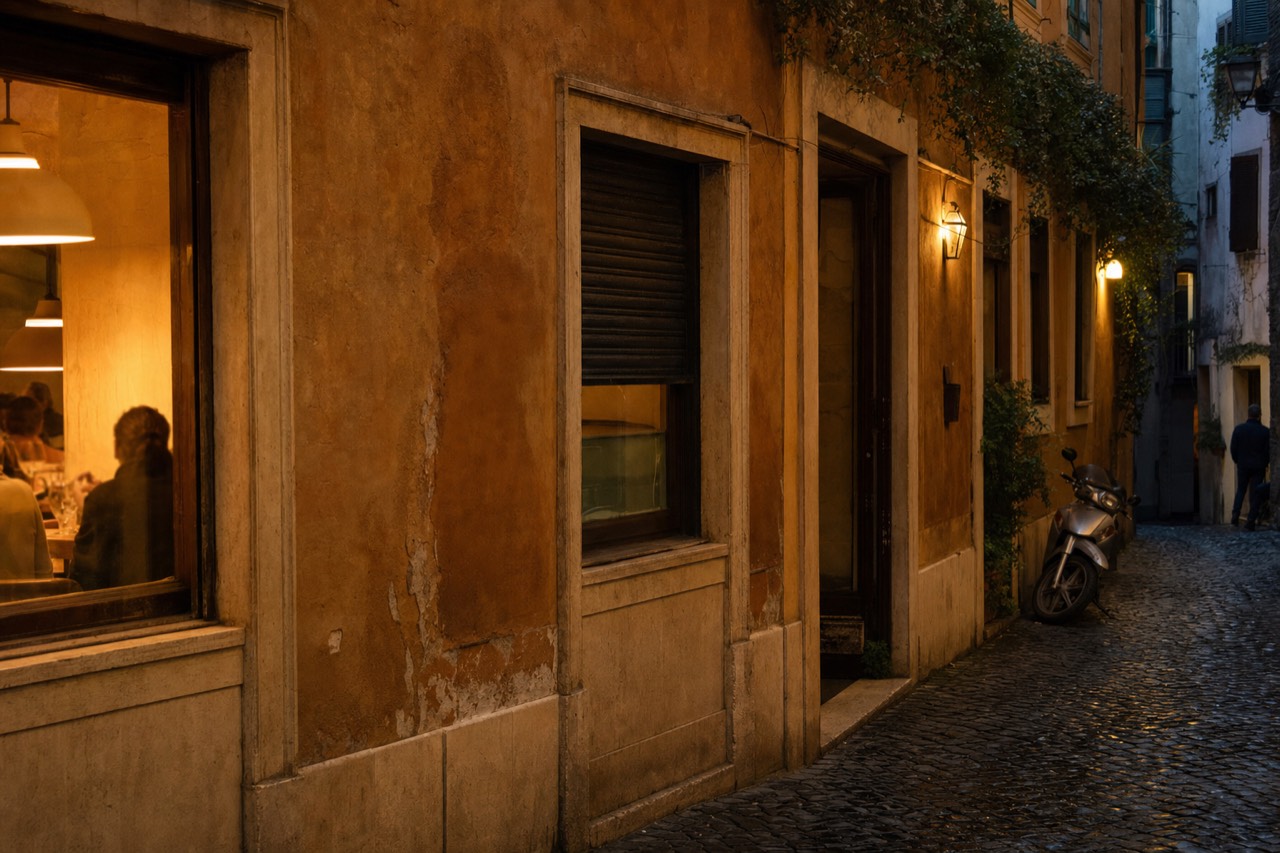
The table most often named is Da Enzo al 29 in Trastevere, the small trattoria he ate at on camera with Aziz Ansari in the Parts Unknown Rome episode. He was also on record praising the quinto quarto cooking of Testaccio, home of Checchino dal 1887, and the pizza al taglio of Gabriele Bonci's counters. None of these rooms is easy today: two take no bookings at all.
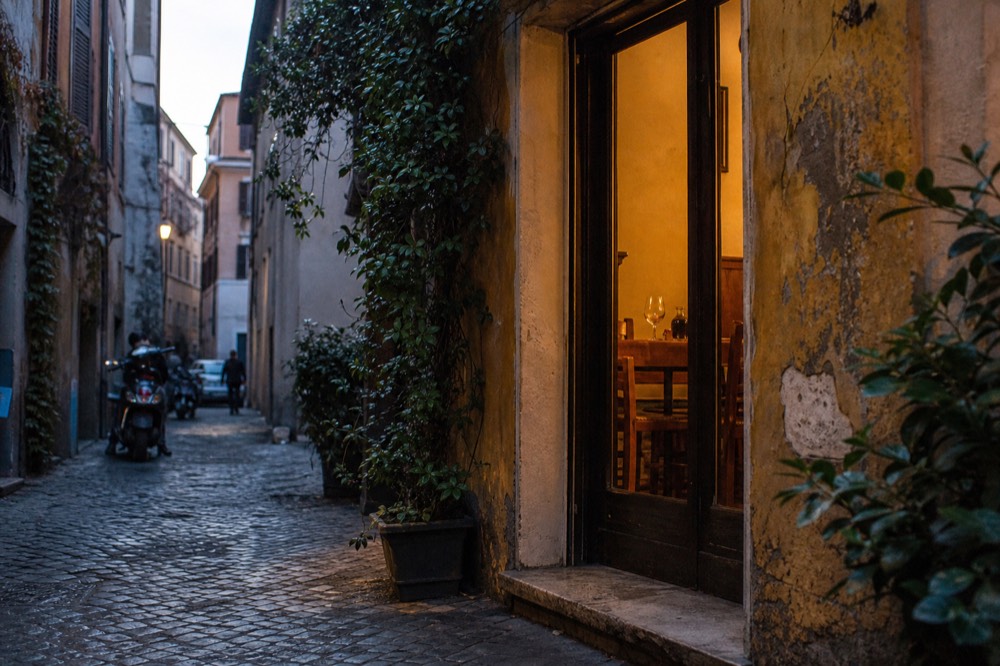
Bourdain never published a ranked list, so the honest answer is the one his programmes actually give. Across his Rome visits, the cooking he kept coming back to was the neighbourhood kind: a small trattoria turning out the four Roman pastas, the offal canon of the old slaughterhouse quarter, and pizza sold by weight from a counter. He was interested in the people and the mechanics of a room, not in booking strategies, which is exactly the part that has changed since.
The catch for a traveller following that record in 2026 is that the rooms he put on the map are now the rooms half of Rome's visitors want. Da Enzo al 29, the address most often called his Roman favourite, takes no reservations in any service, and a dated review describes a perpetual line out the door. Checchino dal 1887 in Testaccio requires at least six hours' notice through its own form. The Pizzarium counter near the Vatican has no seats and a dated report of ninety people waiting.
This page walks the record venue by venue, then covers what each address demands of you today: booking mechanics, closing days, the August shutdown, and what a food tour does and does not solve. Several of these tables are exactly the hard-to-book rooms covered in the hardest restaurants to get into in Rome, so the two pages read well together.
If the goal is simply to eat in his Rome rather than to reproduce one dinner, the fastest route is a guided walk through the quarters he filmed, which removes the reservation problem entirely and covers several counters in one outing.
Is Da Enzo Al 29 Still Open And Can You Book It?
Yes, it is open and it is unchanged in the way that matters, but you cannot book it at all. The trattoria's own site states plainly that it does not take reservations for any service, lunch or dinner, because the room is small and the plates are cooked to order. You arrive, you join the line, and you are seated in order of arrival.
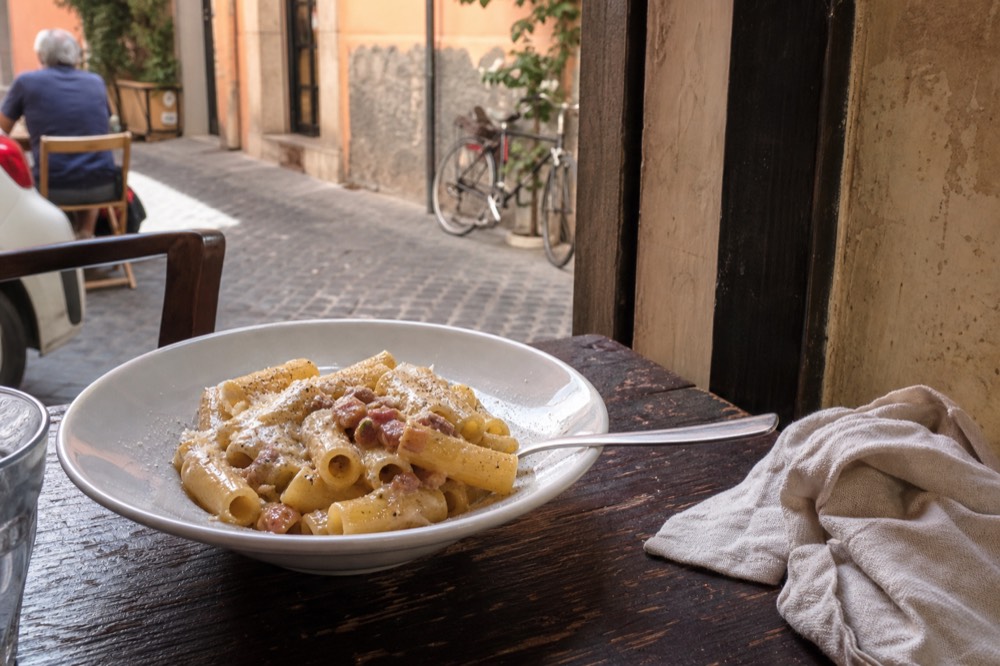
The room is in Trastevere, a few streets off the river, and the signature plate is the rigatoni alla carbonara. Bourdain's segment there, filmed with Aziz Ansari, is the reason a large share of the people now queuing outside know the address at all. The trattoria's English-language site is unusually direct about the mechanism: Da Enzo al 29 says on its own site that it is a small neighbourhood trattoria with few tables and dishes prepared to order, and that for this reason it takes no reservations and welcomes guests in order of arrival.
A dated review describes the line as perpetual and snaking out the door, and no reliable wait in minutes exists, so none is worth planning around. What is plannable is the timing: the trattoria serves lunch from 12:00 to 15:00 and dinner from 18:30 to 22:30, Monday to Saturday, and it is closed Sunday. Arriving near the opening of a service, rather than at the 21:00 peak, is the only lever you control.
One warning that matters here: a couple of guide sites claim dinner can be booked and lunch cannot. That contradicts the trattoria's own site and both of its social accounts, which say no reservations, full stop. Do not build a plan around a dinner booking that does not exist.
The 2.5-hour two-quarter walk above is the cheapest way to cover Trastevere and Campo de' Fiori counters in one evening when the Da Enzo line is longer than the evening allows. It runs small-group with free cancellation available.
Where Did Bourdain Eat In Testaccio?
Testaccio is where he tracked the quinto quarto tradition, the offal cooking that grew out of the old municipal slaughterhouse, and the institution of that tradition is Checchino dal 1887. The restaurant is open and trading, but it asks for at least six hours' notice through its own booking form, closes Monday and Tuesday, and shuts for three weeks every August.
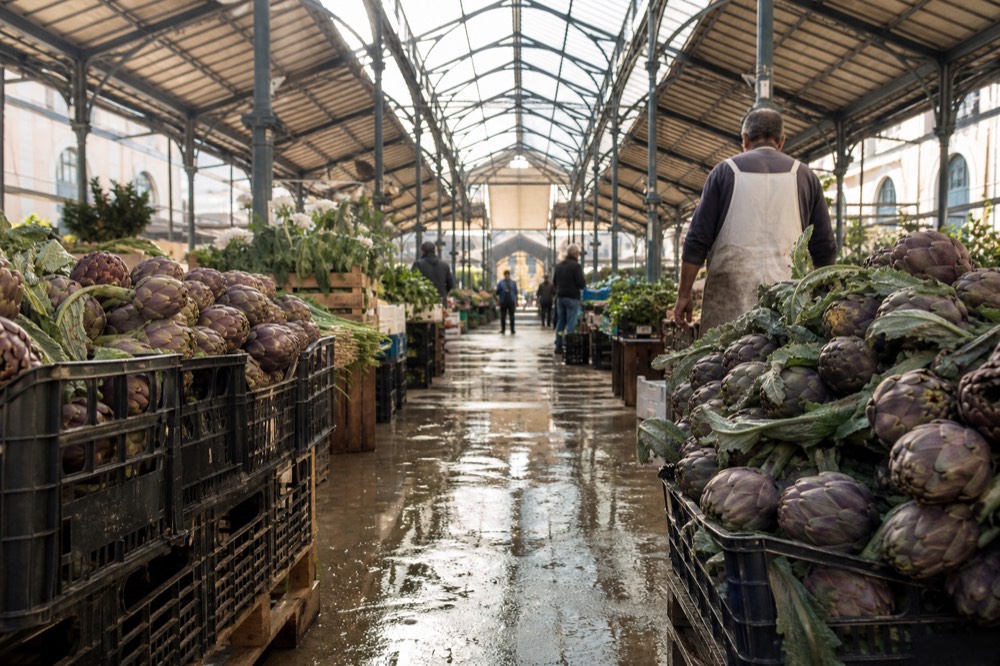
The quarter itself is the reason the food exists. The slaughterhouse, decommissioned in the 1970s, paid its workers partly in the offcuts of butchery, and the cooking those offcuts produced is the backbone of Testaccio's identity. Bourdain, who spent a career drawn to exactly that kind of economics, put the neighbourhood on many viewers' maps, and the market and trattorias that carry the tradition are all within a few blocks of each other.
Checchino dal 1887 is the record-holder of the tradition, and its booking mechanics are unusually clear. Checchino's own booking page states that reservations must be made through its form with at least six hours' notice before arrival, and the restaurant also books by telephone or SMS. It is closed Monday and Tuesday. For August, the restaurant's own site publishes its shutdown dates rather than leaving travellers to guess.
The market next door, Nuovo Mercato Testaccio, keeps the lunch economy of the quarter going. The market's own site states it is open Monday to Saturday from 07:00 to 15:30, closed Sunday, which makes it a morning-and-lunch destination rather than a dinner one. Inside it, the Mordi e Vai stall's sandwiches are a queue in themselves, with dated reports putting the wait at lunchtime.
| Venue in Bourdain's Rome | What the record holds | Booking position now |
|---|---|---|
| Da Enzo al 29, Trastevere | Eaten on camera in the Parts Unknown Rome episode; carbonara and the small room itself | No reservations in any service; line before the door opens; closed Sunday |
| Checchino dal 1887, Testaccio | The quinto quarto institution of the slaughterhouse quarter he sought out | Own form, at least six hours' notice; closed Monday and Tuesday; August dates published on its site |
| Pizzarium Bonci, Prati | The pizza al taglio of Gabriele Bonci, whose counters earned his praise | No seats, no bookings, a standing counter with a dated report of ninety people waiting |
| Nuovo Mercato Testaccio | The quarter's covered market, the lunch economy around the cooking he followed | Walk in, Monday to Saturday 07:00 to 15:30, closed Sunday |
The honest summary of that table: nothing Bourdain ate in Rome is gone, and almost none of it is bookable the way a normal restaurant is. The testaccio walk below is the one format that turns the market and the quarter's counters into a single booked outing, with nine tastings including three Roman pastas.
Do You Need A Food Tour To Eat In Bourdain's Rome?
No, but a tour is the only format that solves the two problems the record creates: no bookings at the walk-in rooms, and a fixed price known before you go. A guided walk covers several counters in one outing, booked in advance like any other ticket, while the trattorias themselves keep their own door policies. No tour listed here enters a famous restaurant from the city's best-known tables.
That last point deserves its own sentence, because the internet is full of pages implying a tour gets you a table at the trattoria you queued for. It does not. What a tour does is remove the reservation problem and cover ground: the ten-plus tasting walk with wine pairings is the longest tasting list on the roster in Trastevere, running about 3 hours from $100.30 per person (checked September 2026), rated 4.9 across 2,915 reviews, with free cancellation available.
For a traveller whose whole trip is built around Bourdain's Rome, the practical structure is this: take a walk through Trastevere or Testaccio early in the stay to learn the geography and eat well without planning, then spend one evening queuing at Da Enzo itself, arriving near the 18:30 dinner opening. For the cooking side, a Roman pasta class teaches the four sauces the trattorias serve, and Rome cooking classes cover the options.
| Format | What it solves | What it costs from | Group format |
|---|---|---|---|
| Trastevere tasting walk, ten or more tastings with wine pairings | Covers many counters, no individual bookings | $100.30 per person (checked September 2026) | Standard |
| Testaccio market walk, nine tastings with three Roman pastas | The slaughterhouse quarter's cooking in one lunch | $128.83 per person (checked September 2026) | Small group |
| Two-quarter street-food walk, 2.5 hours | Cheapest way to eat two quarters in one evening | $48.37 per person | Small group |
| Queueing at Da Enzo yourself | The exact room, the exact plate | The menu price only | One line for everyone |
All three tours listed carry free cancellation, which matters when a queue at the walk-in trattoria might free up on the same evening.
Where Did Bourdain Eat Carbonara In Rome?
Carbonara was the dish he returned to most in Rome, and the short answer is that he ate it at the trattorias above and talked about the version that uses only pasta, guanciale, pecorino romano, egg and black pepper, with no cream, no garlic and no onion. That five-ingredient version is the traditional recipe, and it is the one the Rome trattorias named here cook.
The recipe record is unusually solid. The traditional carbonara is five ingredients, full stop, and the version with cream in it is the one Roman kitchens do not recognise. The dish has also gained a fresh piece of history: a 1939 newspaper mention of spaghetti alla carbonara in Trastevere surfaced in 2026, predating the American troops the standard origin story credits, reported by two Dutch journalists and shared with food historians.
For the traveller, the practical carbonara map of Rome looks like this: Da Enzo al 29 in Trastevere, Tonnarello across the same neighbourhood, Da Felice in Testaccio, where it is tossed at the table, Perilli in a room open since 1911, and Roscioli near Campo de' Fiori, whose carbonara comes with a booking system that holds a card against the table. Each has a different booking position, and the differences are the whole story.
Roscioli is the clearest example of how the fame has hardened into mechanism. Its own booking page states it accepts online reservations only, with a credit card required as guarantee, and the booking counts only once the confirmation email arrives. A dated report describes crowds of hungry patrons without a reservation waiting an hour or more. Tonnarello's own site states the opposite approach: no bookings by phone or email at any of its five Trastevere rooms, just walk in and avoid peak hours, with dated diner reports of waits from forty minutes to over an hour.
| Carbonara kitchen | Neighbourhood | Booking position |
|---|---|---|
| Da Enzo al 29 | Trastevere | No reservations, any service, closed Sunday |
| Tonnarello | Trastevere | No reservations at five rooms, walk-in only, dated waits of forty minutes to over an hour |
| Da Felice a Testaccio | Testaccio | Online booking only, cancellations refused by phone or email |
| Perilli | Testaccio | Takes reservations, no published window, closed Wednesday |
| Roscioli | Campo de' Fiori | Online only, credit card guarantee, closed days none, an hour or more without a booking |
The page you are reading is part of Best Restaurants in Rome, whose whole approach is ranking tables by why they are hard, not by how good they are, and the carbonara list above is exactly that kind of ranking.
Are The Bourdain Tables Open In August?
Partly. August is a real shutdown but a smaller one than the cliché says: about 40 per cent of Rome's shops and restaurants close for two weeks or more, with the majority away roughly 15 to 18 August, and the venues in this article publish their own dates. Checchino closes for three weeks and Piatto Romano for a month, while Roscioli stays open through August except the 15th. Check each venue's own site before building an August itinerary.
The honest framing comes from the trade associations as reported by Il Messaggero: a minority closes properly, most take around four days around Ferragosto, and a counter-example like Roscioli trades straight through. What this means for a Bourdain itinerary is that the two walk-ins, Da Enzo and Tonnarello, carry no published August closure in the record, while the bookable Testaccio rooms state theirs on their own pages.
The other seasonal trap is the week rhythm. Da Enzo is closed Sunday, Checchino is dark Monday and Tuesday, Perilli closes Wednesday, and the Testaccio market is shut Sunday. A traveller who arrives on a Saturday and leaves on a Tuesday can miss a third of the list without ever being told. The booking page of each venue is the only reliable calendar, and hours in Rome should never be treated as guaranteed.
For anyone travelling in the second half of August, the safer plan is the walking formats: the street-food and market walks run through the neighbourhoods regardless of individual trattoria calendars, and the covered counters like Mercato Centrale, which its own site states is open every day from 07:30 to 23:30, hold the evening economy together when the small rooms are shut.
The ten-plus tasting walk with wine pairings below is the format that keeps a Bourdain-style Trastevere evening intact through most of the calendar, with free cancellation if your dates shift.
Should You Queue, Book, Or Take A Tour?
Queue for Da Enzo if the room itself is the point, book ahead for the Testaccio trattorias where the forms and notice windows are published, and take a tour when your evenings are fewer than your ambitions. The record gives you no single favourite table to conquer; it gives you a quarter, a tradition and a dish, all of which are easier as a planned walk than as a series of improvised queues.
Bourdain's own Rome advice, repeated across his programmes, was to eat what the neighbourhood eats and to prefer a full room of locals to an empty room with a view (see Eating Near The Vatican). That advice survives 2026 intact. The signal list is short and reliable: a menu with photographs of every dish, a tout at the door, a laminated card in five or six languages, and carbonara advertised with cream. The zones where those signals cluster are the porticoed edge of Piazza Navona, the blocks around the Trevi Fountain, and via della Conciliazione, all of which are streets away from every table in this article.
The tour formats earn their place when time is short. The two-quarter street-food walk covers Trastevere and Campo de' Fiori in 2.5 hours, the Testaccio walk covers the slaughterhouse quarter's market and pastas in about 3 hours 30 minutes, and the ten-plus tasting walk is the longest tasting list through Trastevere at about 3 hours. Each carries free cancellation. For deeper background on the formats and what they include, Rome food tours compares them, and what to eat in Rome covers the dishes behind the itinerary.
One last mechanic worth knowing before the evening: a separate cover charge is banned in Rome under Lazio regional law, and the lawful service charge is only permitted where the price list shows it before you order. If a bill carries an unexplained per-person charge, the price list is the thing to ask for, calmly, before paying.
| Your situation | Best route into Bourdain's Rome | Why |
|---|---|---|
| One free evening, want the exact room | Queue at Da Enzo near the 18:30 opening | The room only seats in order of arrival, and no booking exists |
| Two evenings, want the traditions | Book Checchino six hours ahead, tour Trastevere the other night | The form and the notice window are published and simple |
| Short trip, many ambitions | The two-quarter walk or the ten-plus tasting walk | Several counters, one booked outing, free cancellation |
| Travelling in August | Walks plus Mercato Centrale | Trattoria calendars thin out; the counters keep long hours |
Whatever route you take, the record itself is the useful map: a small trattoria in Trastevere, the offal canon of Testaccio, and a counter where pizza is cut and weighed one customer at a time. All three are still open, still the same, and still asking something different of you at the door.
Common Questions About Bourdain's Rome Tables
What Was Anthony Bourdain's Favorite Restaurant In Rome?
The table most often named is Da Enzo al 29 in Trastevere, where he ate on camera with Aziz Ansari in the Parts Unknown Rome episode. He was also on record praising Testaccio's quinto quarto tradition, whose institution is Checchino dal 1887, and the pizza al taglio of Gabriele Bonci's counters.
Can You Book Da Enzo Al 29 In Rome?
No. The trattoria's own site states it takes no reservations for any service, lunch or dinner, and seats guests in order of arrival. It is open Monday to Saturday for lunch and dinner and closed Sunday.
Are The Restaurants Bourdain Visited In Rome Still Open?
Yes. Da Enzo al 29, Checchino dal 1887 and Pizzarium Bonci are all trading, and each is covered above with its current booking position. A not-found result is never evidence a business closed, and only a dated source stating a closure counts.
Do Any Rome Food Tours Visit Bourdain's Restaurants?
No tour listed here enters one of the city's famous restaurants. What a tour does is remove the reservation problem and cover several counters in one booked outing, which is the practical substitute when the walk-in lines are long.
Where Did Bourdain Eat Carbonara In Rome?
At the trattorias he filmed and visited in Trastevere and Testaccio, including Da Enzo al 29, whose signature is the rigatoni alla carbonara. The traditional version he championed uses only pasta, guanciale, pecorino romano, egg and black pepper, with no cream.
Are Bourdain's Rome Restaurants Open In August?
Partly. About 40 per cent of Rome's shops and restaurants close for two weeks or more, most of them away roughly 15 to 18 August. Checchino publishes a three-week shutdown, while Roscioli stays open through August except the 15th. Check each venue's own site for its dates.