Where Do Locals Eat In Rome Near The Vatican?
Prati and Borgo explained for the Vatican visitor: how far to walk from the walls for real neighbourhood food, what each quarter is good for, and which counters and trattorias locals actually use.
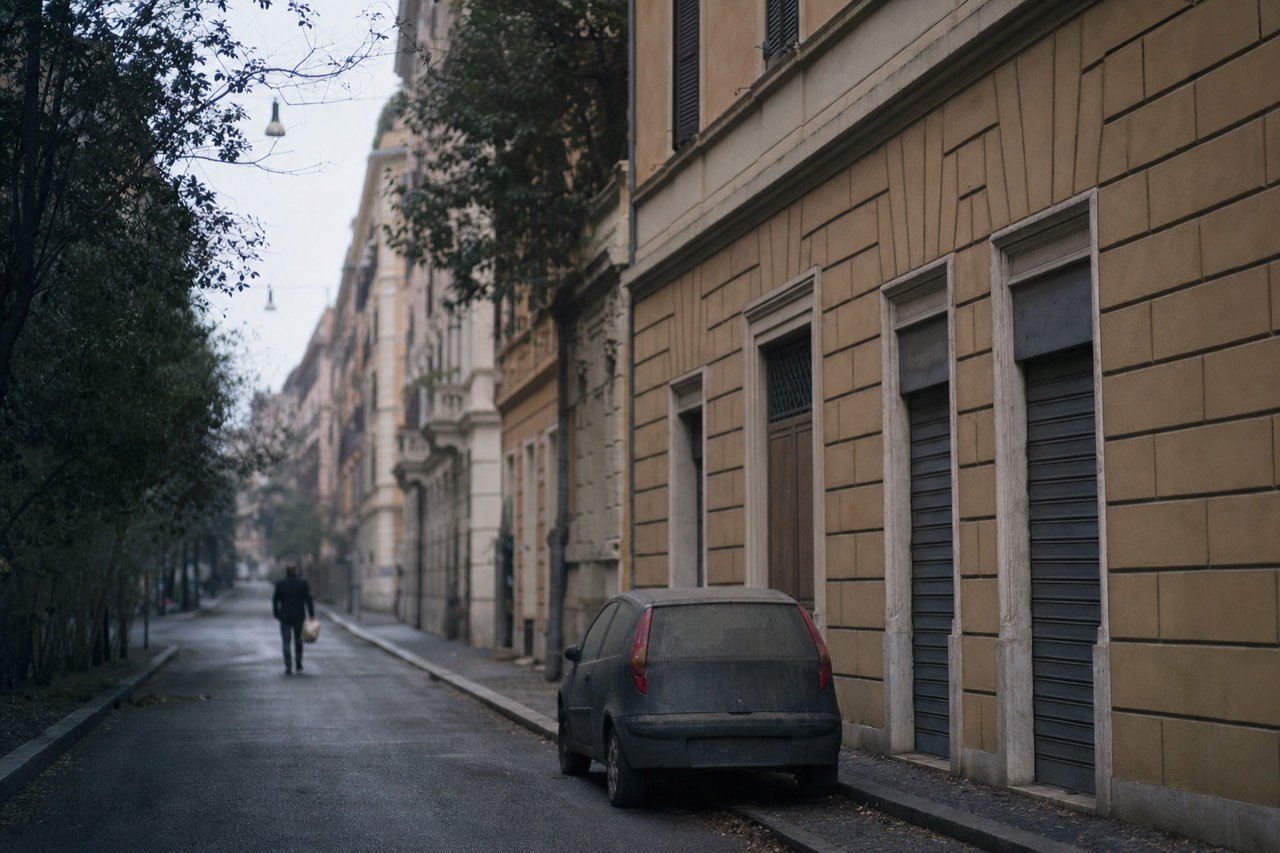
Rome's smallest state sits inside one of its hungriest tourist corridors. The blocks around Piazza San Pietro and via della Conciliazione feed a stream of visitors measured in the tens of thousands a day, and the food economy on those streets answers to that stream first. Locals who work in the area, and the residents of the quarters around it, eat elsewhere. That elsewhere is close, and it splits into two directions: Borgo, the medieval wedge pressed against the walls, and Prati, the grid of apartment blocks on the far side of the river's bend.
The practical answer is a walk-out radius, and it is short. Get a handful of streets away from the basilica's spine, the character of the counters changes fast. This page maps that radius using the neighbourhood's own venues: a bakery where the queue has a documented shape, a trattoria that publishes its Sunday closure and its August dates, a covered market with two published opening schedules, and a gelateria with nothing standing between you and the counter. It also looks at the guided option, a private walk built around the Vatican side of the river, for travellers who would rather have the ground covered in one fixed-price outing.
Where Do Locals Eat In Rome Near The Vatican?
Locals around the Vatican eat in Prati, the residential grid across from the basilica, and on the quieter edges of Borgo, roughly ten to fifteen minutes' walk from the square. The streets closest to the walls, above all the via della Conciliazione corridor, show the city's clearest tourist-belt pattern: picture menus, multilingual laminated cards and touts at doors. Two places anchor the local answer: the Bonci counters, and L'Arcangelo, a trattoria in Prati.
The pattern, not any named business, is the thing to hold onto. Two dated Rome guides describe the same tells: a menu laminated into four or five languages with a glossy photograph of every dish, someone stationed outside calling you in, and a "carbonara" advertised with cream. The zones they name are the porticoed edge of Piazza Navona, the blocks around the Trevi Fountain, via della Conciliazione by the Vatican, and the belt at the Colosseum entrance. No restaurant on this site is called a trap, because the sourcing supports patterns and streets, never a name. What the pattern tells you is direction: the eating improves as you walk away from the monument-facing frontage.
Borgo, the wedge of medieval streets between the Vatican and the river, is a mixed case. Its main spine carries the tourist trade that comes with the basilica's shadow, and its side streets hold a quieter neighbourhood life that guides tend to under-report. The honest formulation is that Borgo rewards walking through it rather than stopping on its main drag, and that the strongest concentration of verifiably local eating near the Vatican sits beyond it, in Prati.
Prati is the opposite of a maze. It is a rational grid of late nineteenth-century apartment blocks, and it feeds itself: the market, the bakeries, the pizza counters and the trattorias there serve the people who live in the flats above them. The friction profile of Prati's eating spots reads like a normal neighbourhood: one counter with a famous queue, one bakery with none, one trattoria that books by telephone or online and closes on Sunday, and a gelateria you can walk into any evening. The guide to the whole map is Rome neighbourhood dining, which lays out the same quarter-by-quarter logic across the city.
If you would rather have someone else cover that ground, the roster holds exactly one tour built on this side of the river: a private Vatican walk with more than twenty-five food and wine tastings, from $231.11 per person (checked September 2026), rated 4.8 across 93 reviews, running about three and a half hours with free cancellation. It meets at La Nicchia Cafe near Cipro Metro Station, which is the Prati side of the equation, not the basilica side.
How Far From The Vatican Walls Does The Food Change In Rome?
The change is measurable in streets, not kilometres: the blocks facing the basilica carry the picture-menu pattern, and by roughly three to five streets out, into residential Borgo or across into Prati, the venues shift to ones locals actually use. Pizzarium Bonci, Panificio Bonci, L'Arcangelo, Gelateria dei Gracchi and the Mercato Trionfale all sit in that walk-out band on the Prati side. Keep the dome at your back and walk until the souvenir shops thin out.
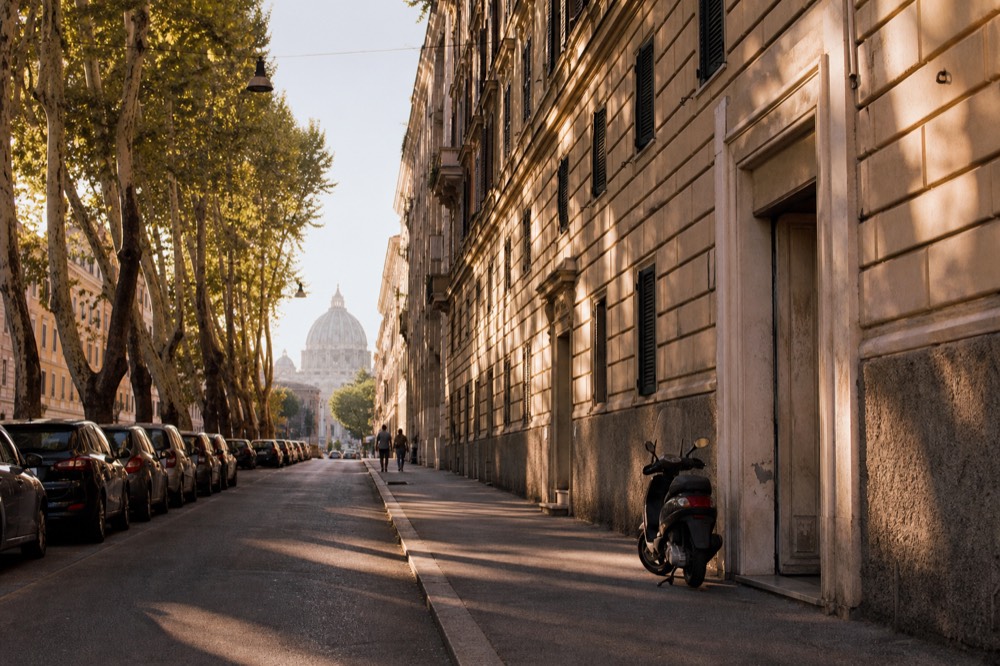
Distance is the honest organising principle because it is the one thing a first-time visitor controls. You cannot know which door on a tourist street is a good one without local knowledge you do not have yet. You can, reliably, count streets. The trap-belt pattern in Rome runs strongest along the monument-facing frontage, and the genuinely local venues sit one neighbourhood back from it, which is exactly where the residents of those neighbourhoods eat every day.
Here is the shape of that radius, drawn from the streets and tables themselves:
| Distance from the Vatican walls | What changes | Where to walk |
|---|---|---|
| Facing the square and the conciliation corridor | Picture menus, multilingual laminated cards, touts at doors, all-day service | Nowhere: this is the belt to walk through, not stop in |
| Three to five streets out, Borgo side | The tourist pattern thins; quieter neighbourhood streets appear, with fewer known restaurants | Deeper into Borgo's side streets, away from the main spine |
| Across the band into Prati | Counters and trattorias that serve the flats above them: Pizzarium, Panificio Bonci, L'Arcangelo, Gelateria dei Gracchi | North and east, toward the Prati grid and its market |
| The Prati market quarter itself | A covered market with its own published hours, plus the Cipro Metro stop and its cafe meeting points | Via Cipro and the streets around the Trionfale market |
Two of those meeting points matter if you are considering a guided option. Both the private Vatican food tour and the four-hour Trionfale market tour meet at or beside La Nicchia, on via Cipro, which places you squarely in the local eating band from the first minute. The market tour runs from $105.19 per person (checked September 2026), rated 5 across 511 reviews, and is built around a visit to the Trionfale covered market with food and wine tastings along the way, with free cancellation.
Is a food tour the right way to cover that radius at all? The honest case, and the roster supports it, is that a tour removes the reservation problem and covers several counters in one outing at a price fixed before you go. No tour listed here enters a famous Roman restaurant; what it buys is ground covered and decisions already made. Travellers who weigh the same question in other quarters can read the are food tours in Rome worth it discussion for the fuller argument.
Deciding between covering it alone and covering it with a guide is the real fork on this page, and the choice depends less on budget than on how many of these decisions you want to make yourself. The private option is the only Vatican-side tour on the roster, it is genuinely private, and it pairs the walk with fine wine rather than a quick snack stop.
What Does Prati Do Better Than Borgo In Rome?
Prati does density and reliability better: a covered market with published hours, a bakery-and-counter cluster around the Bonci operations, a bookable trattoria in L'Arcangelo and a walk-in gelateria, all inside one walkable grid. Borgo does atmosphere better, medieval streets against the walls, but the eating venues worth the walk on this side of the river sit overwhelmingly in Prati. For a visitor asking where locals eat, Prati is the operational answer and Borgo is the walk home.
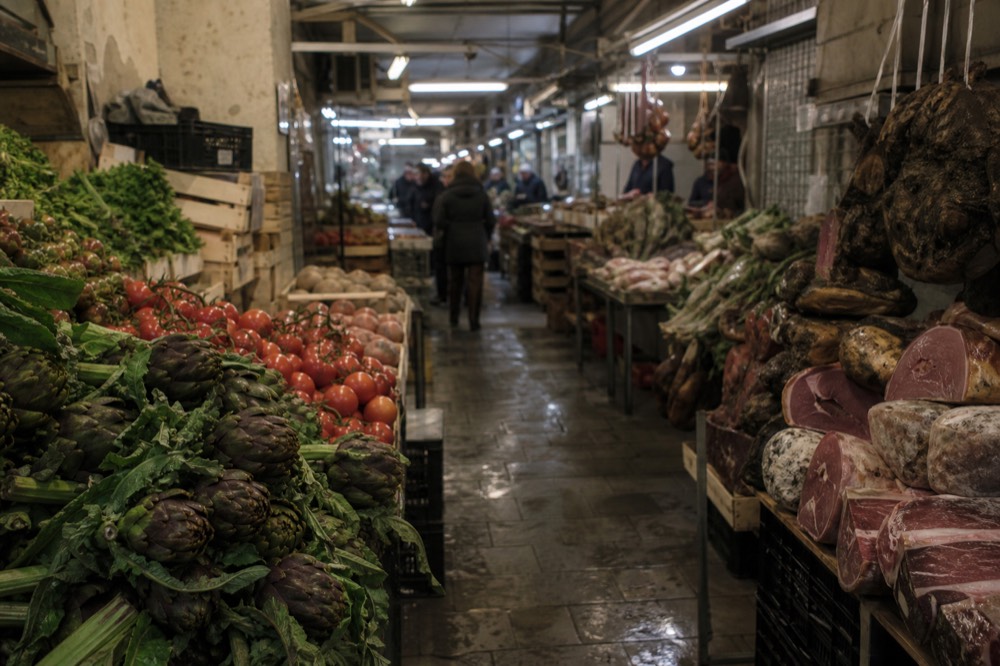
Prati's advantage is structural. It was built as a residential quarter, so its food economy was built for residents, and it still works that way: the market trades in the morning, the counters sell pizza cut and weighed to order, and the trattorias keep neighbourhood hours, including the closures that come with them. L'Arcangelo, in its art-nouveau room, books by telephone or through its own site, serves dinner only in summer from 19:00 to 22:30, is closed on Sunday, and publishes its own August closure dates, from 10 to 31 August inclusive. That is a restaurant keeping a resident's calendar, not a tourist's.
Borgo's profile is the inverse. Its position pressed between the walls and the river makes its main spine a natural corridor for visitor traffic, and the trap-belt research names that corridor's direction as a pattern zone. Its side streets are quieter and hold real neighbourhood life, but the best-known Roman tables and counters on this side of the river cluster in Prati, so this page's specific recommendations cluster there too. The honest advice for Borgo is to enjoy the walk and eat either side of it.
The Bonci pair shows how the same operation can split across the friction scale. Pizzarium, the pizza al taglio counter, takes no bookings, has no seats, and one dated report describes more than ninety people waiting, with two half-hour waits in a single visit. Panificio Bonci, the bakery half of the operation, is closed on Sunday and has no queue story attached to it at all. Same family, same street food register, wildly different evening plans required. Pizza al taglio is sold by weight, so at either counter you point at the size of the piece you want and it goes on the scale; the per-kilo price is posted at the counter (see Best Pizza In Rome).
For the rest of the counter geography around the Vatican, the Rome street food guide covers the citywide picture, including how the weighing mechanic works at each kind of counter.
Which Rome Markets And Counters Do Vatican Locals Actually Use?
The Mercato Trionfale is the one locals use, and its own site publishes two separate schedules: the produce market runs 7:00 to 14:00 most days, to 19:00 on Friday, closed Sunday, while the eating stalls inside run to 23:00 Tuesday to Saturday. Around it sit the Bonci counters, the gelaterie and the cafes near Cipro Metro, including La Nicchia, which doubles as a tour meeting point. Everything is walk-in; nothing takes a booking.
The market's split schedule is the most useful single fact on this page, because it fixes two different plans. If you want the produce market, the market's own published hours give you a morning: stalls shut at 14:00 on most days, at 19:00 on Friday, and the whole market is closed on Sunday. If you want to eat there, the eating stalls run until 23:00 from Tuesday to Saturday, which makes the market an evening option as well as a lunch one, an unusual thing in a city whose food halls and markets mostly keep morning hours. The Rome food markets guide covers how Trionfale compares with Testaccio, Termini and the others.
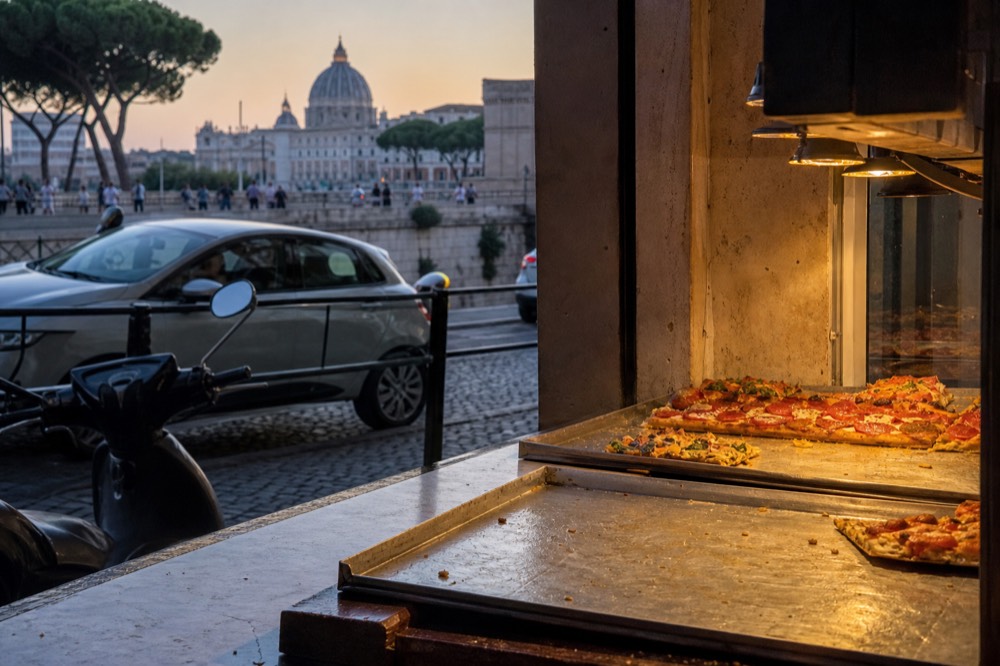
The counters around the market work as a second layer. Pizzarium is the famous one, and its documented queue means you plan for a wait, not a seat, because there are no seats and no booking system, you order on the spot. Panificio Bonci is the calmer bakery alternative, closed on Sunday. Gelateria dei Gracchi, with its pistachio from Bronte, is friction-free in the way gelaterie generally are: no booking exists to fail at. This is worth saying plainly, because a page arguing everything near the Vatican is hard would be neither true nor credible. Half of Rome's best-known tables and counters take no booking at all, and the gelaterie, coffee counters and bakeries are genuinely the low-friction half of the city.
For travellers who want that whole counter layer covered in one outing, the four-hour market tour is the direct fit: it is built around a visit to the Trionfale covered market, runs from $105.19 per person (checked September 2026), is rated 5 across 511 reviews, and includes food and wine tastings with free cancellation and pickup available.
Do You Need A Booking Near The Vatican In Rome?
Mostly no. In the Prati band, only the trattorias want a booking: L'Arcangelo takes telephone or online reservations and closes on Sunday, and it publishes its own August holiday dates. The counters, the market, the bakery and the gelaterie are all walk-in. Further out, fine-dining rooms like Pipero Roma, dinner-led and closed Sunday, want an online booking made days ahead. The pattern is simple: book for a table, walk in for a counter.
A booking table for the Prati side of the river, drawn from the sixty best-known Roman tables and counters:
| Venue | Type | Booking | Closed |
|---|---|---|---|
| Pizzarium Bonci | Pizza al taglio counter | No bookings, order on the spot | No closing day confirmed, sources disagree |
| Panificio Bonci | Bakery | Walk-in | Sunday |
| L'Arcangelo | Trattoria | Telephone or online | Sunday; 10 to 31 August inclusive |
| Gelateria dei Gracchi | Gelateria | Walk-in | No closure on record |
| Mercato Trionfale | Covered market | Walk-in | Sunday |
| Osteria delle Commari | Osteria | Online booking | No closure on record |
Two cautions keep that table honest. First, hours and closing days change constantly in Rome, so treat closures as more reliable than clock times. Second, August is a real factor, and not the cliché version: the only city-level figure with attribution is that about 40 per cent of Rome shops and restaurants close for two weeks or more, most of them away roughly 15 to 18 August, while the majority take shorter breaks. L'Arcangelo is among the venues that publish their own dates, and a traveller arriving in the second half of August finds a different Prati from the one the food guides describe.
The booking mechanics themselves have teeth at the fine-dining end of the scale. Pipero Roma, dinner-led and closed on Sunday, books online through its own site. Further afield, Rome's starred and noted rooms hold cards against tables and name their cancellation penalties in advance, which is a different barrier from a queue and worth knowing about before you promise a table to six friends. For the full map of hard-to-book rooms, the Michelin star restaurants in Rome guide covers who takes a card and who does not.
There is also a quieter layer of friction that no booking solves: the calendar. Sunday closures run through the neighbourhood records on this side of the river, and the market is shut. A Sunday visitor near the Vatican is best served by the counters that trade seven days, and by the food hall options in the wider city, rather than by trattoria plans made without checking the day.
Is A Guided Walk The Easiest Way Around The Vatican Food Belt In Rome?
Yes, for many visitors it is. The Vatican side of the river has compressed geography, with good eating hiding one neighbourhood back from the walls, and a local-led walk covers that radius in one fixed-price outing. The roster's Vatican-side option is a private tour from $231.11 per person (checked September 2026), rated 4.8 across 93 reviews, running about three and a half hours with more than twenty-five food and wine tastings and free cancellation.
The honest claim for a tour here is the one that holds up in Rome: it removes the reservation problem and covers several counters in one outing at a price fixed before you go. It does not get you into a famous restaurant, because none of the roster's tours do. What it does is collapse the planning layer: the counters, the market, the timings and the directions arrive pre-solved, and the meeting point, La Nicchia Cafe near Cipro Metro Station, is already on the local side of the radius.
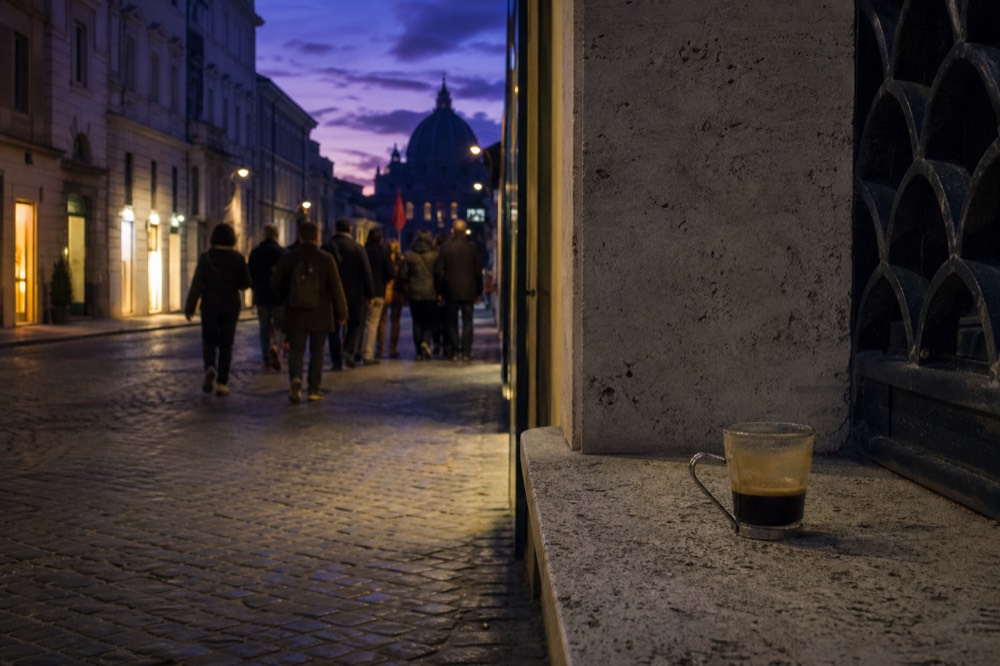
The golf cart format answers a different need. The VIP golf cart food tour with four drinks included runs about four hours, from $191.78 per person (checked September 2026), rated 4.9 across 267 reviews, with six to seven tastings including amatriciana and tiramisu. It meets at Piazza di San Francesco d'Assisi, on the Trastevere side, so it covers different ground entirely, but it belongs in the comparison for one reason: it trades the walking radius for covered distance, which suits travellers with limited mobility or short evenings. The comparison between formats is worth a look before booking anything:
| Format | From, per person | Duration | Group | What you get |
|---|---|---|---|---|
| Private Vatican walk, fine wine | from $231.11 (checked September 2026) | about 3.5 hours | Private | More than 25 food and wine tastings, fine wine, Cipro meeting point |
| Trionfale market tour | from $105.19 (checked September 2026) | about 4 hours | Standard | Food and wine tastings built around the covered market, pickup available |
| Golf cart tour with four drinks | from $191.78 (checked September 2026) | about 4 hours | Small group | Six to seven tastings including amatriciana and tiramisu, four drinks, cart transport |
A note on how these pages are built, because it matters to the answer. This site, Best Restaurants in Rome, ranks the city's tables by how hard they are to get into and by what the restaurants themselves publish, not by how good any dish is claimed to be. The Vatican page follows that logic: the question was never "which restaurant is best," it was "where does a resident of this quarter eat," and the answer is a radius you can walk.
The self-guided version of the same day is entirely workable, and cheaper. A morning at the Trionfale market while the produce stalls trade, pizza al taglio at a counter where the piece is cut and weighed in front of you, gelato at Gracchi in the afternoon, and dinner booked a few days ahead at a Prati trattoria is a full local day that costs only what you eat. The private tour is the answer for travellers who want that itinerary decided, walked and explained, with the wine chosen, in one booking.
For travellers weighing the same question at the citywide level, the Rome food tours guide compares every format on the roster, and the should you take a cooking class in Rome post covers the hands-on alternative, which several Vatican-side classes also offer.
For visitors who want the local radius covered with the planning removed, the private Vatican walk remains the one tour built on exactly this side of the river, and its free-cancellation terms make it a decision you can revisit after a day of walking the grid yourself.
Whichever way you take it, guided or on your own two feet, the geography on this page holds: the eating near the Vatican sits a few streets out from the walls, in a residential grid that feeds itself first. The three formats below cover the same radius at three different price points and paces, so the last decision is only how much of the planning you want handed to you.
These are the questions travellers actually ask about eating within walking distance of the Vatican, answered for Prati and Borgo: the walk-out radius, the market's two published schedules, the booking mechanics at the trattorias and counters, and the honest limits of what any pattern can tell you about a named restaurant. Each answer stands alone, so you can jump straight to the one you need.
Common Questions About Eating Near The Vatican In Rome
Where Do Locals Eat In Rome Near The Vatican?
Locals eat in Prati, the residential grid a short walk north of the square, and on the quieter side streets of Borgo. The places worth knowing cluster around the Prati market quarter: the Bonci counters, L'Arcangelo, Gelateria dei Gracchi and the Mercato Trionfale. The blocks facing the basilica and via della Conciliazione carry a documented tourist-belt pattern, so the answer is a walk-out radius of a few streets.
How Far Do I Need To Walk From St Peter's For Good Food?
Roughly three to five streets out from the monument-facing frontage, into residential Borgo or across into Prati. The souvenir and picture-menu pattern thins as you walk, and the neighbourhood's own fixtures, the market, the bakery, the trattorias and the gelaterie, sit in that band. It is a ten to fifteen minute walk, not a commute.
Is Borgo Or Prati Better For Dinner Near The Vatican?
Prati, for reliability. It holds the bookable trattorias, the covered market with evening eating stalls and the walk-in counters. Borgo is atmospheric but its main spine carries visitor traffic, and the strongest eating options on this side of the river sit overwhelmingly in Prati. Eat in Prati, walk home through Borgo.
When Is The Mercato Trionfale Open?
The market's own site gives two schedules. The produce market runs 7:00 to 14:00 on most days, to 19:00 on Friday, and is closed on Sunday. The eating stalls inside run until 23:00 from Tuesday to Saturday, and are also closed on Sunday. Check the current schedule before you build a day around it.
Do I Need A Reservation Near The Vatican?
For tables, yes: the Prati trattorias book by telephone or online, and the neighbourhood closes down on Sundays and in late August by venue-specific calendars. For counters, no: Pizzarium, Panificio Bonci, the gelaterie and the market are all walk-in, with no booking system to fail at.
Are The Restaurants Right By The Vatican Walls Tourist Traps?
This site never calls a named business a trap. What the pattern on the monument-facing streets looks like: laminated multilingual menus with photographs, touts at doors and cream in the carbonara listing. The pattern is a street-level phenomenon, and the practical defence is the same walk-out radius locals use, a few streets away from the walls.