How Much Should An Aperol Spritz Cost In Rome?
The honest answer to what an Aperol Spritz should cost in Rome: no single figure holds across the city, so this page explains the three-tier pricing mechanic, the posted price list the law entitles you to, and how to spot a view charge before you sit down.
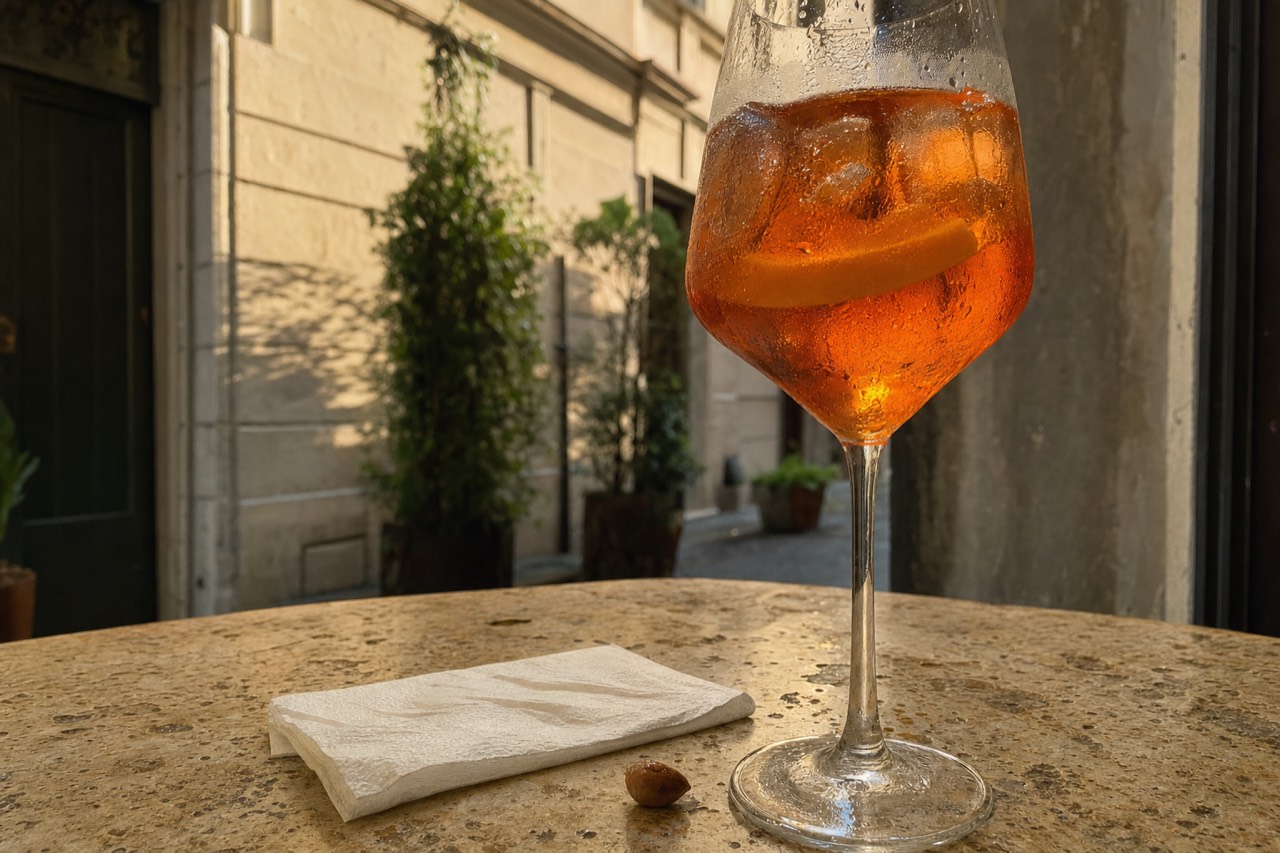
A Rome bar can post three different prices for the same Aperol Spritz on the same afternoon: one for standing at the counter, one for sitting inside, and one for sitting on a terrace with a view of something famous (see View Restaurants). None of those prices is a scam by itself. The mechanism is legal, it is posted, and the law that governs it is a Lazio regional statute that most visitors have never heard of. What separates a fair bill from a bad one is not the drink, it is whether you knew the price before you sat down.
No single figure holds for what a spritz should cost in Rome, because the price depends on the address: prices move with the neighbourhood, the season and the seat, and a number invented for comfort is worse than no number at all (see Food Tour Prices). What it does instead is explain the mechanic: why the same drink is priced three ways, what the law entitles you to see before you order, and how the zones around Rome's honeypot monuments work on your wallet. The spritz question sits inside aperitivo, and aperitivo is the hour when most of these pricing decisions get made badly, because the drink arrives before the bill and the view arrives before the drink.
How Much Should An Aperol Spritz Cost In Rome?
The honest answer is that it depends on where you drink it, and the price list must tell you before you order. The same glass carries three tiers in the same city: standing, seated inside, and seated with a view. Lazio regional law 21/2006 requires the price list to be available before you order, so the number you should care about is the one you can read before you sit down.
That is a lawyerly-sounding answer to a simple question, but it is the only one that is true. The drink itself is Aperol, prosecco, a splash of soda and ice. Its ingredients do not change when you walk from a back street in Monti to a terrace overlooking the Pantheon. Its price does, and it changes for reasons you can see and control: the table, the square, the chair, the linen, the fact that you are willing to pay to sit facing a building that millions of people photograph each year.
The trap signal is not the price. It is the price you did not know about. A Roman bar that charges a premium for a piazza table is running a business model that predates the spritz itself; a bar that reveals the premium only when the bill arrives is breaking the disclosure rule, and that is a different matter entirely. If you remember one thing from this page, remember the mechanic: look for the price list before you sit, find the column for seated service, and decide there.
For travellers who want the decision made simpler, a guided tasting is one way to remove the pricing surprises entirely. These three options cover the format and budget range most spritz-drinkers are actually shopping in:
The cards above are paid experiences rather than bar bills, but the comparison is fair, because an aperitivo hour in a honeypot zone can drift toward the same territory once a table, a view and a second round are involved.
Why The Same Drink Costs Three Prices In Rome
The three tiers exist because Italian bars sell two different products from the same bottle: the drink, and the place to drink it. Standing at the counter, you buy the drink alone. Seated inside, you buy the drink plus table service. Seated on a square with a famous view, you buy the drink, the table and the real estate the table stands on, and that third layer is where the bill stops being about Aperol at all.
The standing price is the one Romans pay. It is also the one most visitors never see, because a visitor arriving in Rome sits down, and sitting down is the single most expensive thing you can do to a drink in this city. The counter is where the espresso culture and the aperitivo culture actually live: you stand, you drink, you pay, you leave. Nothing about it is a punishment. It is simply the tier where the price of the product and the price of the experience are the same number.
The seated-inside tier adds service, and service in Rome is regulated in a specific way. Under L.R. Lazio 21/2006, article 16, the price list for table service must be made available before you order, must show any service component so the price is clearly understandable, and a separate coperto charge is prohibited outright. That is Rome's inverse of the Florence rule, and it matters here: whatever a bar charges you for the privilege of the table must be visible to you before the drink exists, not after.
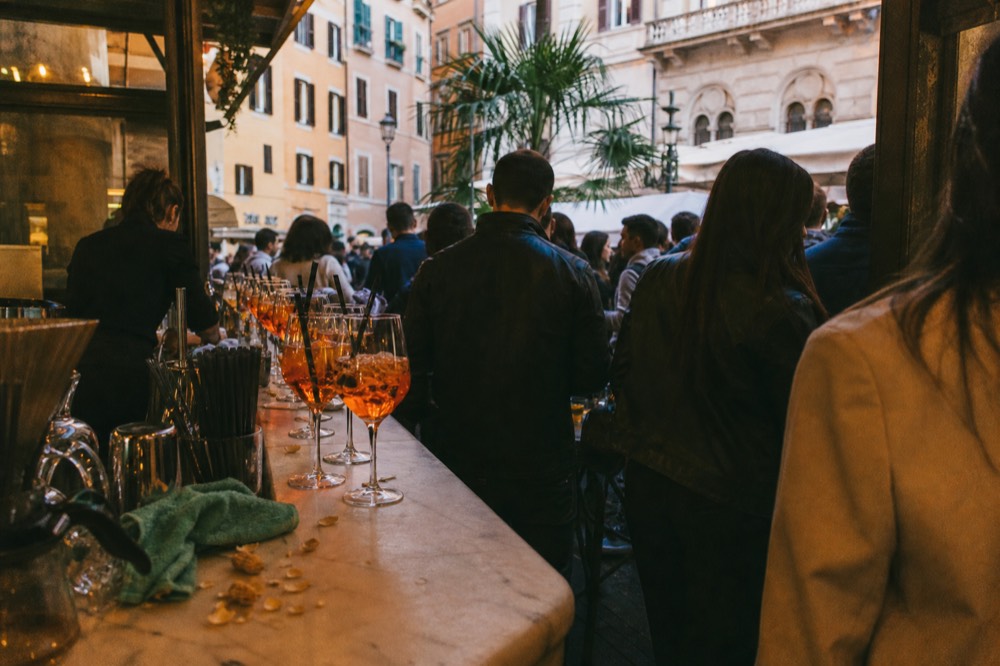
The view tier is the one that generates every shocked bill story that circulates about Rome. A table facing a famous monument is priced the way a hotel room facing the sea is priced: the business is selling the square, and the drink is the vehicle. There is nothing hidden about it when it is done properly, because the menu on that terrace states its numbers before you order. Whether those numbers are worth it to you is a personal decision, and a defensible one. Just make it on purpose.
| Where you drink it | What you are paying for | How to check before you sit |
|---|---|---|
| Standing at the bar counter | The drink only; no table, no service | The price is usually on a board behind the bar; glance up before ordering |
| Seated inside the bar | The drink plus table service | Ask for the listino, the printed price list, before ordering; the service component must appear on it |
| Seated on a piazza or terrace | The drink, the table and the view of the square | Read the terrace menu in full, including the seated-service column, before taking the chair |
The pattern is attached to zones, not to names. The streets within a couple of blocks of the Trevi Fountain, the porticoed edge of Piazza Navona, and the approaches to the major monuments are where the view premium is steepest, because that is where the audience for a view is concentrated. No bar anywhere in those zones is being accused of anything here; the pattern is simply that real estate facing a global landmark prices itself like real estate facing a global landmark. Walk two side streets in any direction and the same drink reverts to the neighbourhood tier. That is the whole trick, and it costs you five minutes of walking.
If a tour is a cleaner way to buy your aperitivo hour, the golf cart format folds a drink into a moving evening. It is a different purchase from a bar bill, but it fixes the price before the evening starts, which is the thing a terrace cannot do for you. Free cancellation is available on it, which a terrace also cannot do for you.
The comparison is worth making consciously. A bar bill is settled blind and contested afterwards; a booked format is settled in advance and cancellable. That asymmetry, more than any price difference, is the argument for the guided route on a first evening in Rome.
How To Read A Roman Price List Before You Sit
Every bar with table service must let you see the price list before you order, and the service component must be shown on it. Ask for the listino, read the seated column, and compare it with the counter column if both are posted. Two prices for the same drink are legal; a price you learn only from the bill is not the system working as designed.
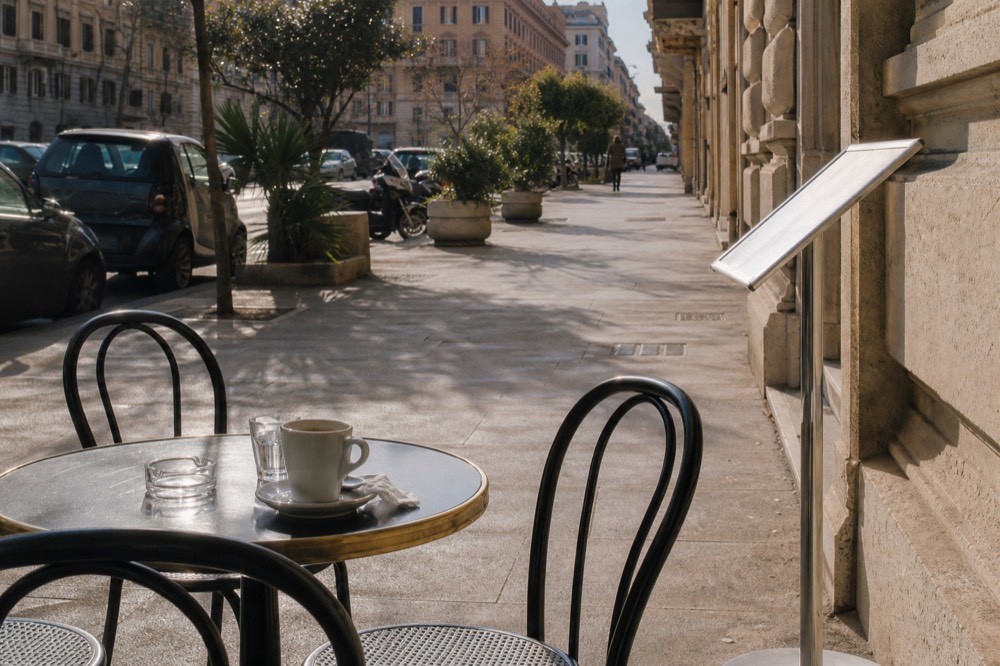
The habit takes ten seconds. Before you take a chair, look for the printed list. In a bar it is usually at the counter or on a stand by the door; on a terrace it should be handed to you or standing on the table. Read the line for what you actually want, not the line for what the waiter suggests, and read the whole line, because service and cover items appear as their own entries or percentages. If the list is not offered and not visible, asking for it is normal, unremarkable Roman behaviour, and it is the exact right the law gives you.
What you are checking for, concretely, is three things: whether the seated price differs from the counter price, whether a service charge is listed and how it is expressed, and whether anything called pane or coperto appears. That last one matters in Rome specifically, because a coperto is prohibited in Lazio, so an entry with that name is a flag worth noticing, whatever the amount. A servizio entry, shown on the list before you order, is the lawful version of the same idea.
This is also the point where the aperitivo hour's other trap walks in: the buffet. Many Roman bars run a happy-hour formula where a drink buys access to a food spread, and the question worth asking before you commit is whether the buffet is included in the posted price or priced per plate. Both models exist. The list, or the waiter, will tell you which one you are in, and knowing it is the difference between a bargain and a surprise.
| Signal on the list or at the door | What it means | What to do |
|---|---|---|
| A seated price and a counter price, both posted | The two-tier system, legally disclosed | Choose the tier consciously; the counter is always the cheaper one |
| A servizio line on the list | Table service charged and disclosed before you order | Factor it in; this is the lawful mechanic |
| A pane or coperto line | A cover charge, which is prohibited in Lazio | Question it politely on the bill; the ban comes from regional law |
| No visible list at a terrace | The disclosure duty is not being met | Ask for it before ordering, or move two streets away |
The comparison with how Romans budget for food is exact, because the same two-tier logic runs through espresso pricing too: one drink, two prices, chosen by where you stand or sit. A traveller who learns the mechanic once at the bar in the morning applies it for free every evening afterwards.
Where Aperitivo Actually Happens In Rome
Aperitivo in Rome runs in the early evening, and it happens in three kinds of place: the neighbourhood bar where Romans stop on the way home, the enoteca where the drink is the cheap half of a wine conversation, and the centre square where the drink is an entry ticket to a view. The price follows the place, not the hour, so the neighbourhood and the enoteca are where the same money buys more.
The neighbourhood bar is the unglamorous answer and the best one. In Monti, in Testaccio, in the streets behind Trastevere's riverfront, the aperitivo hour is a local rhythm, and a bar whose clientele is mostly Roman is a bar whose prices answer to regulars. Nobody pays a view premium on a street with no view. The drink is the same orange colour it is on Piazza Navona, and the bartender is not amortising a monument.
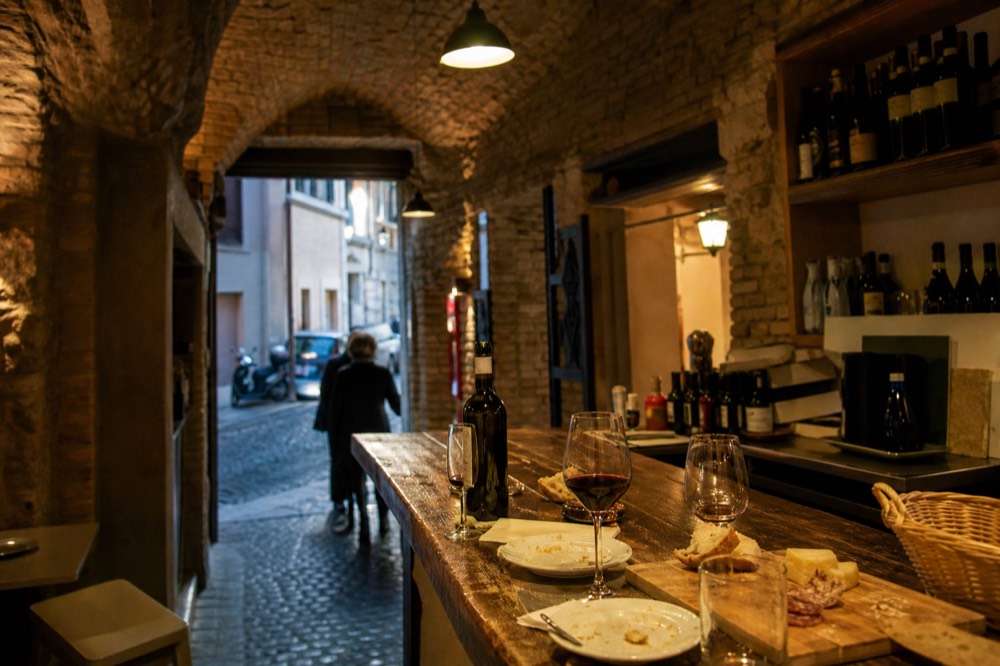
The enoteca is Rome's quiet middle path. A wine bar that opened decades ago and pours by the glass from a blackboard is selling wine culture, not scenery, and its prices sit in the tier between a counter and a terrace. Some of these rooms have been trading for a very long time: one historic Rome enoteca dates to 1929, another to 1946, a third opened in 1983, and their survival is itself a signal, because a wine bar cannot hold a neighbourhood for that long on tourist traffic alone. More on that world lives in the Rome wine bars and Frascati guide.
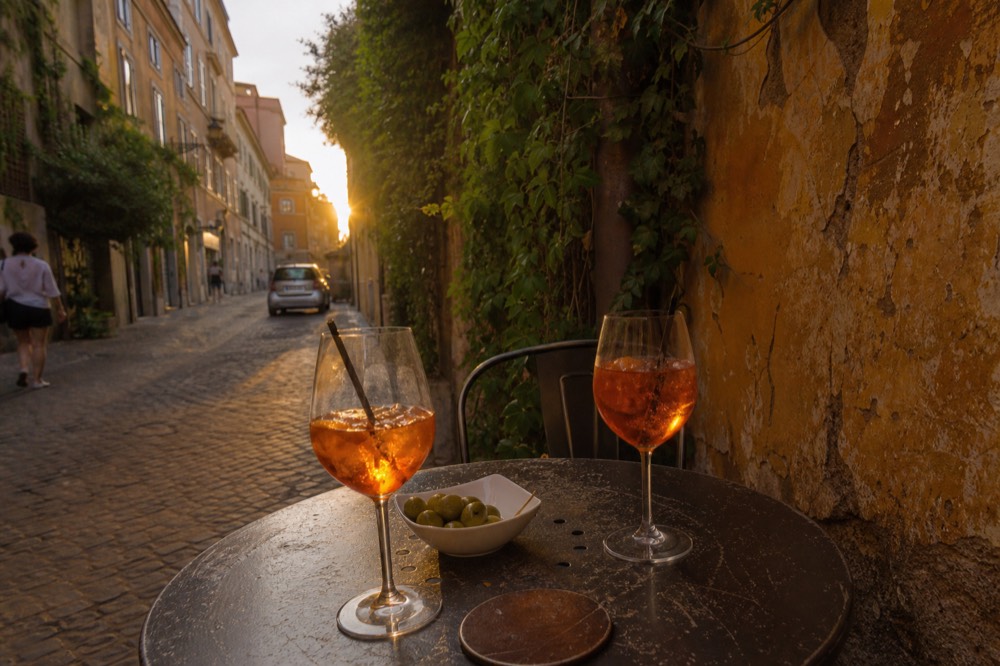
Then there is the centre square, and to be fair to it: a spritz at a table facing a fountain at golden hour is one of the genuinely pleasant products Rome sells. The honest framing is that you are buying two things and the drink is the smaller one. Some people should buy it once, knowingly, and then walk four streets in any direction for the second one. The mistake is not the purchase; the mistake is believing the purchase was about Aperol.
| Kind of place | What the price reflects | Who it suits |
|---|---|---|
| Neighbourhood bar counter | The drink alone, priced for regulars | Anyone who wants the cheapest honest pour and a local rhythm |
| Enoteca or wine bar | The drink plus the wine list and the room | Drinkers who care what is in the glass more than what is outside the window |
| Centre-square terrace | The drink, the table and the monument-facing real estate | Visitors making a deliberate, one-time, known-price purchase of the view |
| Booked tour or tasting | A fixed, cancellable price set before the evening | Travellers who want the aperitivo hour without any pricing surprises |
A guided format can also carry the aperitivo hour without the pricing guessing game. The speakeasy tasting pours wine with food in a bar in the Rione Monti district, about an hour and a half, small and contained, with free cancellation available and a meeting point at Cabaret Voltaire in Monti. For a short evening it is the most contained option on the board, because the operator's live listing fixes the price before you leave the hotel.
For a longer version of the same idea, the private family winery tasting in the countryside trades the terrace for a cellar, which is a different kind of view entirely. It is a private format with pickup included, pairing local food and olive oil with the wines.
Is A Terrace With A View Ever Worth It In Rome?
Yes, and the honest way to decide is to treat the terrace as an experience you are buying once, deliberately, with the price known in advance. The view is real and the drink is identical, so the premium buys the square and the chair, not a better spritz. Check the posted list, accept the number if the hour matters to you, and refuse it if it does not; either answer is correct, because either way you chose it.
The one-sitting rule is a good personal policy. Rome gives you a handful of terraces whose views genuinely justify themselves: a table from which you can watch a famous square change light, a rooftop with the domes laid out, a riverside table with the island in front of you. A place like Trattoria Sora Lella on the Tiber island, which books online and serves lunch and dinner to set hours, shows the model working in reverse: an institutional dining room with a real river position and a booking system, not a cash grab on a monument's doorstep.
The other half of the policy is the walk-away. The premium is attached to zones, and zones end abruptly. Two streets back from any honeypot square the pricing resets to neighbourhood level, and the walk is measured in minutes. If a terrace list reads like an entry ticket and the hour is not special to you, the correct move is to stand at a counter, drink the identical drink, and spend the difference on dinner.
The questions below cover the ones visitors actually ask: what a spritz should cost, why sitting down changes the number, whether a coperto line is legal, and how to dodge the view premium near the monuments. Each answer restates the mechanic rather than inventing a figure, because the mechanic is what travels, and the figure does not.
Common Questions About Aperol Spritz Prices In Rome
How Much Should An Aperol Spritz Cost In Rome?
There is no single honest figure, because the same drink carries three tiers in the same city: standing at the counter, seated inside, and seated with a view. The counter is the cheapest tier, and the seated and terrace prices add the cost of the table and the square. The price list must be available before you order, so the number you should care about is the one you can read before you sit down.
Why Do Bars In Rome Charge More If You Sit Down?
Because table service is a separate product from the drink, and Italian pricing treats it that way openly. The seated price covers the table, the service and, in the centre, the real estate facing a famous view. The two-tier system is legal; the disclosure duty is what the law actually enforces, and the price list must show the service component before you order.
Can A Bar In Rome Charge A Coperto On My Spritz?
No. Lazio regional law 21/2006, article 16, prohibits additional coperto charges where there is table service. A servizio component is the lawful alternative, but only if the price list shows it and the list is available before you order. If a cover charge appears on a Rome bill, that is the item to question, and the law is on your side.
How Do I Avoid Overpaying For A Spritz Near The Monuments?
Read the posted list before taking the chair, and if the terrace price reads like an entry ticket, walk two side streets in any direction, where the pricing resets to neighbourhood level. Standing at the counter is the cheapest tier everywhere in the city. Alternatively, book a tasting or a tour where the price is fixed before the evening starts.
Is Aperitivo In Rome Worth It Compared With A Bar Visit?
Often yes, because the format bundles a drink, a place and a guide into one price fixed in advance. The speakeasy tasting runs from $34.84 per person (checked September 2026) for wine with food over about an hour and a half, and the golf cart aperitivo tour runs from $179.78 per person for about four hours with five tastings. Both remove the seated-versus-counter and view-charge decisions from your evening entirely.
The pricing mechanic is the same one that governs budget eating across the city: know the posted number before you commit, choose the counter over the chair when the number stops making sense, and let the terrace be a deliberate purchase rather than an accident. That is how Best Restaurants in Rome treats every drink in this city, spritz included: as a decision you make with the price list in hand, not with the bill.