What Time Is Aperitivo In Rome?
The hour Romans fill between museums closing and dinner starting, what a real aperitivo includes, and where to drink without a booking.
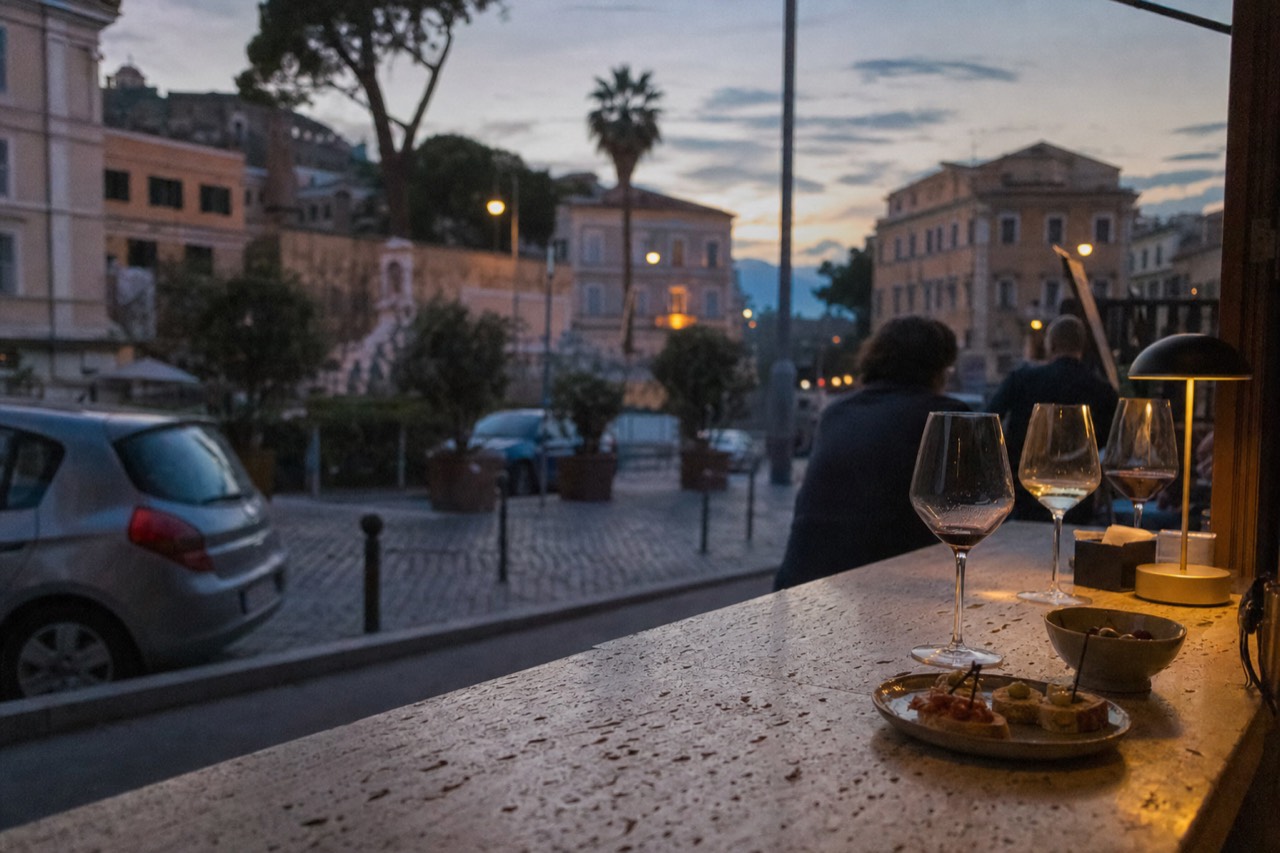
Aperitivo in Rome is not a menu item, it is a slot in the day. The gap it fills is the one between the last museum ticket and the first dinner sitting, roughly 18:00 to 20:00, and it exists because Roman kitchens do not open for dinner until about 19:00 or 19:30 and Romans themselves sit down to eat from about 20:00. Those are the posted and reported facts, and everything else about the hour follows from them.
That is the short answer. The rest of this page covers what a real Roman aperitivo includes and what it does not, which wine bars and counters you can walk into at that hour without a reservation, how the city's street-drinking rules shape the end of the evening, and how a short tasting tour can carry the whole pre-dinner hour for you (see Wine Bars and Frascati).
What Time Is Aperitivo In Rome?
Aperitivo in Rome happens between roughly 18:00 and 20:00, in the hours after the museums and shops thin out and before the kitchens fire up. Rome's restaurants generally open for dinner around 19:00 to 19:30, with some from 18:00, and Romans themselves tend to sit down at the table from about 20:00. Aperitivo is the bridge across those two clocks, a drink with something small to eat that takes the edge off the wait.
The hour is a consequence of the dinner schedule, not a tradition invented for visitors. Armando al Pantheon, one of the clearest examples because its own site posts everything, opens lunch at 12:30 and serves dinner from 18:00 on weekdays, and it is on the early end. Most Roman kitchens open their dinner service at 19:00 or 19:30, and the tables fill from 20:00 onward. A traveller who finishes a gallery at 17:30 and expects dinner at 18:00 is two hours early for the city, and aperitivo is the Roman answer to being two hours early.
That is why aperitivo is a practical scheduling question rather than trivia. The drink is the small part; the hour is the useful part. If your dinner booking is at 20:30, aperitivo starts somewhere between 18:30 and 19:30. If you are eating at 19:00 at an early-opening kitchen, the aperitivo slot shrinks to one drink before you walk over. And if you have no booking at all, aperitivo can quietly become dinner, which is a separate and perfectly Roman outcome covered further down this page.
One scheduling note matters for anyone building the evening backwards from dinner. The details of when Romans actually eat, and why the city's dinner clock runs late, are covered in the companion piece on Roman dinner hours, which carries the posted service times from the restaurants' own sites. Read the two pages together and the evening stops having gaps in it.
For visitors who would rather someone else assemble the pre-dinner hour, three short formats below fit the 18:00-to-20:00 window exactly: a speakeasy wine and food tasting, a golf-cart food tour with an aperitivo stop, and a long Trastevere tasting walk with free-flowing wine.
The trio above covers the three shapes the hour can take. The speakeasy tasting is the shortest and cheapest way to drink well in the slot, the golf-cart tour covers ground between stops, and the twenty-tastings walk replaces dinner entirely.
Why Roman Dinner Starts So Late
Rome's kitchens open for dinner between roughly 19:00 and 19:30, with a few from 18:00, and Romans sit down to eat from about 20:00. Lunch runs about 12:30 to 15:00, then the kitchen shuts and the city resets. Aperitivo at 18:00 is what the population does while the stoves are still cold, and the two habits, late dinner and early-evening drink, are one rhythm rather than two.
The posted evidence is consistent. Sora Lella, on the Tiber island, publishes lunch from 12:30 and dinner service from 19:20 on its own site, and it is a mid-range example rather than an outlier. Armando al Pantheon's own page gives dinner from 18:00, Monday to Friday, and closes Saturday evening and Sunday. The pattern reported across the city's trattorias is a 19:00 to 19:30 dinner opening, and the tables themselves belong to people arriving from about 20:00.
The gap is structural. The afternoon closure between lunch and dinner, usually from about 15:00 until early evening, means the hours either side of 18:00 belong to nobody: shops are winding down, museums hit their last entries, kitchens are not serving. Aperitivo occupies that dead air. It is a drink standing at a bar or a table on a square, with something to eat, that costs the evening nothing and pays it back in patience.
There is also a practical reading for travellers. If your body clock is set to a 18:00 dinner, aperitivo is the pressure valve: you eat something at 18:30, you last until a 20:00 or 20:30 table without crisis, and you eat dinner at the hour the kitchen is actually cooking rather than the hour you landed. The alternative, hunting for one of the kitchens that serve all afternoon, is a different city with a different trade, and one a neighbourhood dining guide maps better than a clock does.
Should the hour need filling with something organised, a short tasting booked for the early evening solves the schedule outright, and free cancellation means the plan bends if the day does.
A question worth asking before the evening is booked end to end: is a pre-dinner drink something to arrange, or something to drift into? A 1.5-hour tasting with free cancellation is the arrange-it answer, and walking into an enoteca is the drift-in one. Both work, at the same hour, in the same city.
What A Real Roman Aperitivo Includes
A Roman aperitivo is one drink plus a small something to eat, served from roughly 18:00, standing at a bar or seated at a table. The drink is a spritz, a glass of wine, or a beer; the food is olives, crisps, small sandwiches or a modest plate. It is an appetite-opener, not a buffet, and the all-you-can-eat spread aimed at visitors is a different product wearing the same name.
The honest description is modest on purpose. A Roman having an aperitivo orders one drink, gets something to nibble with it, and stands at the counter or sits briefly. The aperitivo is the warm-up act. The generous buffet version, where one drink unlocks a spread you can make a meal from, is real in some cities and in some Roman venues that court a foreign trade, but it is not the local default, and the difference is easy to see: a counter with a bowl of snacks is a Roman aperitivo, a heated buffet table with a queue is a product.
What you pay for is set by the venue, and drink prices vary bar to bar and are posted on the price list, which in Lazio must be available before you order. Two rules from regional law shape that moment. The price list must be shown before ordering and must display any service component clearly, and a separate coperto charge is prohibited under Lazio regional law 21/2006, article 16. Some restaurants charge a coperto regardless, which is documented, but the lawful mechanic is the posted list: look at it before you sit, and the standing-versus-seated choice is made with the price in front of you rather than after.
The food that comes with the drink is the Roman part, and it is usually small on purpose: the hour exists to bridge to dinner, not replace it, and the person eating a full plate at 18:30 is often the person with no table booked for 20:30. The exceptions are the venues where aperitivo is dinner, including the buffet rooms and, in a different register, the tasting walks where the pre-dinner hour is a scheduled meal. The Trastevere walk with more than twenty tastings at four venues, dinner included, with free-flowing wine, is exactly that: aperitivo promoted to the main event.
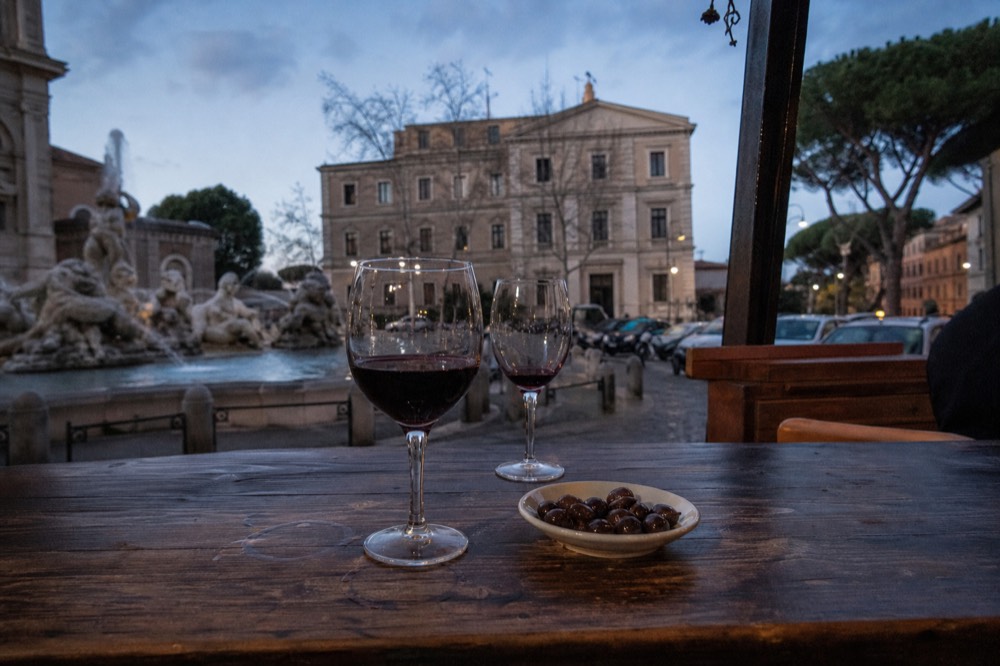
The drink choice is wider than the spritz cliché, and each option fits a slightly different version of the hour:
| Drink | What it is | When it fits the hour best |
|---|---|---|
| Spritz | Bitter aperitivo liqueur, prosecco and soda, orange in colour | The classic one-drink standing aperitivo, suits a short stop |
| Frascati or other Lazio wine | White DOCG and DOC still wines from the Castelli Romani | The local answer, suits an enoteca with a food counter |
| Cesanese del Piglio | Lazio's red DOCG | The sit-down version, suits a longer table before dinner |
| Beer | Draft or bottled lager, a common Roman order | Suits a standing room and a short wait |
| House cocktail | Bar's own bitter mix, vermouth or negroni-style | Suits the speakeasy and cocktail-bar end of the hour |
Lazio's own DOCG wines are Cannellino di Frascati, Cesanese del Piglio and Frascati Superiore, with Roma as a separate DOC, so a glass of Frascati is as Roman as anything orange and fizzy, and the enoteche that pour them are listed in the section on where to drink. For anyone comparing the spritz habit against the wine habit before the trip, the spritz cost question is its own page.
Where To Drink: Counters You Can Walk Into
Most of the aperitivo hour in Rome happens in places that take no booking at all: wine bars, enoteche, coffee bars and bakery counters. Of the sixty best-known Roman tables and counters, twenty-nine score one or two on the friction scale, meaning walk in and be served. The early evening is therefore the easiest eating and drinking hour in the city, and the places people find hard are almost all dinner tables.
This is the half of Rome that counter-programmes the difficulty stories, and it is the half the hour belongs to. The wine bars of the centre are standing rooms and small tables with no booking mechanism to fail at. Il Goccetto pours wine by the glass off a blackboard with a cheese and salumi counter and no reservations. Ai Tre Scalini in Monti is a small room that does not book, busy after work, with the wait as the price of not planning. Eataly at Ostiense is four floors of counters where there is always a seat somewhere. None of them needs a plan, and all of them are at their best exactly at 18:30.
| Venue | Type | Booking at the aperitivo hour | What the hour looks like |
|---|---|---|---|
| Il Goccetto | Enoteca, centro | Walk-in only | Wine by the glass off a blackboard, standing or small tables |
| Ai Tre Scalini | Wine bar, Monti | Walk-in only | Wine and a short kitchen menu, busy after work |
| Eataly Ostiense | Food hall | Walk-in counters | Several floors of options, always a seat somewhere |
| Sant'Eustachio Il Caffè | Coffee bar, Pantheon | Walk-in only | The gran caffè hour before the drinks hour |
| Tazza d'Oro | Coffee bar, Pantheon | Walk-in only | Granita di caffè, open into the evening |
| Trapizzino Testaccio | Street food counter | Walk-in, table service | Open every day from noon to 23:00 |
The deeper history is part of why the hour feels owned by the city rather than sold to it. Enoteca Bulzoni opened in 1929 as a bulk-wine shop, L'Angolo Divino has traded since 1946, and Il Goccetto opened in 1983; between them they span nearly a century of Romans drinking standing up before dinner. The newest entry, Vineria Risorgimento near the Vatican, opened in August 2025 and confirmed the format still works: a micro wine bar with a few hundred labels, two steps from the basilica, walk-in.
For a guided version of the same hour, the 1.5-Hour Speakeasy Tasting runs wine and food tasting inside a speakeasy bar in Rione Monti, from $34.84 per person (checked September 2026), rated 5 across 15 reviews, with free cancellation. The meeting point is Cabaret Voltaire Roma in the Monti district. The 1.5-hour format fits inside the aperitivo window and leaves the dinner plan untouched.
How The Street Rules Shape The End Of The Evening
Rome's public-order regulation bans drinking alcohol in the street between 23:00 and 07:00, in any container, in the zones listed in the regulation, and bans any drink from a glass container in the street between 22:00 and 07:00. Late-night takeaway alcohol sales stop at 22:00. The aperitivo hour sits safely before all of it, which is one more reason the city drinks early rather than late.
The rules are worth knowing because they draw the edge of the evening. Aperitivo at 18:30 with a glass on a square is entirely inside the law. The same drink carried down the street at 23:30, in the covered zones, is not, and the enforcement is by the Polizia Locale. Glass in the street stops at 22:00, alcohol in any container stops at 23:00, and licensed premises themselves stop serving alcohol between 03:00 and 07:00. For a traveller whose plan is drink, dinner, gelato, bed, none of this ever bites; for a plan that ends with a bottle in a piazza, it can.
There is a second ordinance-shaped habit worth carrying: sitting or eating on monuments, fountains and their steps is prohibited under the same regulation, and patrols enforce it. The aperitivo snack taken to a fountain step is the classic way visitors meet this rule, and the safe version is the version Rome built for: a bench, a bar table, or a counter. The city designed the aperitivo hour around seating you legally, which is a better answer than a fine.
The practical shape of the evening, hour by hour, then looks like this:
| Hour | What Rome is serving | What the hour is for |
|---|---|---|
| 17:00 to 18:00 | Museums and shops winding down, bars filling | Last entries, then move toward a square |
| 18:00 to 19:30 | Aperitivo: bars and enoteche at full tilt, kitchens closed | One drink with something small, standing or seated |
| 19:00 to 20:00 | Dinner service opens at most kitchens | The booked table, or the walk-in trattoria |
| 20:00 onwards | Romans sit down to dinner | The main meal, unhurried |
| 22:00 onwards | Glass off the street, takeaway alcohol stops | Gelato, coffee, or a nightcap indoors |
| 23:00 onwards | No street alcohol in the covered zones | The evening ends indoors |
The table is the whole argument of the page in six rows: the aperitivo hour is the hinge, and everything either side of it is scheduled by someone else's kitchen.
When Aperitivo Becomes The Whole Evening
Two Roman formats turn the aperitivo hour into the evening itself. One is the buffet-style aperitivo aimed at visitors, one drink plus a spread. The other is the tasting tour: a scheduled walk that eats and drinks through the hour and replaces dinner. Among the walks listed here, the twenty-tastings Trastevere tour and the golf-cart tour with an aperitivo stop both fill the 18:00-to-20:00 window and finish where dinner would have finished.
The tasting-walk version deserves the description because it is the honest upgrade of the habit. The 20+ Tastings walk in Trastevere runs about four hours, from $120.78 per person (checked September 2026), rated 4.9 across 1,708 reviews, covering more than twenty tastings at four venues with dinner included and free-flowing wine, in a standard group with pickup options and free cancellation. It is aperitivo, primo, secondo and the walk between them, assembled in advance and priced before the evening starts, which removes both the reservation problem and the dead hour in one booking.
The other format is the sit-down version with wheels. The VIP Golf Cart Food Tour runs about four hours, from $179.78 per person (checked September 2026), rated 5 across 41 reviews, in a small group with pickup available, five tastings including an aperitivo, golf cart transport included, and free cancellation. It covers the ground between stops that a walking tour leaves to your feet, and the aperitivo stop is scheduled rather than hunted for.
The trade-off between the two is shape, not quality. The Trastevere walk is longer on tastings and cheaper per person, with dinner built in. The golf-cart tour is smaller, seated between stops, and built around fewer, larger moments. Both start in the late afternoon or early evening in practice, and both end at the hour Romans are ordering secondi. Whichever way the evening goes, the hour before it still belongs to the bars and counters that never needed a plan, and Best Restaurants in Rome carries the full map of them, from the standing enoteche of the centre to the counters of Testaccio.
One closing scheduling note: the tours above are booked like tickets, in advance, with free cancellation, and they do not enter the famous restaurants this site covers elsewhere. What they remove is the friction, not the reservation at Da Enzo or Roscioli. If the plan is aperitivo, tour, then a booked table later in the week, that sequence works; if the plan is tour as dinner, nothing else needs booking at all.
The last hour of daylight in Rome belongs to the people holding a glass, and the city has spent a century arranging counters for them to hold it at. Start at 18:00, order once, eat what arrives with the drink, and be at the table when the kitchen actually opens. That is aperitivo in Rome, and the clock is the whole secret.
Aperitivo in Rome runs roughly 18:00 to 20:00, before dinner service opens at about 19:00 to 19:30 and before Romans sit down to eat from about 20:00. The questions below cover the specifics travellers ask most: whether the food with the drink is free, whether the street rules apply, whether anything needs booking, and when the hour can stand in for dinner. The answers are short because the schedule itself is short.
Common Questions About Aperitivo Hours In Rome
What Time Is Aperitivo In Rome?
Roughly 18:00 to 20:00, between the museums closing and the kitchens opening for dinner at about 19:00 to 19:30, with Romans sitting down to eat from about 20:00.
What Time Do Romans Eat Dinner?
Kitchens open dinner service between roughly 19:00 and 19:30, a few from 18:00, and Romans themselves tend to sit at the table from about 20:00. Aperitivo fills the hours before.
Is Aperitivo In Rome Free With A Drink?
The something-to-eat that comes with the drink varies by venue, from a bowl of snacks to a fuller spread. What you pay is on the venue's price list, which in Lazio must be shown before you order.
Can You Drink In The Street During Aperitivo Hours?
The street rules bite late, not early. Between 22:00 and 07:00 no drink in a glass container is allowed in the street in the covered zones, and between 23:00 and 07:00 no alcohol at all in any container. The 18:00 aperitivo hour is unaffected.
Do You Need To Book Anywhere For Aperitivo?
Mostly not. Wine bars and enoteche in the centre take no bookings at all, and twenty-nine of the sixty best-known Roman tables and counters are simple walk-ins. Booking matters for the dinner table afterwards, not the drink before it.
Is Aperitivo The Same As Dinner In Rome?
It can be, either deliberately through a tasting tour that includes a full meal, or through the buffet-style aperitivo venues aimed at visitors. The Roman default is smaller: one drink, something to nibble, then dinner.