Restaurants In Trastevere Rome And The Other Neighbourhoods Worth A Table
Rome is not one dining city but nine, and the neighbourhood you pick decides whether you queue, book at midnight or simply walk in. This guide ranks the quarters by what they are actually good at, street by street.
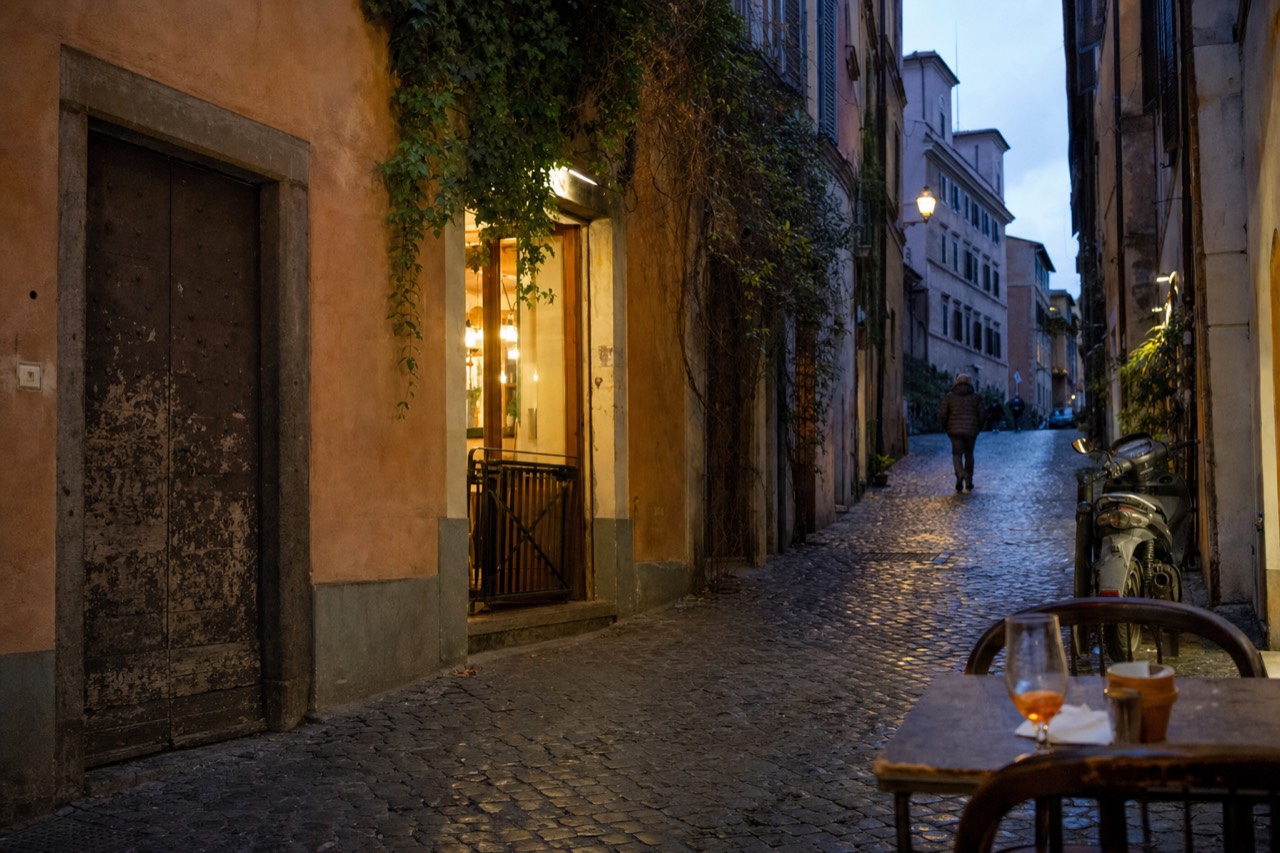
Short answer
Trastevere has the highest density of Roman cooking and the longest walk-in queues. Testaccio is the lunch and offal quarter. Monti and the Jewish Ghetto are small and bookable. The Centro Storico holds the hardest tables, and Prati, San Lorenzo and Ostiense are where the queues thin out.
What Is The Best Neighborhood In Rome For Food?
No single quarter wins, because Rome's nine dining neighbourhoods each hold one thing the others cannot do. Trastevere has the deepest bench of Roman trattorias but takes almost no bookings. Testaccio owns lunch and the offal canon. The Centro Storico holds the hardest tables, the Jewish Ghetto owns fried artichoke, and Prati, San Lorenzo and Ostiense are where the queues thin out. The honest answer is the quarter that matches your temperament.
A traveller who will happily stand in a line eats better in Trastevere than anywhere else in the city, because the walk-in trattorias there are among the most-recommended rooms in Rome. A traveller who plans ahead does better in the Centro Storico, where the good rooms book online weeks out and one of them releases its tables at midnight. Somebody who wants a fixed price and a schedule does better still on a guided walk: the roster of Rome food tours removes the reservation problem entirely and covers several counters in a single evening at a price fixed before you go.
The split is measurable. Of Rome's sixty best-known tables and counters, twenty-nine take no booking at all, and the same twenty-nine score one or two on the friction scale used throughout these pages. In other words, half of Rome's eating is walk-in by design. The difficult half is difficult because of mechanisms, not because the food is better, and the Best Restaurants in Rome pages rank tables by why they are hard, not by how good they are.
| Neighbourhood | What it is genuinely good at | Typical friction | When it comes alive |
|---|---|---|---|
| Trastevere | Roman pasta canon, walk-in trattorias, street counters | High: queues, no bookings | Evening, from 19:00 |
| Testaccio | Offal cooking, market lunch, quinto quarto | Medium: bookable, lunch-led | Lunch, 12:30 to 15:30 |
| Monti | Small bookable trattorias, wine bars, sandwich counters | Low to medium | Evening and aperitivo |
| Prati | Pizzerias, delis, gelato near the Vatican | Low | Lunch and evening |
| Centro Storico | The hardest bookable tables, coffee bars | Very high: midnight releases | Lunch and dinner |
| Campo de' Fiori | Bakery counters, one salumeria con cucina | Medium | Morning and evening |
| San Lorenzo | Trattorias and grilled meat, student prices | Low | Evening |
| Ostiense | Food halls, trattorias, market-driven menus | Low | Evening |
| Jewish Ghetto | Fried artichoke, Roman-Jewish cooking | Medium: phone bookings | Lunch and dinner |
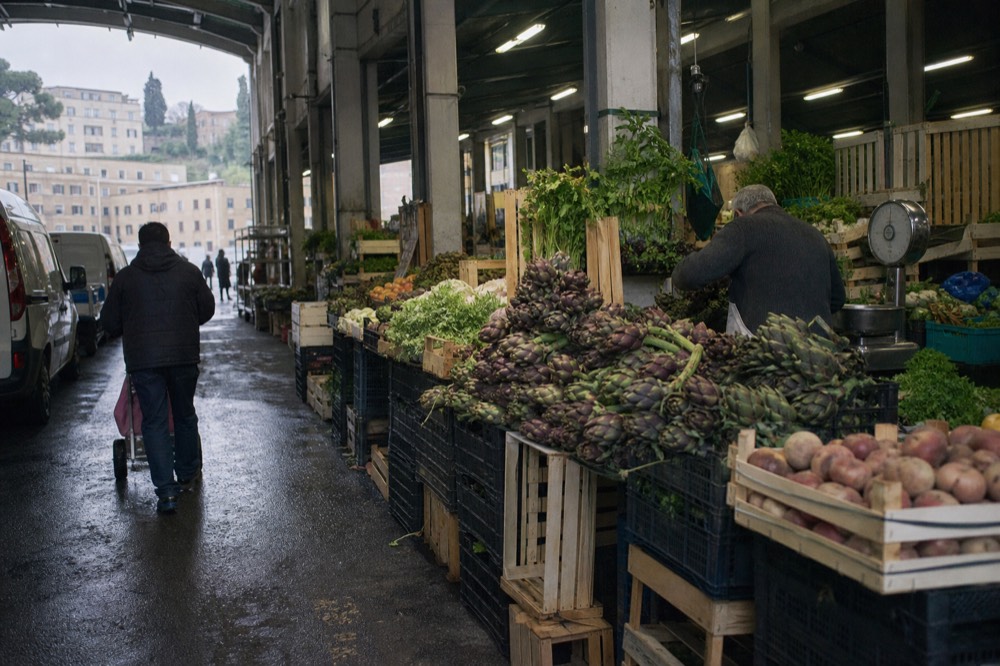
Is Trastevere Good For Restaurants?
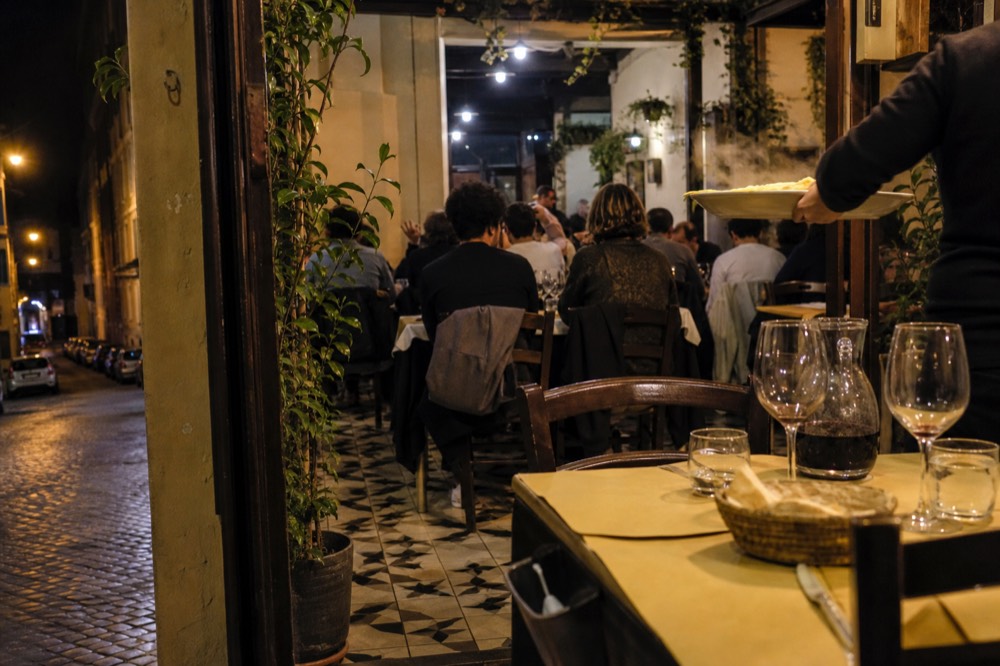
Yes, and it is the strongest single cluster in the city, with one catch: almost none of it books. Tonnarello refuses reservations at all five of its Trastevere rooms, Da Enzo al 29 takes no bookings in any service, and the queues are part of the deal. In exchange you get the highest density of Roman cooking in Rome, from tonnarelli cacio e pepe to supplì counters and a starred kitchen.
Start with the mechanism, because it decides the evening. Da Enzo al 29 says on its own site that it takes no reservations, in any service, and seats people in the order they arrive; a dated review describes a perpetual line out the door. Tonnarello has grown to five rooms inside a few Trastevere streets and still refuses to manage a book, telling visitors on its own site to avoid peak hours if they want shorter waits. Dated diner reports put the wait there at forty minutes to over an hour at peak dinner. Those are the two most famous tables in the quarter, and both of them are queue-first.
The walk-in half of the quarter is just as strong. Supplì Roma is a takeaway counter with a queue of one or two people, cash only, closed Sundays. La Renella is a wood-oven bakery where you point at a tray and pay by weight, also cash only. Otaleg serves gelato until midnight and later on weekends, and the Biscottificio Artigiano Innocenti sells biscuits by weight from its ovens. Glass Hostaria, the quarter's starred kitchen, is the exception that books, online through its own reservations page, and it closes Mondays.
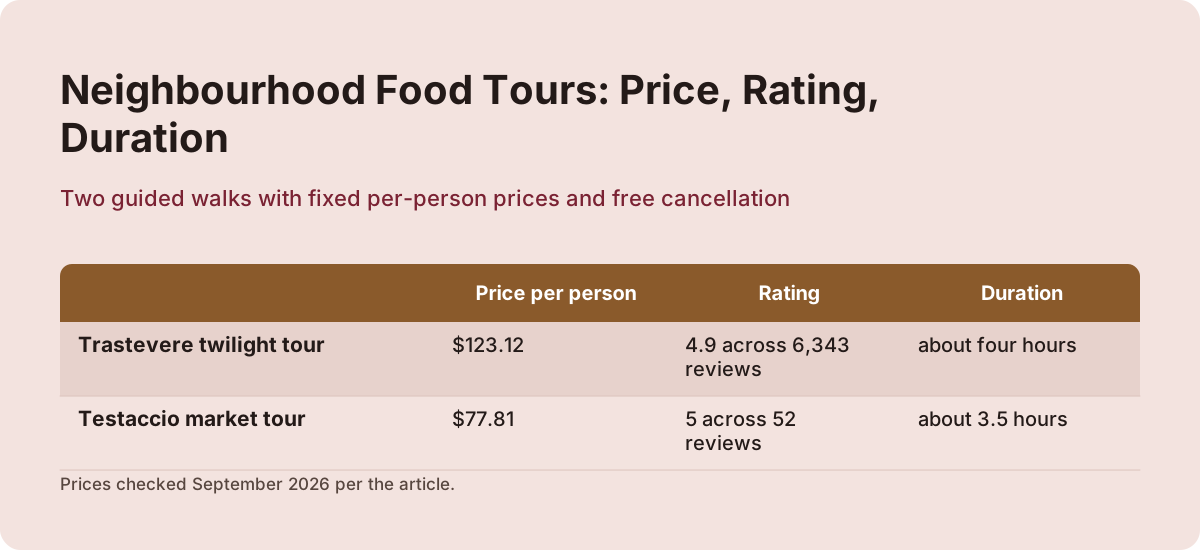
The most-booked walk listed here for the quarter is the twilight Trastevere tour: from $123.12 per person (checked September 2026), rated 4.9 across 6,343 reviews, running about four hours with six to seven curated tastings and local wines poured along the way. It meets on Piazza S. Bartolomeo All'Isola, at the Tiber island, and free cancellation is available. That price is fixed before you go, which is the whole argument for a tour in a quarter where the alternative is a pavement.
| Trastevere venue | What it is | Bookings | The catch |
|---|---|---|---|
| Da Enzo al 29 | Trattoria, rigatoni carbonara | None, any service | A line before the door opens |
| Tonnarello | Trattoria, tonnarelli pastas | None, five rooms | Forty minutes to over an hour at peak |
| Supplì Roma | Fried rice-ball counter | None | Cash only, closed Sundays |
| La Renella | Bakery, pizza by weight | None | Cash only |
| Glass Hostaria | Fine dining, one star | Online, own page | Closes Mondays, groups email first |
| Otaleg | Gelateria | None | Nothing, it is open to midnight |
Why Is Trastevere So Famous?
Trastevere is famous because it is the one Roman quarter where the medieval fabric survived intact, and the evening street life that grew inside it is now the image the whole city sells. Trattorias with no bookings, cobbles, ivy and a river crossing made it the default first-evening choice for two generations of travellers. The fame doubled the crowds, which is exactly why the queue-first venues below still matter more than the view.
The fame is old and the crowds are new. The quarter kept its working-class layout when other districts were rebuilt, and its trattorias kept the no-booking tradition that now reads as authenticity. That authenticity has a price: the streets around Piazza di Santa Maria in Trastevere fill by eight in the evening, and the wait at the walk-in rooms grows with them. The famous tables answer with patience rather than systems, Tonnarello's own site tells you plainly to have a little patience and dodge the peak.
The trap pattern here is streets, never names. Dated guides point at rooms with laminated menus in four or five languages, a photo of every dish and someone outside calling you in, concentrated around the busiest squares. The fix is simple: walk two lanes off the main drag and the picture menus thin out. The guide to spotting a Roman tourist trap covers the signals in detail, and the honest signal worth repeating is carbonara advertised with cream, which no Roman kitchen serves.
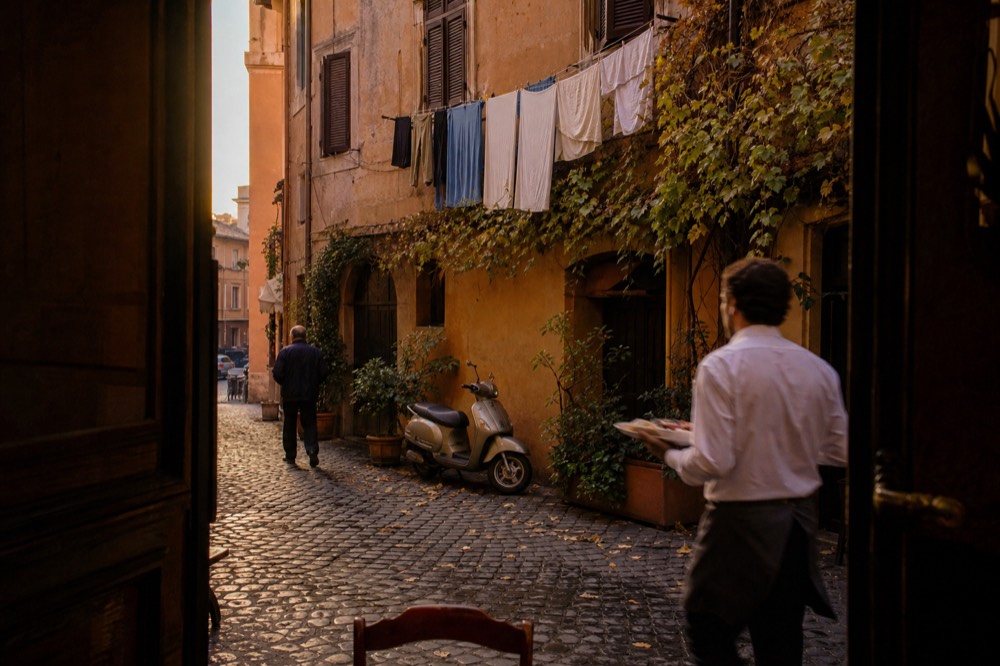
What Is The Best Restaurant In Monti, Rome?
Monti's best-known table is La Carbonara, an osteria trading on via Panisperna since 1906, but the honest answer is that Monti works as a cluster rather than a single destination. The quarter pairs one historic bookable room with wine bars, sandwich counters and one of the easiest fine-dining walk-ins in the centre. It is the neighbourhood where planning is optional.
La Carbonara takes reservations, closes Sundays by its own notice, and serves dinner from 19:00, in a small room that books up on its own; the quarter's size, a handful of lanes behind the Forum, is why. Around it sit the easy half. Zia Rosetta is a sandwich counter on via Urbana with no booking involved, open into the evening four days a week, and its own site gives the hours. Ai Tre Scalini is a wine bar that takes no bookings, small enough that a wait is common after work. Urbana 47 runs long hours from breakfast through dinner and books online through its own site, which in Monti counts as one of the easy ones.
That mix is the reason to pick Monti for a first evening: if the booked room fails, the counters do not. The same logic runs the whole street food in Rome spine, where a fried counter or a rosetta roll is always the fallback when a trattoria's line is too long. Monti simply concentrates more fallbacks per square metre than any quarter except Trastevere.
Testaccio: The Slaughterhouse Quarter That Runs On Lunch
Testaccio is Rome's kitchen quarter, built around a decommissioned slaughterhouse whose workers were once paid partly in butchery offcuts, and its cooking still follows that history. The neighbourhood eats at lunch, inside a market that closes at half past three, and its trattorias cook the quinto quarto canon. It books better than Trastevere and empties earlier than everywhere.
The market sets the clock. Nuovo Mercato Testaccio is open Monday to Saturday from 07:00 to 15:30 and closed Sunday, per its own official page, and everything inside it, including Mordi e Vai, the sandwich stall the whole market is famous for, lives inside that window. The market's own stall page admits there is often a bit of a line, and dated reports put the lunchtime queue between 12:00 and 13:30, with weekend waits of around forty minutes by half past two. Pizza al taglio at CasaManco, stall 22, is sold by weight, so you point at the size of the piece you want and it goes on the scale.
The trattorias around the square book, which makes Testaccio the organised alternative to Trastevere. Checchino dal 1887 wants at least six hours' notice through its own form, closes Mondays and Tuesdays, and publishes its own August closure dates. Da Felice a Testaccio books online and refuses cancellations by phone, email or social media, per a banner on its own site. Flavio al Velavevodetto books online or by telephone. Piatto Romano books online, closes Sundays, and prints its own summer closure dates on its homepage.
For travellers who want the quarter handed to them, the Testaccio market tour with pickup included runs from $77.81 per person (checked September 2026), rated 5 across 52 reviews, about 3.5 hours, visiting fourteen tastings across eight family-run eateries including the market. It meets by the Monumento ai Caduti di Testaccio statue closest to the Santa Maria Liberatrice church, and free cancellation is available.
| Testaccio venue | Signature | Booking rule | Constraint |
|---|---|---|---|
| Checchino dal 1887 | Rigatoni con la pajata | Own form, six hours' notice | Closes Mon and Tue, August dates |
| Da Felice a Testaccio | Cacio e pepe tossed at the table | Online, cancellations online only | Open every day |
| Flavio al Velavevodetto | Tonnarelli cacio e pepe | Online or 06 5744194 | Fills at dinner |
| Piatto Romano | Offal canon | Online | Closed Sunday, summer dates |
| Mordi e Vai | Panino col bollito | None, market stall | Lunch only, queue at peak |
| Nuovo Mercato Testaccio | CasaManco, stall 22 | None | 07:00 to 15:30, closed Sunday |
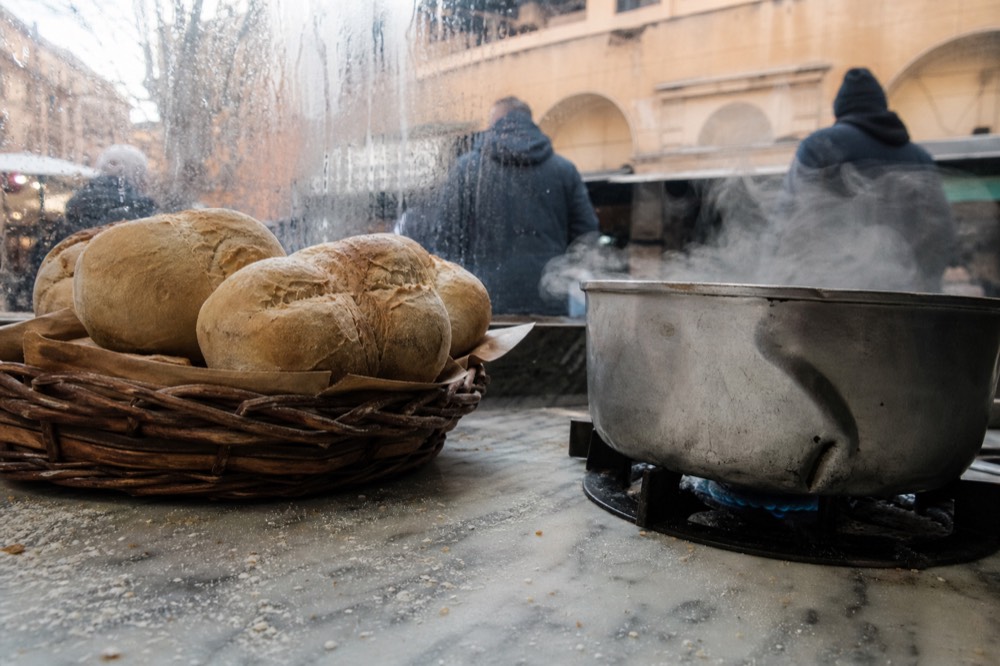
Prati: Pizza, Delis And The Quiet Vatican Side
Prati is the residential grid behind the Vatican, and it is the quarter where Roman eating is easiest: pizzerias that take telephone bookings, a covered market with late eating hours, and counters with no queue story attached. It trades Trastevere's atmosphere for shorter lines, and on a Vatican day that trade is worth making.
The pizzeria anchor is Emma, in the Campo de' Fiori camp rather than Prati itself, but Prati's own anchors are Pizzarium and Panificio Bonci. Pizzarium is the pizza al taglio counter with no seats, no bookings, and a dated report of ninety people waiting; pizza is cut, weighed and priced by weight, one customer at a time. The bakery half of the Bonci operation has no queue story and closes Sundays. L'Arcangelo books by telephone or online, closes Sundays, and publishes its own August closure dates.
The market is the quarter's quiet weapon. Mercato Trionfale, via Andrea Doria in Prati, keeps two separate sets of hours on its own official page: the produce stalls shut at 14:00 most days and 19:00 on Friday, but the eating stalls run to 23:00 from Tuesday to Saturday, and the whole market closes Sunday. Around 275 activities trade there, per the market's own site. A market-led tour covers it: the Trionfale market food tour runs from $105.19 per person (checked September 2026), rated 5 across 511 reviews, about four hours, built around a visit to the covered market, meeting at La Nicchia Cafè on Via Cipro, with free cancellation available.
Centro Storico And The Pantheon: The Hardest Tables In Rome
The streets around the Pantheon hold the highest-friction dining in the city, not because the rooms are the best but because the booking mechanisms are the tightest. Armando al Pantheon releases its tables online only, thirty days ahead, with a new day opening every night at midnight. Roscioli takes online bookings only with a card guarantee, and an hour or more on the pavement without one.
Armando al Pantheon is the clearest case in Rome of a table that is hard by mechanism. Bookings are online only, email is refused outright, the book runs thirty days and a new day is released at midnight, so the queue for a table happens on a website at 00:00 rather than on the pavement at 19:00. It closes Saturday evening and Sunday and will not seat a dinner party above six, per its own site, which also gives lunch from 12:30 to 15:00 and dinner from 18:00 on weekdays.
The same streets hold the easiest tables in the centre. Sant'Eustachio Il Caffè is open every day of the year except two, per its own channels, and has never taken a booking. Tazza d'Oro is a standing bar a step from the Pantheon. Giolitti is the busiest gelato counter in the centre and still just a counter (see Giolitti Verdict). The star rooms sit on top: Il Pagliaccio, two stars, books with a card and charges per person for a no-show or a late cancellation, closing Sunday and Monday. Pipero books online and closes Sunday. La Pergola is the comparison point for the starred tier, dinner only, five nights a week, with a card held against the table and free cancellation up to 72 hours before.
| Centro venue | Type | Bookings | Difficulty |
|---|---|---|---|
| Armando al Pantheon | Trattoria since 1961 | Online only, 30-day book, midnight release | 5 of 5 |
| Roscioli | Salumeria con cucina | Online only, card guarantee | 4 of 5, queue without one |
| Il Pagliaccio | Fine dining, 2 stars | Online, card validated, no-show charge | 5 of 5 |
| Sant'Eustachio | Coffee bar | None | 1 of 5, open all year but two days |
| Giolitti | Gelateria since 1900 | None | 1 of 5 |
| Tazza d'Oro | Coffee bar | None | 1 of 5 |
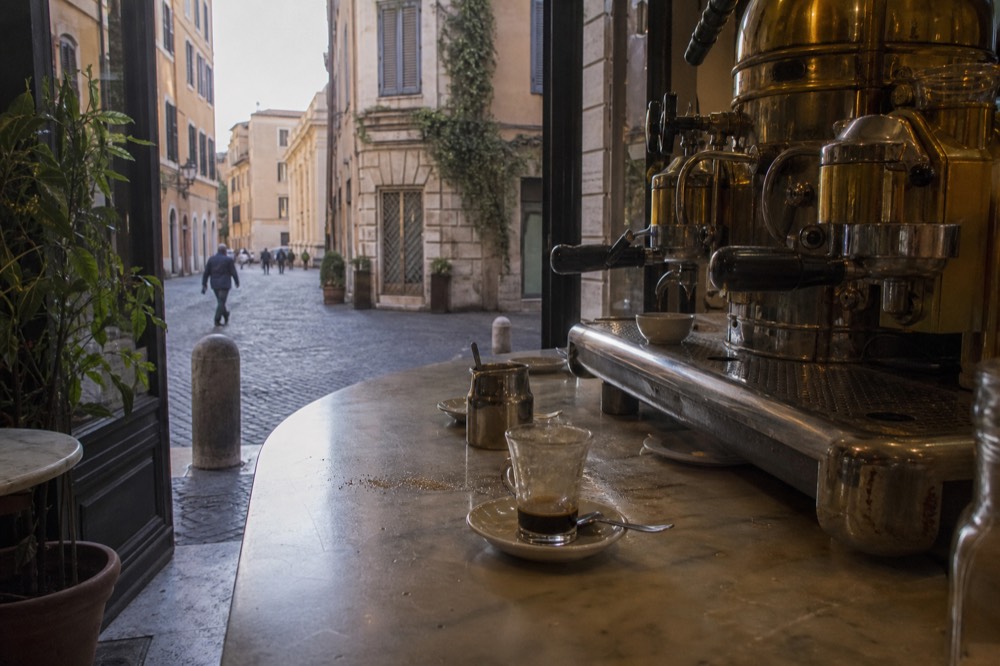
Campo De' Fiori: Bakery Mornings, One Famous Kitchen
Campo de' Fiori is a morning market square with two food identities: the bakery counters that open with the market, and Roscioli, the salumeria con cucina that anchors the evening. The market itself is free to walk through and increasingly souvenir-led. The eating worth planning for is the bakery and the bookable rooms around the square's edges.
Forno Campo de' Fiori sells pizza rossa and pizza bianca by weight, no reservations, and the queue discipline is your own job: there is no numbered ticketing, so keep track of your place in line or a regular will take it, as one dated report puts it. Antico Forno Roscioli is the walk-in bakery half of the family business, with pizza cut and weighed at the counter. Hosteria Grappolo d'Oro, a Bib Gourmand a minute from the square, takes reservations and books out for exactly that reason. Emma Pizzeria prefers the telephone, and its own site states plainly that it will not process booking requests made at the weekend or for the same day, and that email requests count only once confirmed.
The trap pattern concentrates here at night and near the porticoed edges, with picture menus and door touts. It is a pattern of streets and signals, never a named business, and two lanes off the square in any direction changes the menu back to Italian. The market's own hours are not officially posted anywhere, so treat the morning stretch as the reliable window rather than any clock time.
Is It Worth Visiting The Jewish Ghetto In Rome?
Yes, and not only for the food: the Ghetto is four lanes of the oldest continuous Jewish community in Europe, and its kitchens invented a style of Roman cooking the rest of the city adopted. Carciofo alla giudia, the twice-fried artichoke, is the signature, and the quarter's tables are small, bookable and quieter than Trastevere's.
The quarter runs on a handful of rooms. Nonna Betta books by telephone on 06 68806263 and closes Tuesdays. Pasticceria Boccione is the kosher bakery with the burnt-top ricotta and sour-cherry tart: no reservations exist, there is always a line, it is cash only, closed Saturdays for Shabbat, and the stock runs out, Sundays first. The Ghetto's own counters and the Trastevere ones across the river are covered together in the Roman street food guide, because the two banks eat the same fried things.
One practical fact saves a search: there is no standalone Ghetto food tour on the market at all. The Ghetto appears as a leg of the Trastevere walks, which is the design of the Trastevere and Jewish Ghetto street food walk: from $52.26 per person (checked September 2026), rated 4.8 across 168 reviews, running two to two and a half hours, private, with three or five street-food tastings depending on the option and drinks on the premium options. It meets at Piazza Benedetto Cairoli, varies by option, pickup is available, and free cancellation applies.
What Is Jewish Roman Food?
Jewish Roman food is the cuisine of a community locked into four lanes for three centuries, which forced a cooking style built on fried vegetables, off-cuts and no mixing of meat with dairy. Its signatures are the twice-fried artichoke, fried salt cod fillets and the tart of ricotta with sour cherries. Several of its dishes, including the fried vegetables, moved outward into Roman trattorias generally.
The style is older than the quarter's most famous dishes. Deep frying in oil is the technique that defines it: carciofo alla giudia is a whole artichoke flattened and fried twice, and the technique applies to zucchini flowers, to baccalà and to whatever the market held. The kosher rules shaped the rest, splitting the cooking between meat days and dairy days and pushing pastry in the dairy direction, which is where the ricotta tarts live.
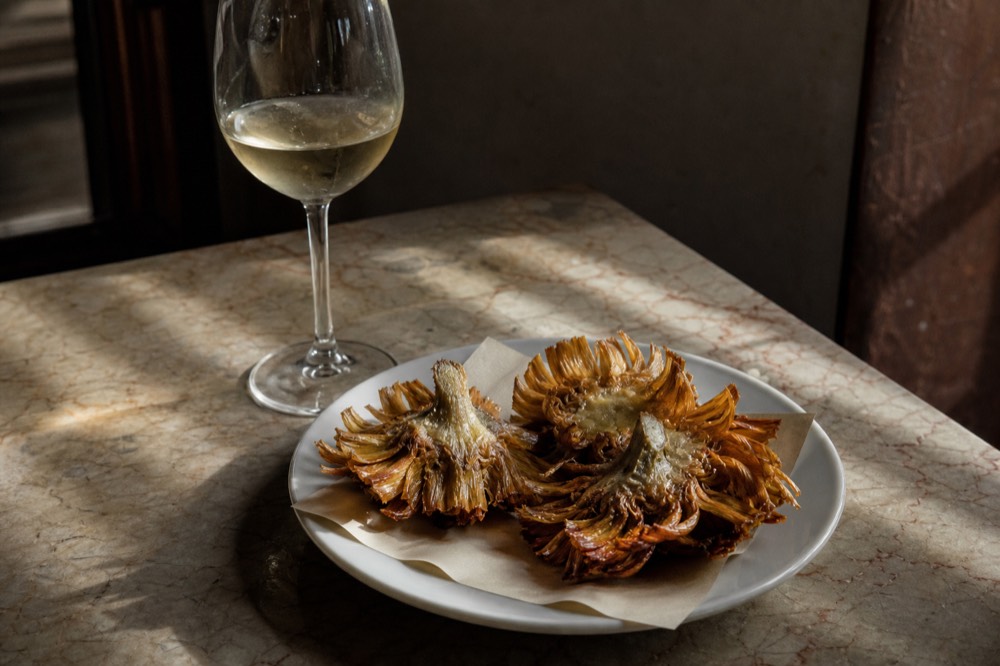
The Ghetto tables are small and the bakery sells out, so lunch is the safer slot. Book Nonna Betta by telephone for dinner, arrive at Boccione before the afternoon, and accept that Saturday is closed for Shabbat. It is a quarter where two venues and a bakery are the whole plan, and both plans work.
San Lorenzo And Ostiense: Where The Queues Thin Out
San Lorenzo and Ostiense are the student and industrial quarters east and south of the centre, and they hold the trattorias and food halls that Romans actually keep for themselves. Pommidoro has grilled meat over embers in a room kept since 1890, Tram Tram expects you to have called, and Ostiense adds Eataly's four floors and Trattoria Pennestri's Bib Gourmand. Neither quarter has a picture menu in it.
San Lorenzo's two anchors both book. Pommidoro books through its own site or by telephone on 06 4452692 and closes Sundays. Tram Tram takes reservations and closes Mondays. Neither has a queue story attached to it, which in this city is the whole point. Ostiense runs the same logic at a bigger scale: Eataly Roma Ostiense is four floors of counters by Ostiense station where there is always a seat somewhere, and its restaurants take bookings online or by telephone. Trattoria Pennestri takes reservations, closes Mondays, runs dinner only for half the week, and holds a Bib Gourmand that keeps the room full.
What Is The Coolest Neighborhood In Rome?
Cool depends on the hour. Trastevere owns the evening and the postcard, Testaccio owns the lunch table and the food credibility, Monti owns the aperitivo and the design shops, and Ostiense owns the late night. If cool means where Romans themselves eat when the centre is full, the answer is Testaccio for lunch and Ostiense for dinner.
The pattern behind the ranking is age. The cool quarters are the ones that were unfashionable twenty years ago, which is why their trattorias kept their prices, their regulars and their closing days. Trastevere crossed over first and pays for it with crowds. Testaccio and San Lorenzo are mid-crossing. Ostiense has not finished crossing yet, which is why a food hall and a Bib Gourmand sit next to rail yards.
| If you want | Pick this quarter | The plan |
|---|---|---|
| The classic Roman evening | Trastevere | Queue at Da Enzo or Tonnarello before 19:00, or book Glass Hostaria |
| The food-credible lunch | Testaccio | Market by 12:30, then a booked trattoria |
| No planning at all | Monti or Prati | Counters and pizzerias, telephone bookings only where needed |
| The hardest famous tables | Centro Storico | Armando at midnight, Roscioli with a card |
| Fried artichoke | Jewish Ghetto | Nonna Betta by phone, Boccione early |
| Where Romans eat | San Lorenzo or Ostiense | Book Pommidoro or Pennestri |
The mechanism, not the food, is what separates these quarters from each other. Every neighbourhood above cooks the same four pastas and fries the same things, and the what to eat in Rome spine covers the dishes themselves. What changes street by street is whether you queue, telephone, set an alarm for midnight or simply point at a tray.
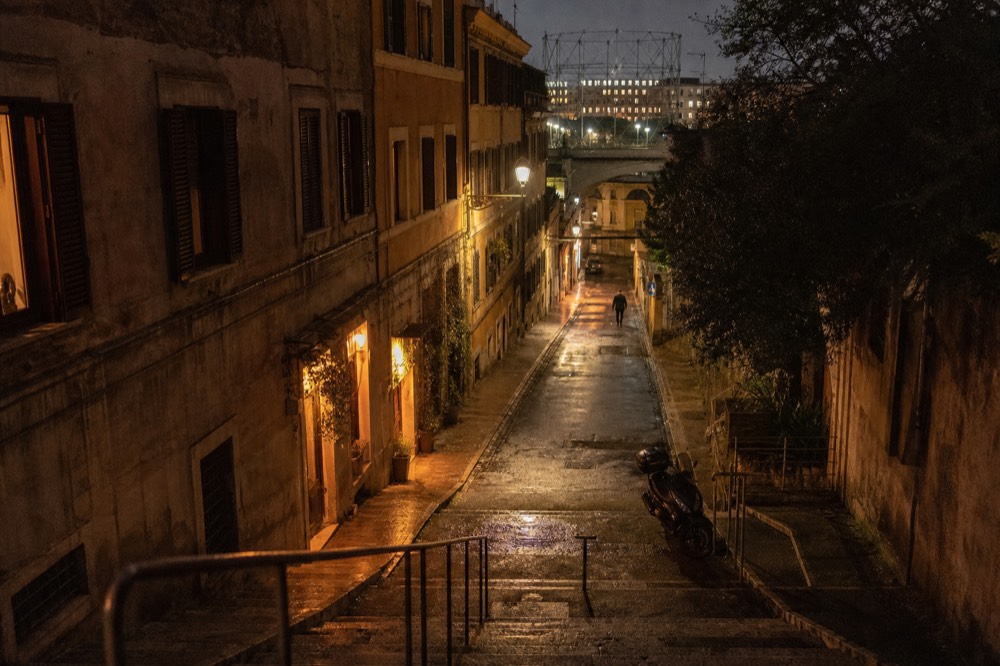
These are the questions travellers ask most before picking a Roman quarter to eat in, and the answers below restate the mechanics this guide runs on: which neighbourhoods book, which ones queue, and which one holds the fried artichoke. Each answer stands alone, so a reader landing on any one of them gets the full plan without scrolling back through the neighbourhood sections above.
Common Questions About Neighbourhood Dining In Rome
What Is The Best Neighborhood In Rome For Food?
No single quarter wins. Trastevere has the deepest bench of Roman trattorias but takes almost no bookings, Testaccio owns lunch and the offal canon, and the Centro Storico holds the hardest tables. Pick the quarter that matches whether you queue, book weeks out or walk in.
What Is The Best Restaurant In Monti, Rome?
La Carbonara, an osteria on via Panisperna since 1906, is Monti's best-known table and takes reservations. Around it the quarter works as a cluster: the Zia Rosetta sandwich counter, the Ai Tre Scalini wine bar and Urbana 47's long hours make Monti the neighbourhood where planning is optional.
Is Trastevere Good For Restaurants?
Yes, it is the strongest single cluster in the city. The catch is the mechanism: Da Enzo al 29 and Tonnarello, the two most famous rooms, take no bookings at all, and the queues are part of the deal. The quarter's counters, bakeries and gelaterie balance them out.
Why Is Trastevere So Famous?
It is the one Roman quarter where the medieval street fabric survived intact, and the evening street life inside it became the image the whole city sells. The fame doubled the crowds, which is why the queue-first trattorias matter more than the postcard squares.
Is It Worth Visiting The Jewish Ghetto In Rome?
Yes. It is four lanes of the oldest continuous Jewish community in Europe, its kitchens invented carciofo alla giudia, and its tables are small, bookable and quieter than Trastevere's. Book Nonna Betta by telephone and go to Boccione early, remembering it closes Saturdays.
What Is Jewish Roman Food?
The cuisine of a community locked into a small quarter for centuries, built on fried vegetables, off-cuts and the kosher split between meat and dairy. Its signatures are the twice-fried artichoke, fried baccalà and the ricotta and sour-cherry tart, and its fried dishes moved outward into Roman cooking generally.
What Is The Coolest Neighborhood In Rome?
By the hour: Trastevere owns the evening, Testaccio owns the lunch table, Monti owns aperitivo and Ostiense owns the late night. If cool means where Romans themselves eat when the centre is full, the answer is Testaccio for lunch and Ostiense for dinner.