Is Giolitti The Best Gelato In Rome?
A named-venue verdict on Giolitti: what it does well, what the ticket-then-queue system costs you, and which gelaterie a Roman would name instead.
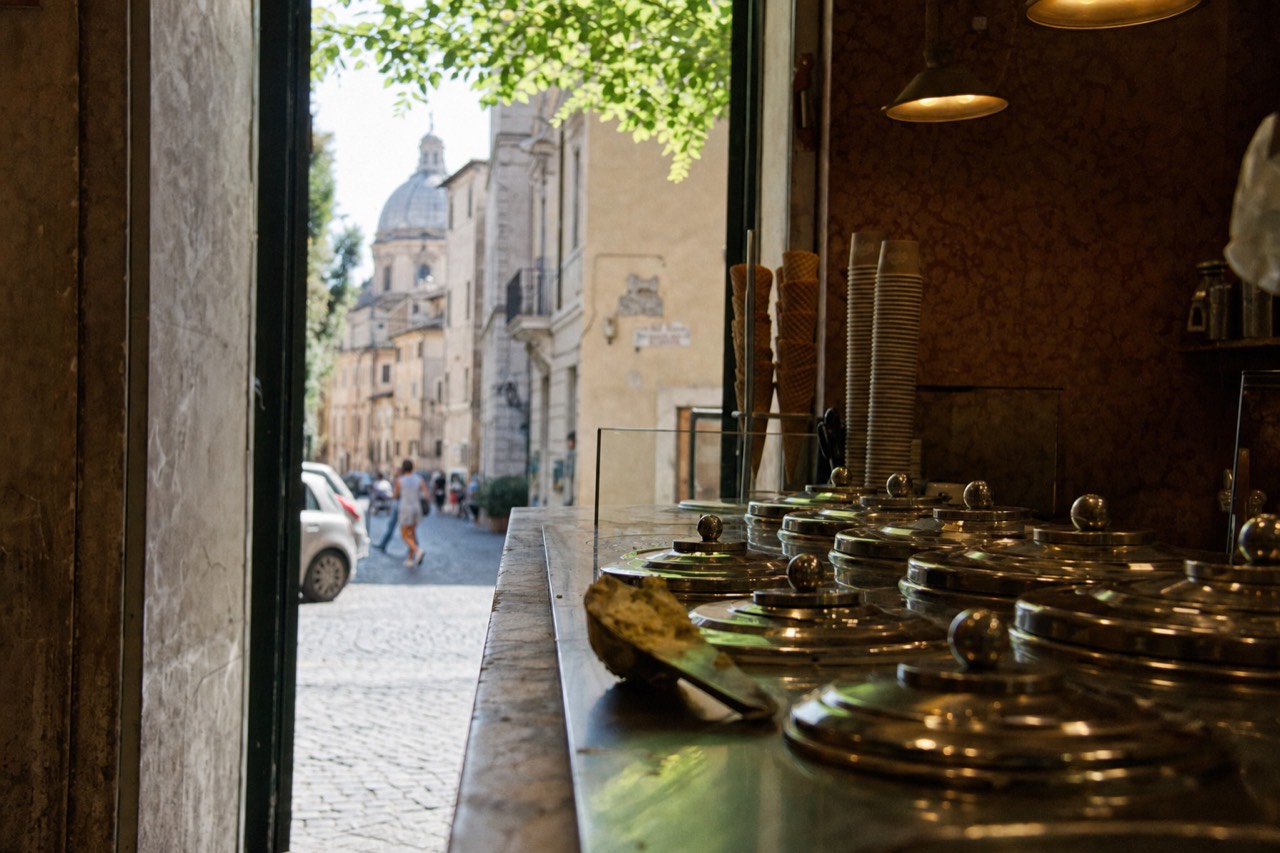
Giolitti is a gelateria and pasticceria near Montecitorio whose counter has been working since 1900, making it the oldest name on Rome's gelato scene and one of the busiest counters in the centre. It is the venue every visitor has heard of before landing, which is precisely why the question deserves a real answer rather than a reflex.
Giolitti is very good at what it does, and what it does is broad rather than artisanal: dozens of flavours, a ticket-then-queue system, a room full of seated families, and opening hours that run late into the evening. Romans with a specific favourite elsewhere still take visiting relatives here, because it delivers the occasion as much as the gelato. Whether it is the best in the city depends on what you are measuring.
The honest framing matters, because "best" collapses two different questions into one. The first is quality of the gelato itself. The second is the experience of getting it, and at Giolitti that experience has a rhythm of its own: you pay at the till first, take the receipt to the counter, and wait your turn among tourists and locals alike. Nothing about that is a hardship in the way a restaurant reservation war is a hardship. Gelaterie as a category are the lowest-friction eating in Rome, and this page says so plainly rather than manufacturing drama around a queue for ice cream.
For travellers who want the gelato experience folded into a wider eating outing, there are tours that do exactly that. The three below all include gelato among their stops or their subjects.
A full rundown of every worthwhile gelateria in the city, including the spot-it-fresh rules of thumb, lives in the Rome gelato guide, and the wider context of Roman street eating is in the street food guide. This page stays on one question: does the most famous name win?
What Is Giolitti Actually Known For?
Giolitti is known for longevity, scale and range: a counter working since 1900 near Montecitorio, an enormous flavour list that runs from the Roman classics to house inventions, and a seated room alongside the standing bar, with service late into the evening. It is also known for its system: you buy a ticket at the till, then take it to the counter to order. The combination makes it an occasion venue rather than a quick-stop counter.
The till-first system is the thing that most often catches first-time visitors out, and it is worth understanding before you go. Nothing is paid at the gelato case itself. You decide roughly what you want, or ask at the till, pay there, and then join the counter queue with your receipt. At busy hours this separates the payment bottleneck from the scooping bottleneck, which is why the line at the case moves faster than it looks like it will. Anyone who has stood in a single fused queue elsewhere will recognise the logic.
The range is the real differentiator against Rome's smaller artisanal shops. A specialist gelateria with a dozen rotating flavours will beat almost anyone on freshness and focus. Giolitti instead runs a deep list that has to satisfy a century of regulars, tourists who want pistachio and stracciatella, and children who want three colours in one cup. That breadth is a genuine strength, and it is also the honest ceiling on the place: a kitchen producing that many flavours every day is producing excellent industrial-scale gelato, not a small-batch experiment.
What the venue's own history page establishes is the 1900 origin and the Montecitorio location, and Giolitti's own site is the source to check for anything about the room and the service. It takes no bookings and never has; the site's record and every guide agree on that. On the site's friction scale this is a 1 out of 5 (checked September 2026): walk in, queue briefly, be served. That is worth stating plainly, because a lot of Rome content likes to turn every line into a survival story, and a gelato queue is not one.
The comparison with the rest of the gelato field looks like this:
| Gelateria | Known for | Neighbourhood | What the queue is like |
|---|---|---|---|
| Giolitti | Counter working since 1900, enormous flavour list, seated room | Centro Storico, near Montecitorio | Ticket first, then a counter line that moves steadily; busy at evening peak |
| Otaleg | Cioccolato 88 and a rotating seasonal board | Trastevere | Short counter wait, open to midnight and later on weekends |
| Gelateria dei Gracchi | Pistachio from Bronte and single-origin flavours | Prati | Brief, a neighbourhood pace |
| Gelateria del Teatro | Herb-and-fruit flavours such as sage and raspberry | Centro Storico, via dei Coronari | Short, with a window onto the kitchen |
| Palazzo del Freddo Giovanni Fassi | The old house gelato in a vast 1928 tiled hall | Esquilino | Room to absorb crowds; queues are rare even at peak |
Giolitti's record carries no August closure and no cash-only flag, and it is one of the few centre venues where the seating genuinely helps families with children. If that is your situation, the case for Giolitti strengthens considerably, and no smaller specialist can compete with it on that axis.
Is a class the better way to spend a gelato-hungry evening? For visitors who would rather make the dessert than queue for it, there is a three-hour class built around exactly that pairing.
The class runs from $41.33 per person (checked September 2026), which is the lowest entry price on the site's Rome class roster, with free cancellation available. Bookings are handled through the operator's live listing.
How Do You Spot Real Artisanal Gelato In Rome?
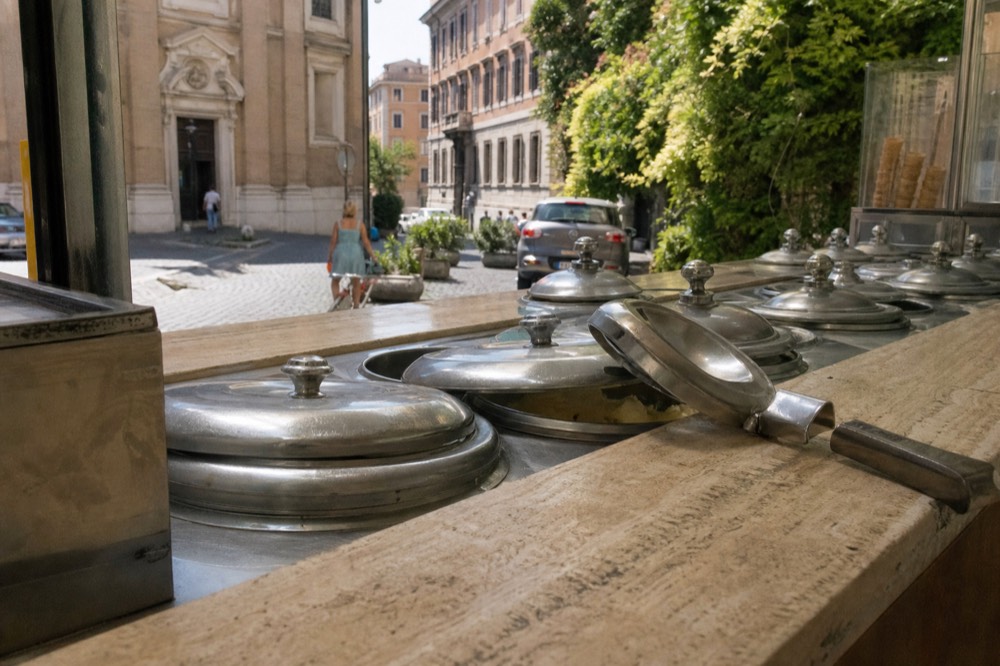
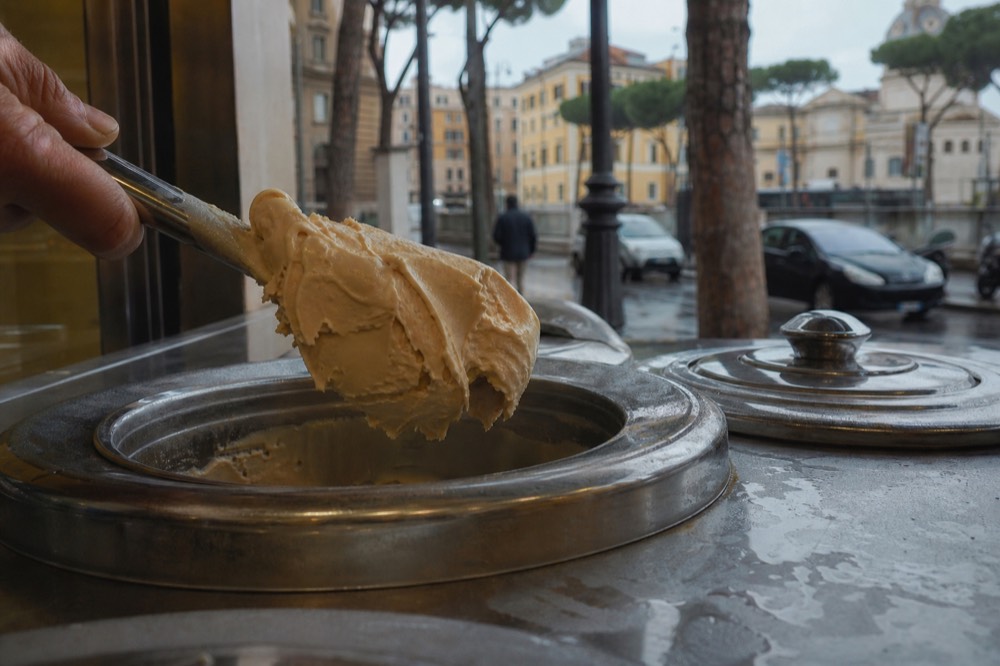
The reliable tells are visual: artisanal gelato sits flat in covered metal tins, pistachio reads as a dull khaki rather than bright green, banana is greyish-white rather than yellow, and flavours that change with the season replace a permanent list. Mounded, fluorescent tubs are made for display and stabilised for it, not churned that morning. No single tell is proof, but together they separate shops that make gelato from shops that resell it.
These rules apply to every counter in the city, Giolitti included, and they are the honest instrument for answering this page's question. A gelateria that keeps a short seasonal board, stores its product in covered pozzetti, and closes when the batch runs out is optimising for freshness. A gelateria with fifty flavours held at a constant texture all evening is optimising for volume, and volume is not a sin, it is a choice with a flavour cost.
| Signal at the counter | What it suggests | Why it matters |
|---|---|---|
| Gelato flat in covered metal tins | Small-batch production | Covered tins keep temperature stable and hide nothing |
| Pistachio a dull khaki | Real pistachio, no colouring | Vivid green is a colouring job, not a nut |
| Banana greyish-white | Real fruit base | Yellow banana is dye |
| Flavours that rotate with the season | A kitchen working with market produce | A permanent fifty-flavour list needs stabilisers to survive |
| Tall mounded tubs, bright colours | Product built for display | Air and stabiliser, churned for the window not the palate |
The point of learning these tells is not to disqualify the famous names. It is to calibrate. Once you can read a gelato case, you can walk into any counter in Rome, including Giolitti's, and know within seconds what category of product you are buying. That knowledge travels better than any single recommendation, because gelaterie open and close and change owners, while the physics of the display case stays the same.
For travellers who would rather have someone else lead the case-reading, the short street-food walks include gelato stops alongside pizza and supplì, so the tuition arrives with the tastings.
That 2.5-hour small-group walk covers street-food tastings including pizza, supplì and gelato, from $48.37 per person (checked September 2026), rated 4.9 across 4,191 reviews, with free cancellation and a meeting point at Fontana Piazza San Simeone.
Which Gelaterie Do Romans Name Instead Of Giolitti?
The names that come up in Roman conversations about gelato are Otaleg in Trastevere for its chocolate and seasonal board, Gelateria dei Gracchi in Prati for Bronte pistachio, Gelateria del Teatro near via dei Coronari for herb-and-fruit flavours, and Fassi in Esquilino for the scale and the 1928 hall. None of them is a coronation either. Each is a specialist doing one thing extremely well, where Giolitti is a generalist doing everything at once.
Otaleg is the Trastevere entry, open Sunday to Thursday from noon to midnight and until one in the morning on Friday and Saturday, which makes it the late-night option in a neighbourhood that stays up. Its cioccolato 88 is the flavour people cross the river for. Gelateria dei Gracchi in Prati is the pistachio specialist, using Bronte nuts, and it sits close enough to the Vatican corridors to be the locals' answer in that quarter. Gelateria del Teatro works herb-and-fruit combinations, sage and raspberry among them, with a window onto the kitchen so you can watch the base being made. Fassi, the Palazzo del Freddo in Esquilino, has been serving house gelato from a vast tiled hall since 1928, and the sheer size of the room means the queue never becomes the event.
The pattern in that list is the actual answer to this page's question. Romans do not name one best gelateria, because gelato in Rome is a high-floor category. Twenty-nine of the sixty best-known Roman tables and counters need no booking at all, and every gelateria is among them; the differences between the top gelato counters are matters of emphasis, not of quality tiers. Giolitti's claim to fame is not that it beats these shops on the spoon, it is that it has been doing the full occasion since 1900 and can seat your grandmother while it does so.
That said, some structure helps a visitor decide, and the honest differentiators are these:
| If you want | The Rome answer | The trade-off |
|---|---|---|
| The historic occasion, seated | Giolitti | A centre location and a busier counter |
| The latest possible scoop on a weekend | Otaleg, to 01:00 Friday and Saturday | Trastevere evening crowds |
| Pistachio as the whole point | Gelateria dei Gracchi | A detour to Prati |
| Watching the base being made | Gelateria del Teatro | A small list, so choose it for the method |
| Space, children and 1928 grandeur | Fassi | Esquilino, away from the centre sights |
Every one of these venues walks in without a booking, which is the real secret of the category. On a Rome trip packed with midnight-released reservation books and card-guaranteed tasting menus, the gelato leg is the one where you simply go. The neighbourhood dining guide covers how these quarters differ, if the gelato decision is doubling as your evening plan.
Is Giolitti Worth The Queue?
Yes, on its own terms: the queue is short by Rome standards, the ticket system keeps it moving, and the venue scores 1 on this site's friction scale, meaning you walk in and are served without planning. The question is really about timing, not difficulty. Go at an off-peak hour, mid-afternoon or before the evening rush, and the wait barely registers. Go at nine on a summer evening and you will stand behind every family in the centre.
It helps to be precise about what a gelateria queue is, because Rome content has a habit of dramatising it. The queues that actually cost time in this city belong to restaurants that take no bookings and rooms whose reservation books open weeks ahead. A gelato line is minutes, not evenings. No duration is printed here because none is sourced, and none is needed: the category is the easiest eating in Rome and should be described that way.
Giolitti's ticket system deserves a practical note rather than a warning. The till and the case are the two steps, and knowing the sequence removes the only real confusion. Decide your format, cup or cone, large or small, pay at the till, then order at the counter. Staff handle hundreds of first-time visitors a day and the machine is built for them. Anyone who prefers a self-service rhythm can find it at the food-hall counters instead, where gelato sits alongside everything else.
The verdict, then, is a measured one. If the historic room and the century of operation are part of what you want from Rome, Giolitti delivers them, and the gelato is good. If what you want is the single best scoop of the day and nothing else attached, the specialists above compete on the spoon and often win on the walk there. Both answers can be true, and this page is not going to pretend otherwise.
One way to fold the gelato decision into a structured evening is a class that ends with the dessert you made yourself, which also answers the question from the opposite direction (see Cooking Class Decision).
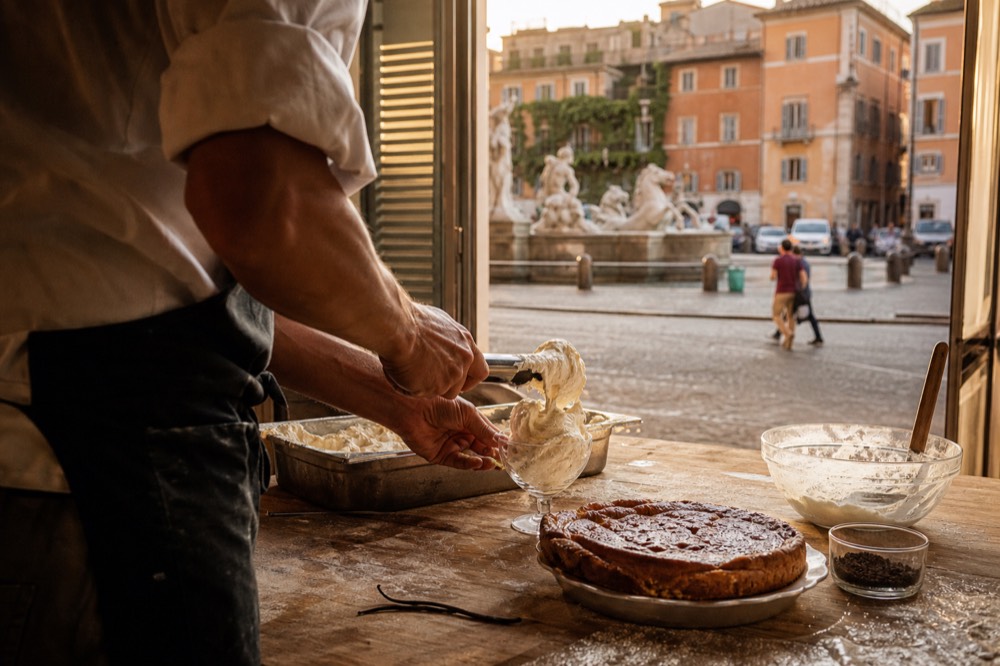
Can You Make Gelato And Pizza Yourself In Rome?
A class is the alternative that turns the gelato question into a making question, and the cheapest class on the roster is the three-hour small-group class pairing pizza with tiramisu or gelato, with wine flowing through it. From $41.33 per person (checked September 2026), rated 5 across 1,501 reviews, with free cancellation, it covers more ground than any counter visit and costs less than several of the longer tours.
The class pairs a pizza you make and eat with tiramisu or gelato, with flowing wine alongside, and it runs about three hours in a small-group format. For travellers weighing it against an evening walking between counters, the honest comparison is this: the class does not show you Rome's gelato scene, it shows you how the dessert is constructed, and a visitor who has done both usually reads every gelato case better afterwards.
For a longer format with the same subjects, a related class runs from $56.62 per person (checked September 2026), about three hours, standard group, where the choice is pizza or pasta made in class with gelato or sorbet and unlimited wine, meeting at Via Quattro Novembre 139. And the street-food walk profiled earlier remains the option for visitors who want Rome's existing counters rather than its kitchens. All three appear again at the end of this page for a final comparison.
A note on planning: none of these classes requires the kind of lead time the city's restaurants do. Free cancellation is available on every one of them, and the gelato counters themselves require nothing but arrival. The contrast with a midnight-released booking book is the structural reason this whole page is calmer than the restaurant pages on Best Restaurants in Rome: the dessert half of Roman eating is simply easier than the dinner half.
That difference is also why the site's verdict on Giolitti resists both a coronation and a takedown. The venue has survived since 1900 in a category where the floor is high and the ceiling is contested, and its real competitors are not failing on any axis a visitor would notice. The decision between them is a matter of emphasis: occasion versus focus, breadth versus seasonal depth, a seated room versus a walk-in counter two streets from your hotel.
The short answers: Giolitti wins on occasion and history, the specialists win on focus, the queue is a two-step system that moves quickly, and no gelateria in Rome needs a booking. The questions below cover how the queue works, what to order, how to read a gelato case, and which counters stay open latest.
Common Questions About Giolitti And Gelato In Rome
Is Giolitti The Best Gelato In Rome?
It is the best at the full occasion: a counter working since 1900, a huge flavour list, a seated room and late hours. On the spoon alone, specialists like Otaleg, Gelateria dei Gracchi, Gelateria del Teatro and Fassi compete with it and often win on focus. Rome's gelato category is a high-floor one, so the honest answer is a comparison rather than a coronation.
How Does The Queue At Giolitti Work?
You pay at the till first, take the receipt to the gelato case, and order there. The two-step system keeps the counter line moving. Peak is the summer evening; mid-afternoon is far quieter. No booking exists or is needed.
Does Giolitti Take Reservations?
No. It is a walk-in gelateria and pasticceria with a standing bar and a seated room, and no booking channel exists on any of its channels. This is typical: gelaterie are the lowest-friction eating category in Rome.
What Should I Order At Giolitti?
The house list is deep, so the Roman move is to ask what was churned that day rather than default to the most photographed flavour. If pistachio is the test, order it and judge the colour as well as the taste: a dull khaki is the honest signal of real nut.
What Are The Signs Of Artisanal Gelato In Rome?
Gelato stored flat in covered metal tins, pistachio in dull khaki rather than bright green, greyish-white banana, and a short seasonal list. Tall, brightly coloured mounds are built for display and stabilised for it.
Which Gelaterie Stay Open Latest In Rome?
Otaleg in Trastevere serves to midnight Sunday to Thursday and to one in the morning on Friday and Saturday. Giolitti's centre hours run late into the evening as well. Late-night gelato is one category Rome does not make you plan for.
For a final side-by-side, the three tours and classes that fold gelato into a wider evening:
The short answer to this page's question, one last time: go to Giolitti for the century and the room, go to the specialists for the single best scoop, and do not agonise over either, because the gelato half of Rome asks less planning of you than any other meal in the city.