How To Find The Best Gelato In Rome
The best gelato in Rome is not a matter of brand loyalty. It is a matter of reading the counter: covered metal tins, muted colour and a short list of seasonal flavours separate the shops that churn their own base from the ones that buy it in.
Short answer
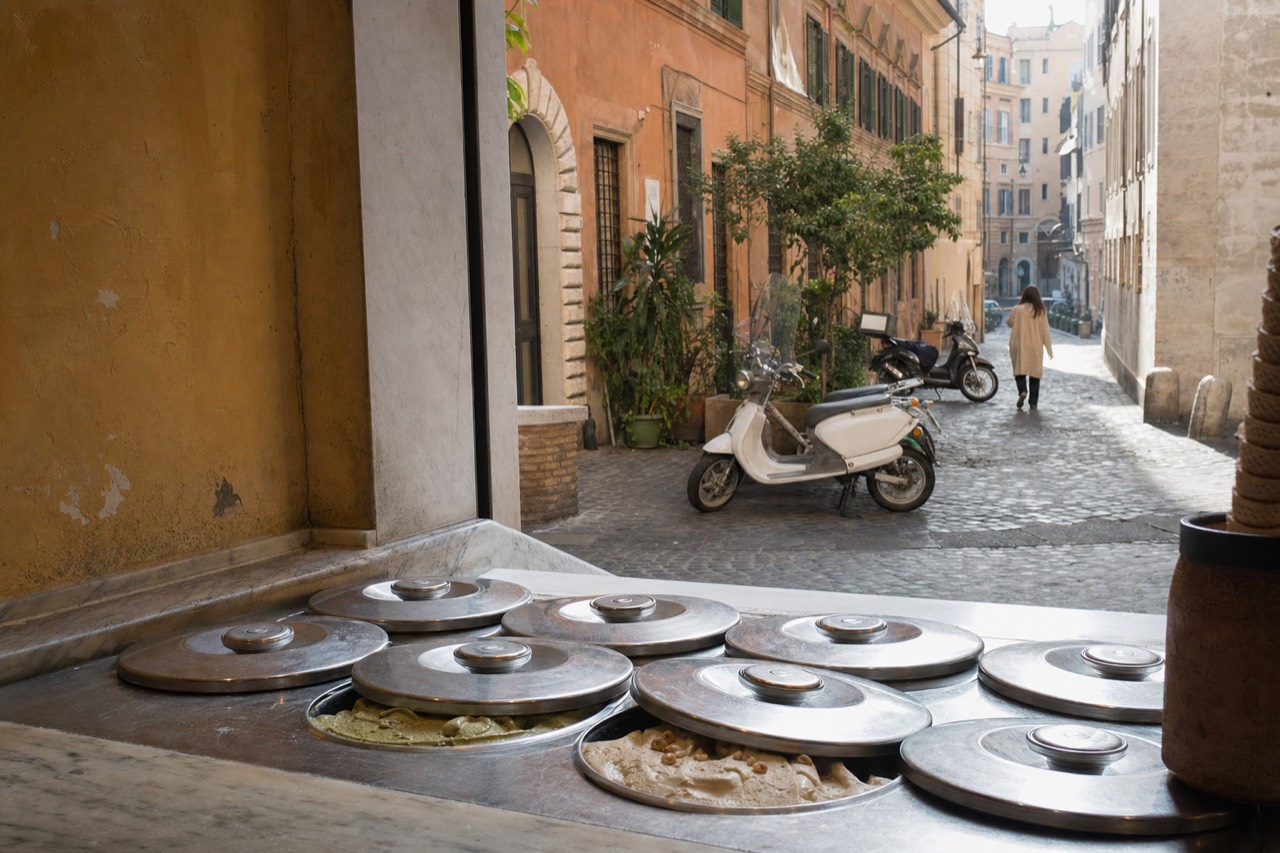
Real Roman gelato sits flat in covered metal tins, its pistachio is a dull khaki and its fruit list is short and seasonal. Giolitti has traded near the Pantheon since 1900 and Fassi since 1928. Every gelateria on this page is a walk-in: no booking, no closing-day trap, no queue worth planning around.
The best gelato in Rome is decided before you taste it. The counter tells you everything: gelato stored flat in covered metal tins, pistachio in a dull khaki rather than a bright green, banana greyish-white rather than yellow, and a short list of fruit flavours that changes with the season. Mounded tubs under fluorescent display lights are stabilised and aerated for the showcase, not churned that morning. This page sets out the reading method first, then names the gelaterie that pass it, neighbourhood by neighbourhood, so it works from wherever you happen to be standing.
Gelato is also the one corner of Roman eating with no friction at all. Every venue on this page takes no bookings, has no door policy and no cover charge to worry about. It is a useful counterweight to the rest of this site's argument, which is that Rome's famous tables are hard and its counters are easy. Gelato is the easiest of the counters. For the shape of that argument across the whole city, see the Rome neighbourhood dining guide.
How To Spot Real Gelato In Rome
The four tells are covered pozzetti tins or flat lids, muted natural colour, a short seasonal fruit list and a modest portion price scale rather than display engineering. A shop that passes all four is almost certainly churning its own base. A shop with piled fluorescent mountains, bright green pistachio and banana in February is selling an industrial product dressed as gelato.
The visual test comes first because it works from the street, before you commit to anything. Real pistachio, made from actual Bronte pistachios, is brownish-green. Real banana is grey. If the fruit case carries strawberry, melon and fig in the depths of winter, the flavours are coming from a tub of industrial base and paste, not from the produce of the season. Colour saturation is the single fastest signal: intensity in hue almost always means the flavour was built for the eye.
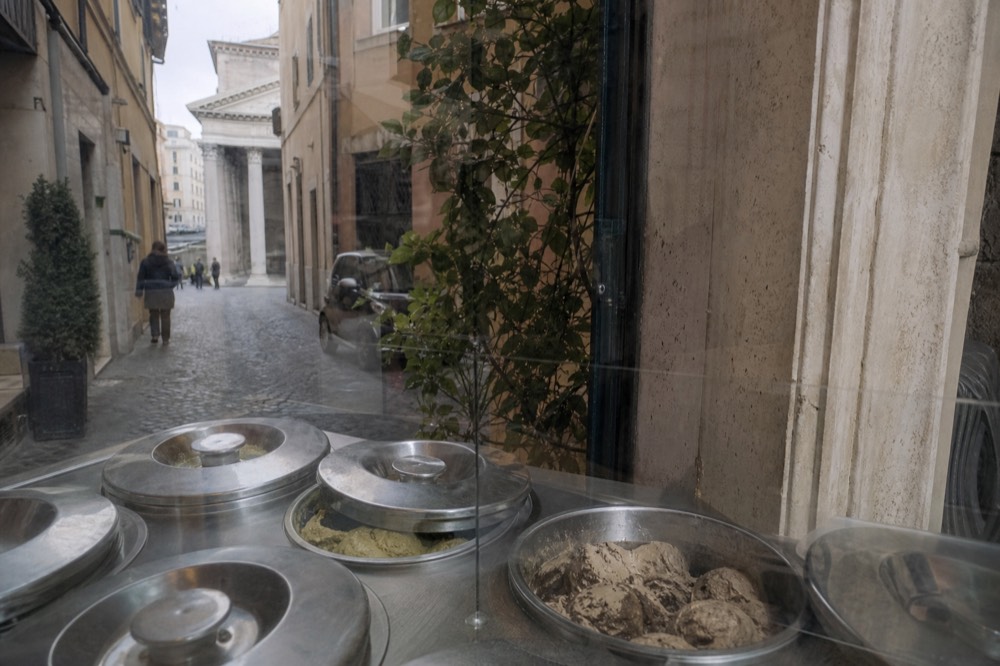
The storage test is the second. Traditional Roman gelaterie keep their product in pozzetti, covered cylindrical tins, or under flat stainless lids. The lid matters twice over: it keeps the temperature stable, and it removes the temptation to sculpt the gelato into display mounds. Whipped-up peaks exist to signal abundance, and the air that holds them up is air you are paying for by weight.
The list test is the third. A serious gelateria offers maybe a dozen flavours, and the fruit half of the board rotates. If the board carries thirty flavours in identical pyramid form, nothing is seasonal and nothing is small-batch. The honest size of a Roman gelateria's board is a strength, not a limitation: it means the base is churned often rather than held.
| Signal on the counter | What it usually means | What it rules out |
|---|---|---|
| Covered metal tins or flat lids | Small-batch churn, temperature control | Display-driven, over-aerated product |
| Dull khaki pistachio | Real nuts, no colouring | Paste-based industrial pistachio |
| Grey-white banana | Real fruit | Artificial flavouring |
| Short seasonal fruit list | Base churned for the current market | Long static boards held in storage |
| Fruit out of season on the board | Bought-in paste and base | A kitchen cooking with the market |
One further mechanic worth knowing: Rome's gelaterie, like its pizza al taglio counters, price simply and post the list (see Best Pizza In Rome). There is no cover charge and no service element in a gelateria, so the price you see by the till is the whole transaction. And sitting on the Spanish Steps or a fountain edge with your cone is not allowed under the city's public-order regulation, which prohibits sitting, including while eating, on monuments, fountains and their steps. Eat it walking.
What Is The Most Famous Gelato In Rome?
Giolitti, trading near the Pantheon since 1900, is the most famous gelato in Rome, and it still serves from a walk-in counter with no reservation system and no door policy. Fassi's Palazzo del Freddo in Esquilino runs a 1928 hall. Otaleg in Trastevere is the modern artisanal name. All three can be walked into any evening.
what is the most famous gelato in Rome? The answer has not changed in a century. Giolitti has been scooping from a counter a few streets from the Pantheon since 1900, serving everyone from neighbourhood regulars to heads of state from the same queue. It is the gelateria that guidebooks mean when they say "the famous one", and it still works the old way: take a ticket or join the line, order at the counter, pay at the till, eat it outside or at a standing table. The full history and the current format are on Giolitti's own site.
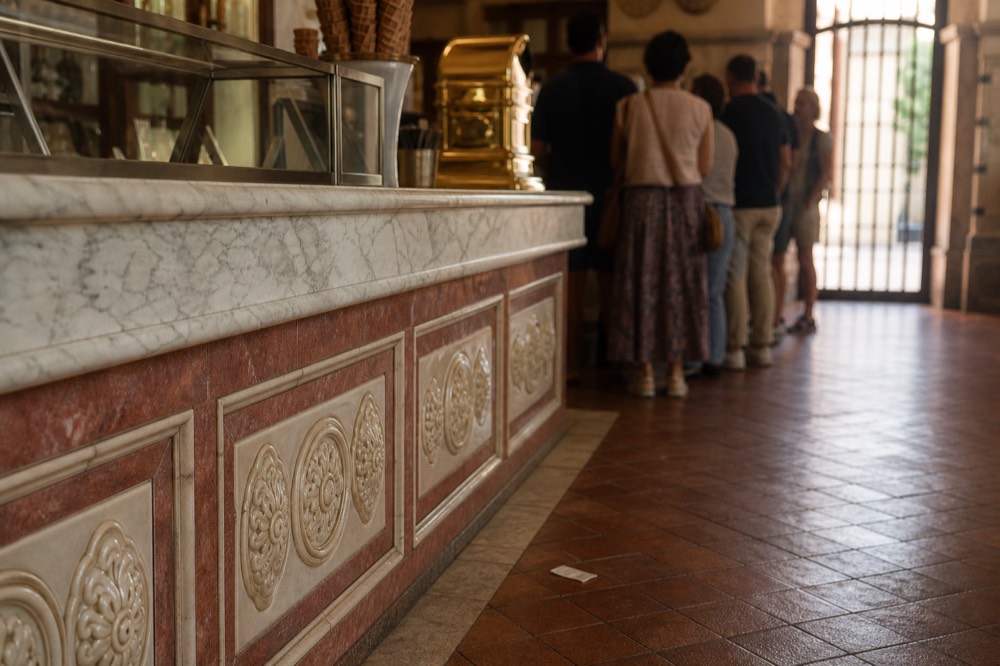
Fame has a cost, and in Giolitti's case the cost is a crowd in the late afternoon and evening. It is a real crowd, not a friction problem: the queue moves, the counter is large and there is no booking mechanism to fail at. Visit mid-morning or late evening and it is simply a beautiful old room.
If you want to turn a gelato outing into a fuller evening, the classes below combine it with pizza-making. The cheapest combined option on the roster runs from $41.33 per person (checked September 2026).
The three options above cover different formats: the five-star flowing-wine class with tiramisu or gelato, a choose-your-own pizza or pasta option with gelato or sorbet, and a two-shape fresh pasta class with unlimited wine and gelato at the end. All three carry free cancellation on the operator's live listing, so a slot can be locked in before the rest of the day is settled.
What Is The Oldest Gelato Store In Rome?
Fassi's Palazzo del Freddo Giovanni Fassi in Esquilino, operating from its 1928 hall near Piazza Vittorio, is the oldest continuous gelateria operation in Rome still trading under its own name, with a vast tiled room and no booking system. Giolitti's counter dates to 1900. Both are walk-ins, seven days a week.
what is the oldest gelato store in Rome? By trading years, Giolitti's 1900 counter takes the title. But the oldest surviving purpose-built temple to gelato is Palazzo del Freddo Giovanni Fassi, a huge tiled hall off via Principe Eugenio that the Fassi family opened in 1928. The room alone justifies the tram ride to Esquilino: marble counters, sanpietrini, the small house speciality sold by the piece, and a seating capacity that means the queue, when there is one, is indoors. The hall's own history and current opening details are on Fassi's official site.
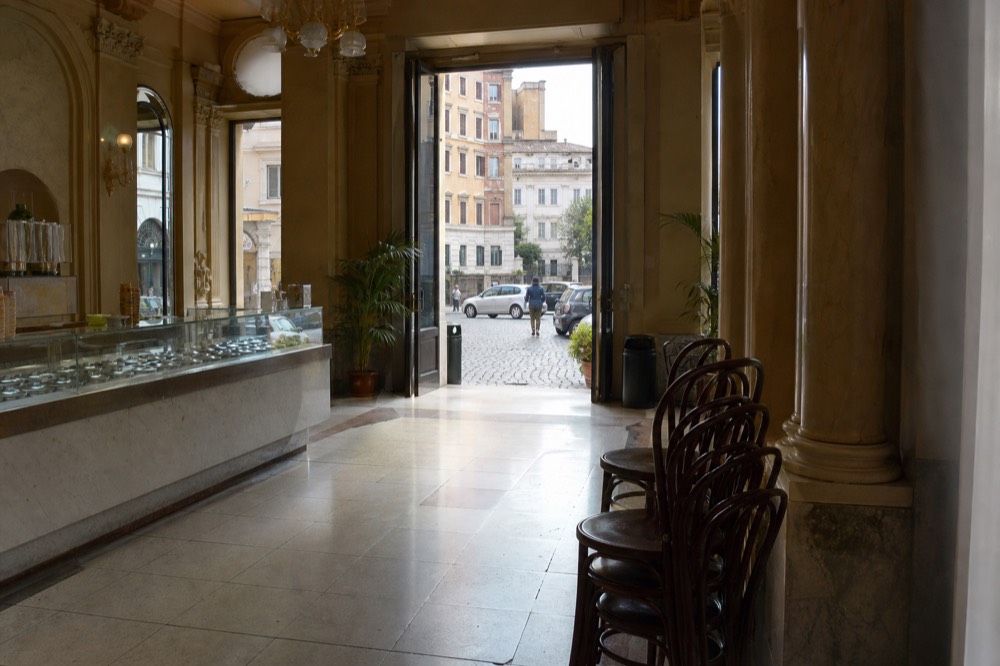
Esquilino rewards the trip beyond gelato. The Nuovo Mercato Esquilino trades Monday to Friday from early morning to mid-afternoon and Saturday a little later, and it is the most multicultural market in the city, full of spices, pulses and flours you will not find elsewhere in the centre. A gelato afternoon in Fassi's hall pairs naturally with it, and both are a short walk from Termini, where the Mercato Centrale food hall keeps long daily hours if the weather turns.
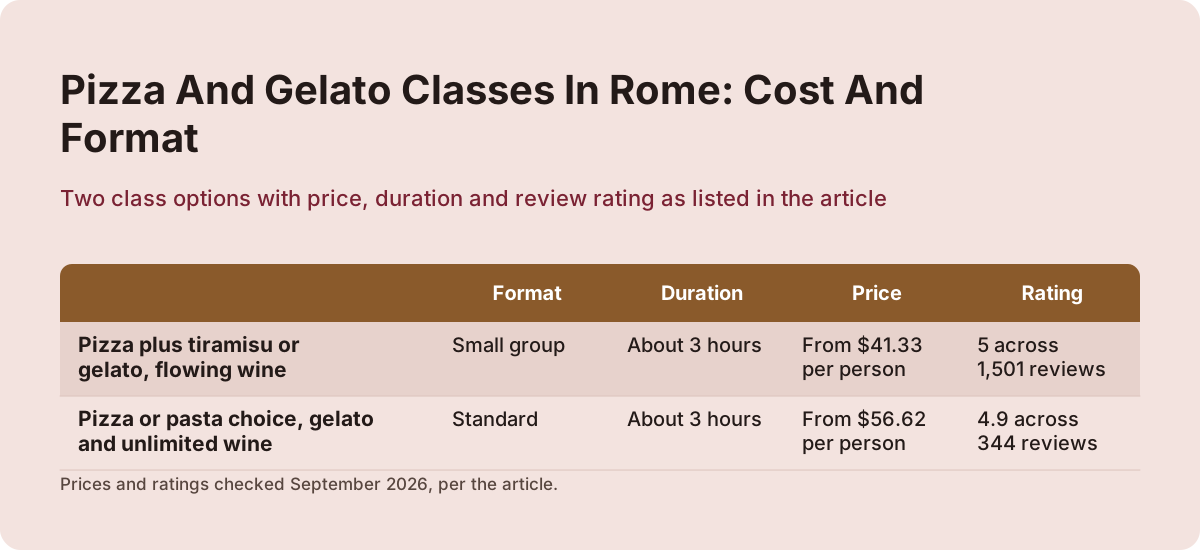
Since gelato itself never needs planning, the one part of an Esquilino or Monti day that rewards booking ahead is a class. The combined pizza and gelato class with flowing wine is the most-reviewed option in this family: rated 5 across 1,501 reviews (checked September 2026), about three hours, from $41.33 per person, with free cancellation on the live listing.
The box above links the five-star pizza and tiramisu or gelato class directly. Note that its meeting point is confirmed on the operator's live listing at the time of booking, so check the confirmation details there rather than assuming a central square. Everything else on the listing is fixed: the format, the duration, the wine.
The Best Gelaterie In Rome, Neighbourhood By Neighbourhood
The gelaterie that pass the counter test, in usable order, are Otaleg in Trastevere, Gelateria dei Gracchi in Prati, Gelateria del Teatro near via dei Coronari, Giolitti near the Pantheon, Fassi in Esquilino and Palazzo del Freddo's competitors across the centre. Each is a walk-in counter with no booking, no door policy and no cover charge.
The point of a neighbourhood list is that it works from wherever you are standing, not from a ranked podium. All six below take no reservations and have no seasonal trap beyond ordinary opening hours. None of them is a sit-down restaurant; the transaction is a counter, a cone and the street.
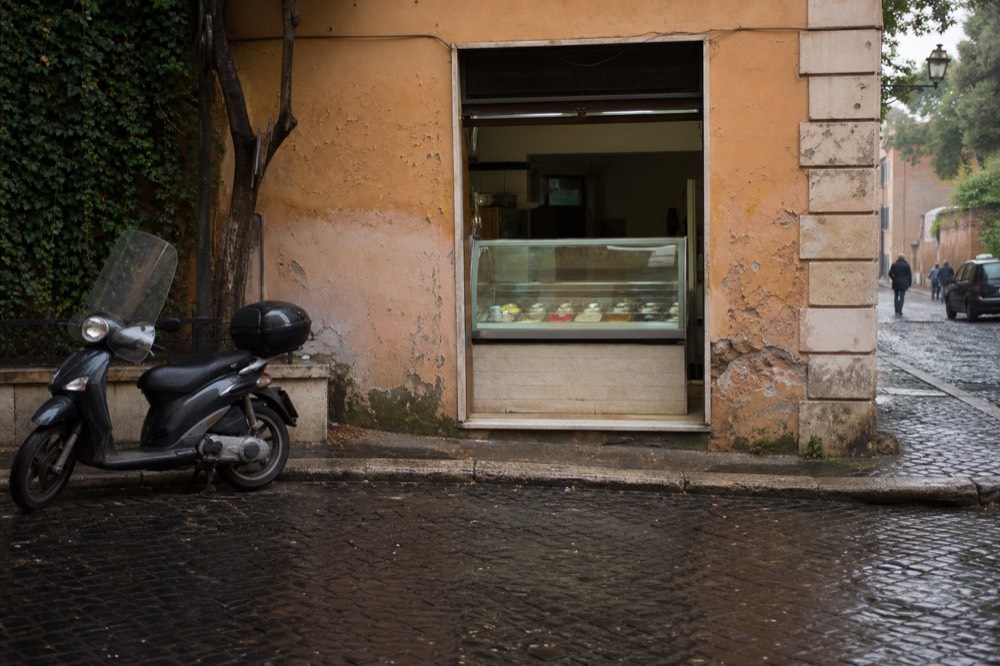
| Gelateria | Neighbourhood | Signature | Why it passes the test |
|---|---|---|---|
| Otaleg | Trastevere | Cioccolato 88, rotating seasonal board | Artisanal base, muted colour, short list |
| Gelateria dei Gracchi | Prati, near the Vatican | Pistachio from Bronte, single-origin fruit | Flat tins, natural colour, restrained board |
| Gelateria del Teatro | Centro Storico, via dei Coronari | Sage and raspberry, herb-and-fruit flavours | Small kitchen visible from the street, short list |
| Giolitti | Pantheon area | The historic counter since 1900 | Institution scale, still a simple walk-in queue |
| Palazzo del Freddo Fassi | Esquilino | Sanpietrini, the 1928 hall | Vast room, own product, no booking |
| Biscottificio Innocenti | Trastevere | Biscuits by weight | Not gelato, but the same zero-friction counter format |
Gelateria dei Gracchi is the practical answer for anyone coming off a Vatican morning: it is a short walk into Prati, the pistachio is made from Bronte nuts and reads khaki-brown, and the fruit flavours are the honest colour of their ingredients. Details and locations are on its own site.
Gelateria del Teatro works the same logic for the corridor between Piazza Navona and the river. Its kitchen sits behind a window onto the street, the board is short, and the herb flavours, sage and raspberry among them, only work with real infusion. Trastevere's Otaleg is the modern artisanal pick: a cioccolato 88 at full bitter intensity and a board that rotates hard with the season. It stays open until midnight and an hour later on weekends.
One caution that applies to the whole category: this site does not review or accuse named businesses, but a dated 2026 report described a Trastevere gelateria sanctioned for serious irregularities, and a widely reported 2026 case involved a central gelateria charging an exorbitant bill for cones with unrequested extras. Both are reminders to glance at the price list by the till before ordering, not at the display case, and to question extras you did not ask for.
What Is The Best Gelato Brand In Italy?
There is no single best gelato brand in Italy, because the category splits in two: national industrial brands sold in supermarkets and vending machines, and the artisanal gelaterie that churn their own base daily. The best gelato is a shop, not a brand. In Rome, the artisanal names are Otaleg, Gracchi, Teatro, Giolitti and Fassi.
what is the best gelato brand in Italy? The honest answer reframes the question. The brands Italians actually recognise nationally, the ones in supermarket freezers, are industrial products, and no serious gelato conversation in Italy ranks them. What Italians rank is gelaterie: individual shops judged on whether they make their own base, in a country where the craft is protected more by custom than by law. An artisanal gelateria that passes the covered-tin and natural-colour tests is doing something a brand by definition cannot, because a branded product must survive distribution.
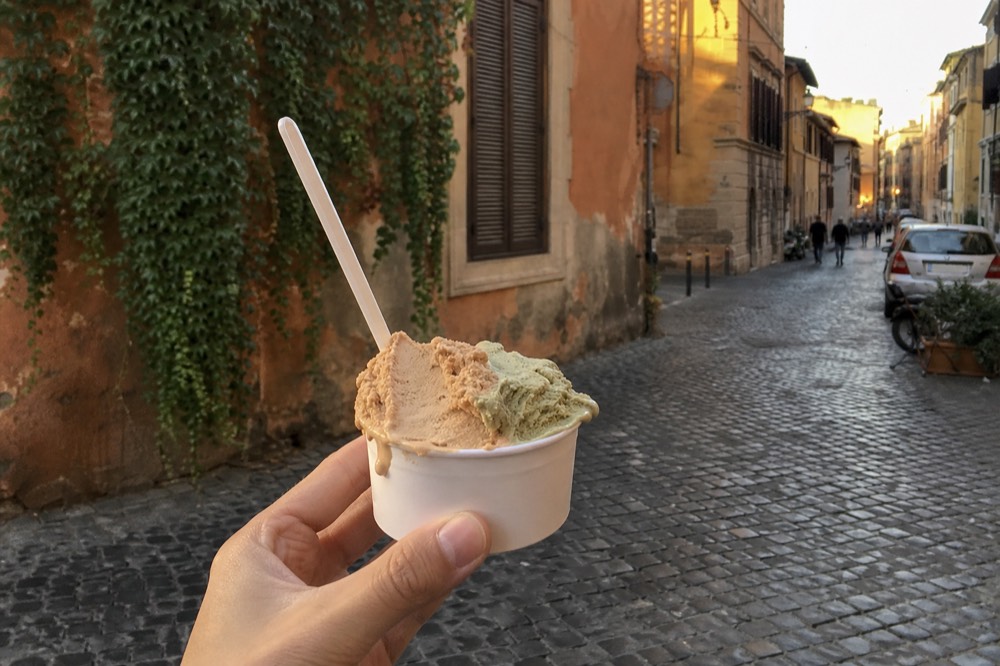
Rome's own hierarchy has a shape worth knowing. At the top sit the artisanal churners: Otaleg in Trastevere, Gelateria dei Gracchi in Prati, Gelateria del Teatro in the centro storico. Below them sit the great institutions, Giolitti and Fassi, which combine scale with their own production and a century of regulars. Below those sit the hundreds of display-case shops that buy in a base. The hierarchy is readable from the street using the tests in the first section, which is the point of having a method rather than a brand.
The infogain block below collects the current facts on the Roman scene.
Do Gelaterie In Rome Take Bookings?
No. Not one gelateria on this page takes bookings, holds cards, charges a cover or closes for a low-season break the way restaurants do. Gelato is the zero-friction corner of Roman eating: you walk in, you queue for a minute or two, you order, you pay, you leave. This page's friction thesis simply does not apply here.
This is worth stating plainly because the rest of this site is built around the opposite finding: Rome's famous trattorias refuse reservations, its starred rooms hold cards against the table, and its market stalls finish before most visitors think about lunch. Gelato inverts all of it. There is no booking mechanism to fail at, no closing-day trap worth planning around, no August question worth asking. Even the queues are honest ones, minutes rather than the hour-plus waits documented at Rome's no-booking trattorias.
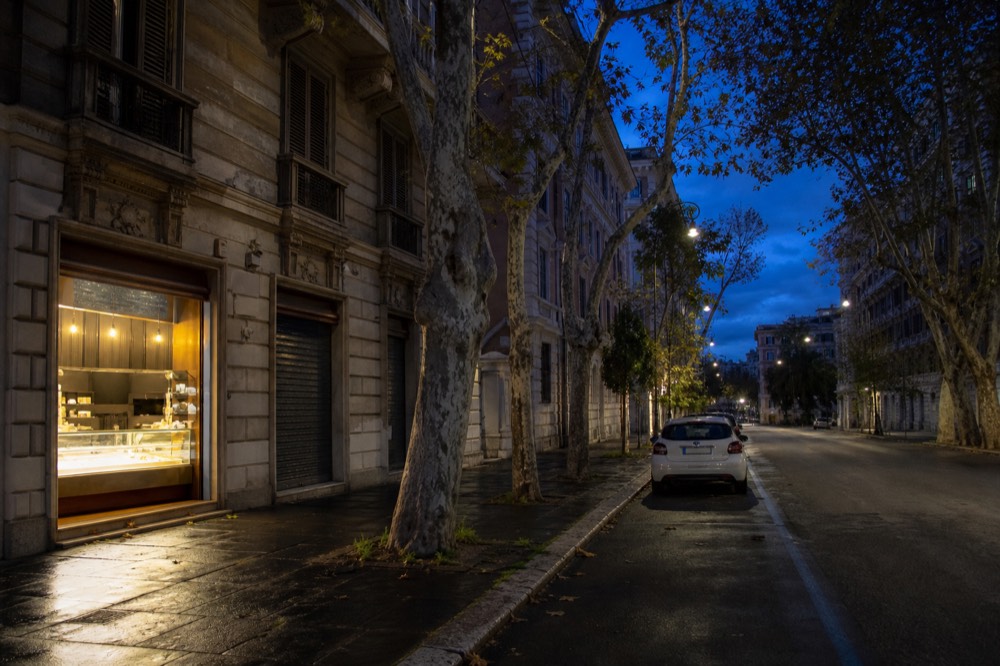
| Venue type | Booking mechanism | Typical wait | Friction score |
|---|---|---|---|
| Artisanal gelateria | None, walk-in | A short queue at peak evening | 1 of 5 |
| Historic gelateria (Giolitti, Fassi) | None, walk-in | A moving line at peak | 1 of 5 |
| Neighbourhood forno or biscottificio | None, walk-in | A minute or two | 1 of 5 |
| Coffee counter (Sant'Eustachio, Tazza d'Oro) | None, walk-in | Short | 1 of 5 |
| No-booking trattoria (for contrast) | None, walk-in | The documented waits run far longer | 4 to 5 of 5 |
The comparison row is deliberate. If you have read the guide to the hardest tables in Rome, you know the city's most-loved trattorias take no bookings at all and queue in the street. Gelato gives you the same walk-in freedom with none of the cost, which makes it the reliable fallback for every evening the restaurant plan collapses.
Pizza And Gelato Classes In Rome: What They Cost And What You Eat
The cheapest pizza-plus-gelato class on the roster is the five-star flowing-wine option at from $41.33 per person (checked September 2026), about three hours, rated 5 across 1,501 reviews. The two-shape fresh pasta class with unlimited wine and gelato runs from $63.87. All include free cancellation and none requires a meeting-point assumption.
A class is the one way gelato interacts with booking, because classes, unlike gelaterie, run on fixed daily slots. The comparison below uses only figures from the tours listed on this page. Where a meeting point is listed, it is copied exactly from the operator's listing; where none is published, nothing is stated.
| Class | Format | Duration | Price | Rating and reviews |
|---|---|---|---|---|
| Pizza plus tiramisu or gelato, flowing wine | Small group | About 3 hours | From $41.33 per person (checked September 2026) | 5 across 1,501 reviews |
| Pizza or pasta choice, gelato and unlimited wine | Standard | About 3 hours | From $56.62 per person | 4.9 across 344 reviews (checked September 2026), meets at Via Quattro Novembre 139 |
| Fresh pasta, two shapes, unlimited wine and gelato | Standard | About 3 hours | From $63.87 per person | 4.9 across 928 reviews (checked September 2026), Trastevere area |
| Two-hour pizza class by Piazza Navona | Small group | About 2 hours | From $56.73 per person | 4.9 across 1,506 reviews (checked September 2026), meets at Osteria Pasquino on Piazza di Pasquino |
The two-hour pizza class deserves a note on geography, because it is the classic trap on this subject: it meets at Osteria Pasquino on Piazza di Pasquino, which is a different square from Piazza Navona even though the listing title leans on the association. Check the confirmation on the live listing before planning a walk.
The five-star flowing-wine class is the strongest fit for a gelato-focused trip: it is the cheapest option on the roster, the best-reviewed in its family, and it pairs the pizza with a dessert course of tiramisu or gelato alongside flowing wine. Its meeting point is confirmed at booking on the operator's live listing, so read the confirmation rather than guessing.
If a two-hour format suits a tight schedule better, the Pasquino pizza class above covers the same ground in less time, with coffee, tea or limoncello instead of the flowing wine.
Street Food Walks That End At A Gelato Counter
The cheapest guided route that includes gelato is the 2.5-hour two-quarter walk at from $48.37 per person (checked September 2026), rated 4.9 across 4,191 reviews, covering street-food tastings including gelato across two neighbourhoods. A five-tasting historic centre walk covers similar ground in small-group format, from $51.10 per person. Both formats include free cancellation.
A walk solves a different problem from a class: it covers ground. The roster's street-food walks include gelato among their tastings, which means the evening's dessert is built into a route that also takes in pizza, supplì and sandwiches, with a guide handling the ordering. None of these walks enters a famous restaurant, and the honest value is exactly that: several counters in one outing at a price fixed before you go, with no reservation problem to solve.
| Walk | Coverage | Duration | Price | Rating and reviews |
|---|---|---|---|---|
| Two-quarter street food walk | Trastevere and Campo de' Fiori | About 2.5 hours | From $48.37 per person (checked September 2026) | 4.9 across 4,191 reviews, meets at Fontana Piazza San Simeone |
| Five fried tastings, historic centre | Historic centre | About 2.5 hours | From $51.10 per person | 4.9 across 1,331 reviews (checked September 2026), meets at Piazza di S. Simeone by the fountain |
| Local guide, wine and beer | Trastevere | About 2 hours 30 minutes | From $55.55 per person | 4.8 across 150 reviews (checked September 2026) |
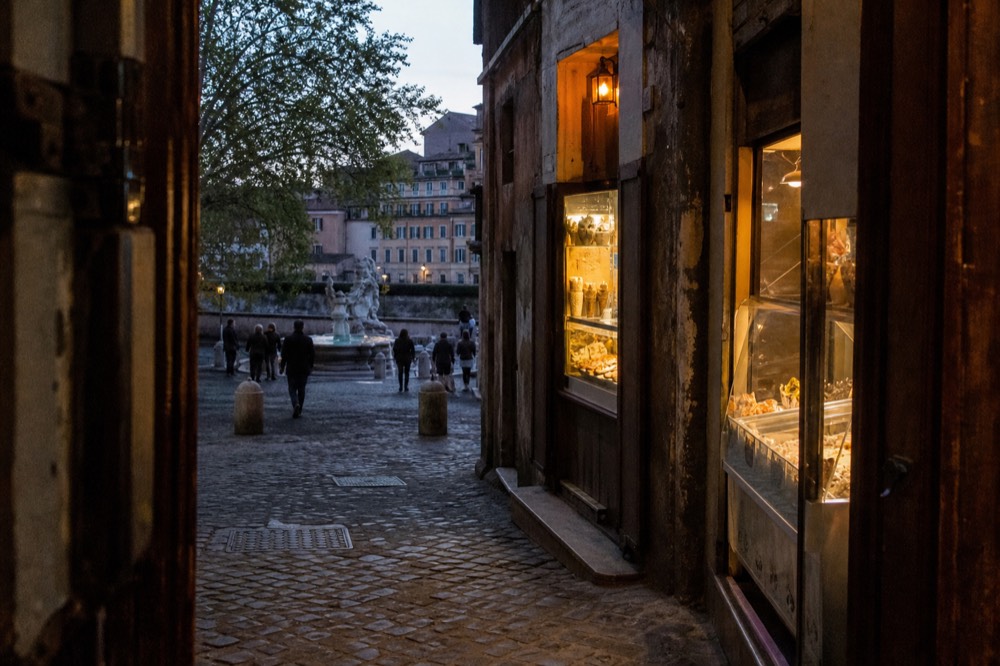
The two-quarter walk is the pick for a gelato-first evening because it ends the tasting list at the sweet counter after covering the savoury ground between the two squares. Since it meets at the fountain in Piazza San Simeone, it also starts within a short walk of both the Campo de' Fiori bakery counters and the river crossing into Trastevere, which is where most of the gelaterie on the neighbourhood table above sit.
Both the walk and the classes above appear on the operator's live listings with free cancellation, which matters for a gelato evening only in the sense that the weather decides. The Rome street food guide covers the savoury side of the same ground in more depth, and the Rome food tours guide compares every format on the roster.
What City In Italy Is Most Famous For Gelato?
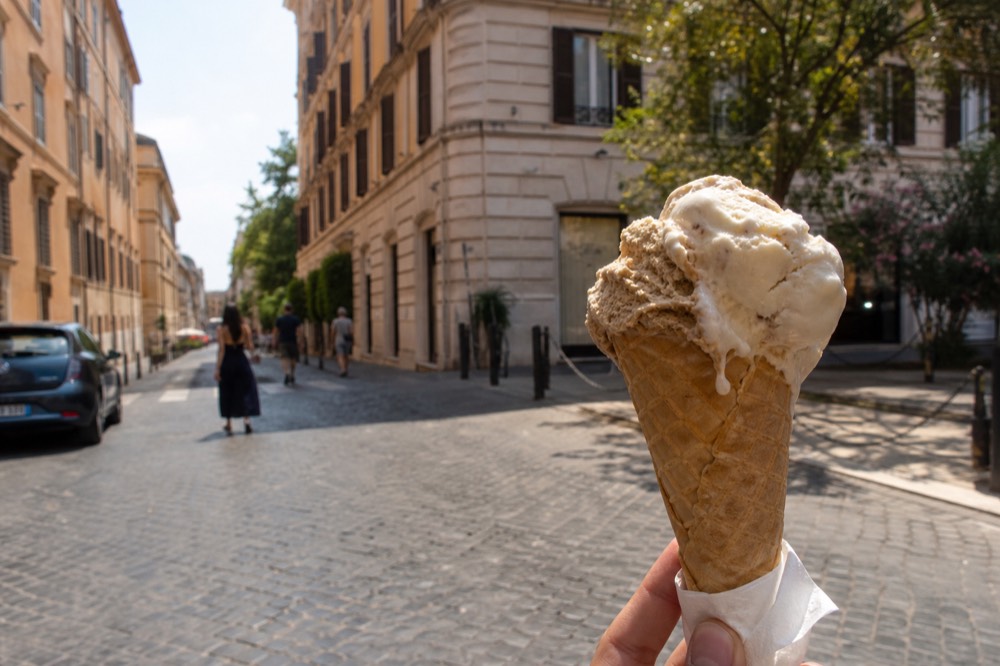
Sicily is the historic home of gelato and its most famous region, with Florence the most famous single city for the counter culture. Rome is not the origin, but it is the best city to eat it in practice: dozens of walk-in artisanal gelaterie, late hours and no booking friction anywhere in the category.
what city in Italy is most famous for gelato? By origin myth and by historical weight, the answers are Sicily, where Arab-era ices evolved into the craft, and Florence, where the Medici-era courts and the bernardo prosciutto of gelato storytelling sit. Rome makes no claim to having invented it. What Rome offers is density and ease: more artisanal counters per square kilometre of tourist walking than any other Italian city, hours that run to midnight and past, and a category with no reservation mechanics, no dress code and no queue worth a plan. On the evidence of this page, the practical answer for a visitor is Rome, even if the historic answer is not.
That practicality is why Best Restaurants in Rome treats gelato as the floor of the city's food scene rather than its decoration. When the trattoria plan collapses, the starred room is booked out or the no-booking line is an hour deep, the gelato counter is still there, still open, still selling the product it churned that morning. Pair it with the best pizza in Rome for the same reason: the pizzerie and the gelaterie share the walk-in culture the restaurants do not.
For travellers who want the dessert half of the evening to be more than a counter stop, the three options below are the roster's gelato-relevant classes in one place, all with free cancellation on the operator's live listings.
The short answers: Giolitti is the most famous gelato in Rome and has traded near the Pantheon since 1900, Fassi's Palazzo del Freddo is the oldest purpose-built gelato hall at 1928, there is no best brand because the craft belongs to individual shops, and Sicily and Florence hold the historic fame while Rome is the easiest city to eat it in. Every gelateria discussed on this page takes no bookings.
Common Questions About Gelato In Rome
What Is The Most Famous Gelato In Rome?
Giolitti, trading near the Pantheon since 1900, is the most famous gelato in Rome. It is a walk-in counter with no bookings. Fassi's Palazzo del Freddo in Esquilino and Otaleg in Trastevere are the other names that come up most.
What Is The Oldest Gelato Store In Rome?
By trading years, Giolitti's counter dates to 1900. The oldest purpose-built gelato hall is Fassi's Palazzo del Freddo in Esquilino, opened in 1928 and still operating as a vast tiled walk-in room.
What Is The Best Gelato Brand In Italy?
There is no best brand, because the craft sits with individual shops, not national brands. Look for covered metal tins, muted natural colours and a short seasonal fruit list; in Rome the artisanal names are Otaleg, Gelateria dei Gracchi and Gelateria del Teatro.
What City In Italy Is Most Famous For Gelato?
Sicily is the historic origin and Florence the most storied counter city. Rome is the most practical city to eat gelato in: dense with walk-in artisanal gelaterie, open late, and with no booking friction anywhere in the category.
How Do I Tell If A Gelateria In Rome Is Artisanal?
Read the counter. Real gelato sits flat under lids or in covered tins, pistachio is a dull khaki, banana is grey-white, and the fruit list is short and changes with the season. Tall fluorescent mounds and out-of-season fruit indicate an industrial base.
Can I Sit On The Spanish Steps To Eat My Gelato?
No. Rome's public-order regulation prohibits sitting, including while eating or drinking, on monuments, fountains and their steps, and it is signposted and enforced. Eat it walking or at a standing table.