What Is A Trapizzino?
A trapizzino is a triangular pocket of pizza bianca filled with classic Roman stews, invented in Testaccio. Here is what it is, where it came from and how to eat one.
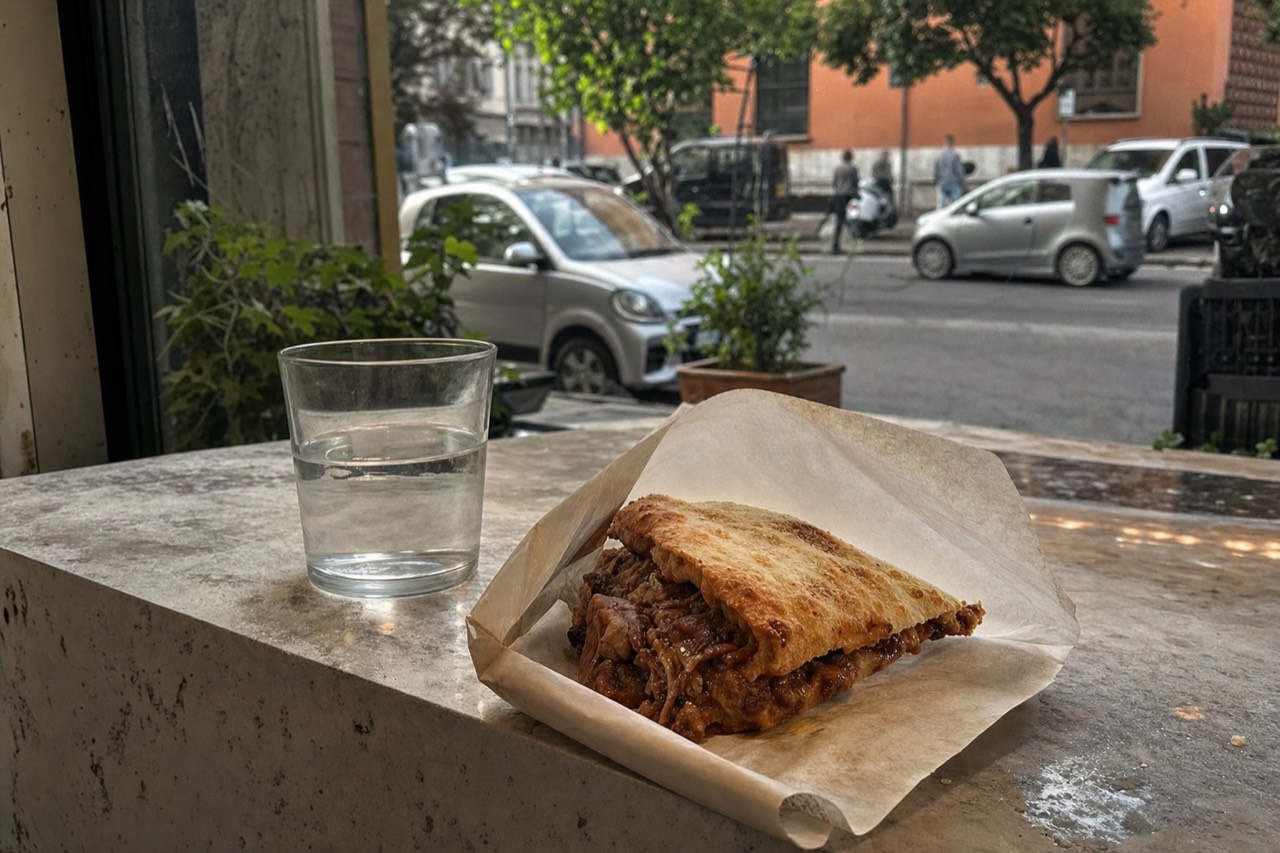
Rome's most copied street food invention of the last two decades is a triangle of pizza bianca, split at one corner and stuffed with a stew that would normally arrive on a plate. It is called a trapizzino, it was born in Testaccio, and it exists because a pizzaiolo asked a simple question: what if the container for the stew were made of bread, and the stew were the Roman classics that the neighbourhood's old kitchens cook slowly all morning? It has since spread to multiple addresses in Rome and beyond, but its logic has not changed. The pocket is the innovation, and everything inside it is tradition.
What Is A Trapizzino?
A trapizzino is a triangular pocket made from pizza bianca, the plain Roman flatbread, split open while still warm and filled with a slow-cooked Roman stew. The bread is crisp at the corners and soft at the fold, the filling is the kind of dish that normally requires a table and a fork, and the whole thing is eaten by hand. It is street food in format and trattoria cooking in content.
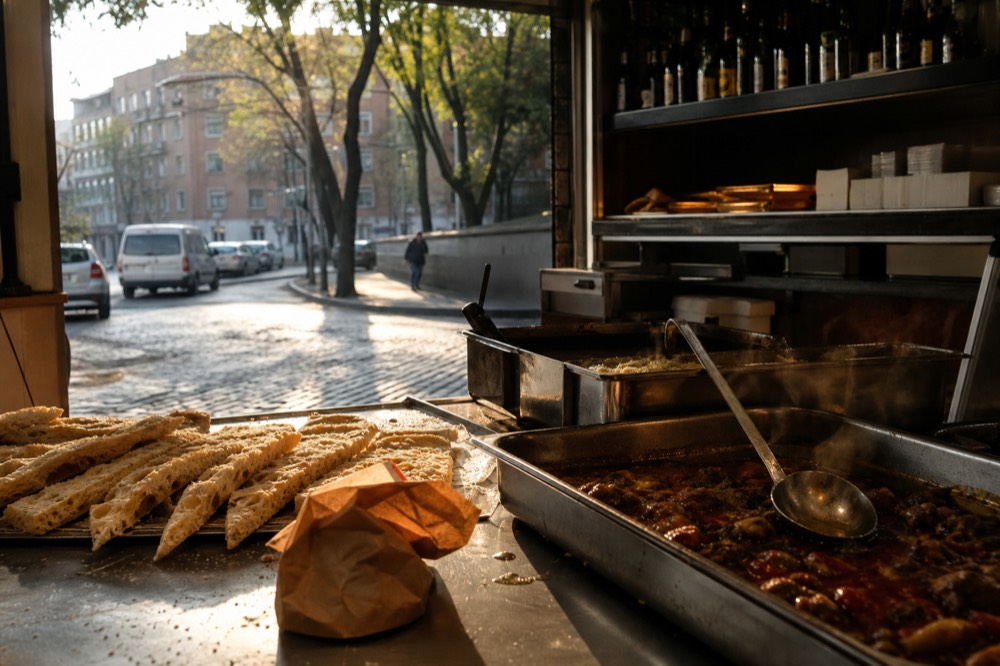
The format is the whole idea. Pizza bianca, the unassuming oil-and-salt flatbread that Roman bakeries bake in strips all day, is sturdy enough to hold a ladle of stew without collapsing, and neutral enough in flavour to let the filling lead. The pocket is cut or folded so that one corner opens into a pocket, the stew goes in at the last moment, and the heat of the bread meets the heat of the filling. Fillings rotate with the kitchen and the season, and the attested Roman stews are the classics of the city's slow-cooking tradition; the Testaccio counter's own material names pollo alla cacciatora among them.
The shape matters to how it eats. A trapizzino is thickest at the base, where the stew pools, and thinnest at the point, where you get a dry, crunchy final bite. Unlike a panino, nothing is sliced to order inside it, and unlike pizza al taglio, nothing is weighed. You order a filling, you get a pocket, you eat it while the bread is still doing its job.
Rome's street food was mostly snack-shaped before it arrived: fried rice balls, pizza by weight, sandwiches. The trapizzino is the one that carries a full main course, which is why it has become shorthand for a particular kind of Roman eating, the kind where the city's old cooking walks out of the dining room and onto the street.
For travellers who want to cover several of these formats in one outing rather than hunting each counter down separately, the street-food walks below do exactly that: a fixed price, a route through one or two quarters, and a set of tastings chosen in advance.
Where Did The Trapizzino Come From?
The trapizzino was created in Testaccio, Rome's old slaughterhouse quarter, by the pizzaiolo Stefano Callegari, who ran a pizza al taglio counter in the neighbourhood. The pocket of pizza bianca filled with Roman stew is his invention, and the location is not an accident: Testaccio is the home of the quinto quarto tradition, the offal and slow-stew cooking that grew up around the municipal slaughterhouse.
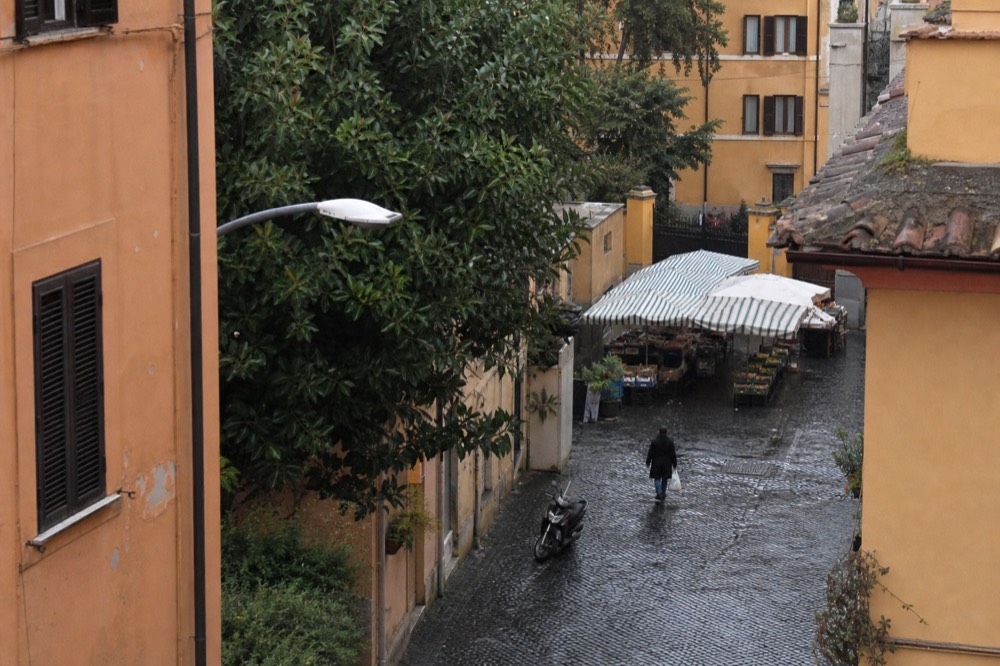
Testaccio's cooking exists because of the Mattatoio, the municipal slaughterhouse that operated from the late nineteenth century until 1975. The workers, the vaccinari, were paid partly in cash and partly in the offcuts of butchery, and the neighbourhood's trattorias turned those offcuts into the braised and stewed dishes that still define the area's menus. That tradition is the reason a walk through Testaccio passes the market, the deli counters and the trattorias within a few minutes of each other.
The trapizzino took that inheritance and gave it a new container. The stews that the neighbourhood had always eaten seated, braised chicken, slow-cooked beef, the Roman classics that take hours, went into a bread pocket that could be eaten in the street. It is the clearest example on Rome's street-food scene of old cooking being re-formatted rather than re-invented.
The brand grew from the original Testaccio counter into multiple Rome addresses, with the pocket also travelling to other Italian cities and to New York. Reporting on the Roman street-food scene describes it as one of the defining inventions of the last two decades, the dish that other counters now imitate. The original Testaccio shop, at Trapizzino Testaccio, states on its own site that it is open every day from 12:00 to 23:00 with table service in the room, a rare combination for street food: the pocket is walk-in, and there is somewhere to sit.
Why does this matter to a visitor? Because the trapizzino is the single easiest way to taste the quinto quarto tradition without booking a trattoria or committing to a full dinner. If a sit-down meal in Testaccio is on the list anyway, the walk-in pocket is the preview, and a guided walk through the quarter is the version with the friction removed.
How Is A Trapizzino Different From A Panino?
A trapizzino uses pizza bianca as its container, a panino uses a roll or sliced bread, and pizza al taglio is the bread itself, topped and eaten flat. The trapizzino's filling is a wet, slow-cooked stew held inside a pocket, while a panino holds sliced meats and cheese between dry surfaces. The three formats sit at different points between bread and full meal.
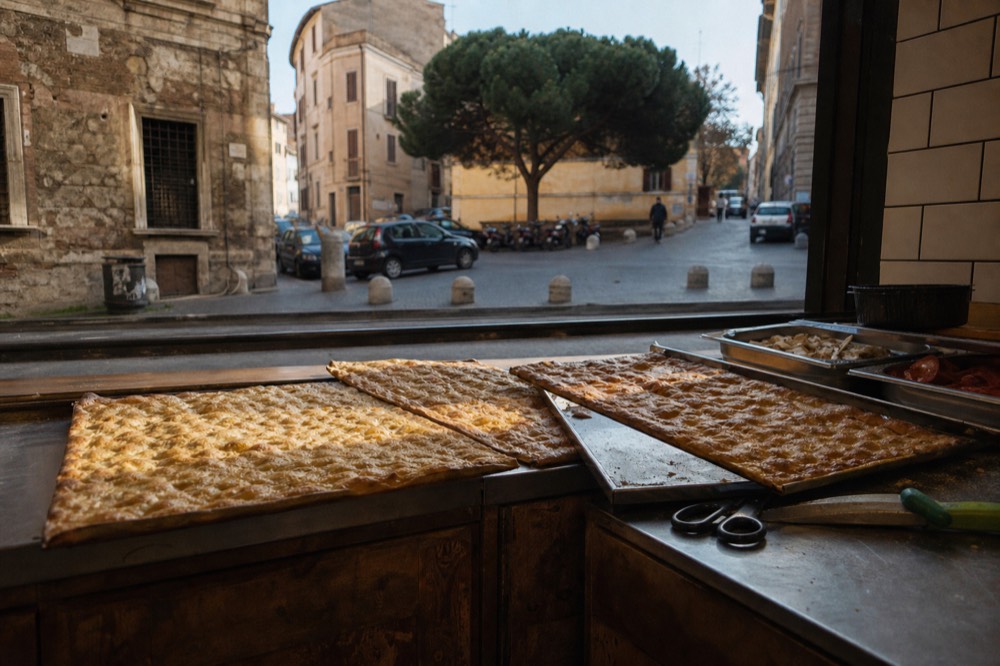
The bread is the first difference. Pizza bianca is baked in a hot oven with oil and salt, develops a hollow, airy crumb and a crisp base, and is sturdy enough to hold a ladled stew. A rosetta or ciabatta, the panino's usual homes, are softer loaves built for dry fillings. Pizza al taglio is baked in large trays, cut with scissors or a blade, and sold by weight.
The filling is the second. A Roman panino is usually a deli construction: porchetta, salumi, cheese, vegetables. The trapizzino's fillings are the dishes a trattoria cooks in the morning and serves at lunch, which means the pocket is the only street-food format in the city whose contents come from the stew pot rather than the slicer.
| Trapizzino | Panino | Pizza al taglio | |
|---|---|---|---|
| Bread | Pizza bianca, folded into a pocket | Roll or sliced loaf | Tray-baked pizza, cut to order |
| Filling | Slow-cooked Roman stews, rotating | Sliced meats, cheese, vegetables | Toppings baked on top |
| How it is sold | One fixed pocket per order | One fixed sandwich per order | By weight, priced per kilo |
| How it is eaten | By hand, stew pooled at the base | By hand, dry throughout | By hand or on a plate, flat |
| Sitting | Counter with table service at the Testaccio shop | Counter or bar, varies | Standing counter, usually no seats |
The third difference is the clock. Pizza al taglio counters trade through the afternoon, and panini bars keep lunch hours. A trapizzino's fillings are stews, so the counter opens around midday and runs into the evening, which makes it an unusually flexible option: it works as a late lunch or an early dinner in a city where many kitchens close between the two.
For travellers comparing the formats side by side, the Rome street food guide covers all three across the neighbourhoods where they are at their best, and the fried-rice-ball half of the family is unpacked separately in the answer to the supplì versus arancini question.
The 2.5-hour two-quarter walk is the cheapest way on the roster to taste several of these formats in one evening: it runs from $48.37 per person (checked September 2026), is rated 4.9 across 4,191 reviews, and covers Trastevere and Campo de' Fiori with street-food tastings including pizza, supplì, gelato and sandwiches, meeting at Fontana Piazza San Simeone.
How Do You Eat A Trapizzino?
You eat a trapizzino with your hands, starting from the pointed end and working toward the base where the stew collects, with paper wrapped around the middle to hold it together. The bread is at its best in the first minutes after filling, so eat it near the counter or at a table rather than carrying it across the neighbourhood. There is no cutlery.
The technique is simple but real. The pocket is folded so the open corner faces up, and gravity does the rest: the sauce travels down into the thick base, flavouring the bread as it goes. Locals eat the point first, then the middle, and finish with the sauce-soaked heel (see Eating Near The Vatican). If the filling has been generous, the last bite is the best one, and the paper exists precisely because of it.
Where you eat it matters more than visitors expect. Rome's public-order regulation prohibits sitting, including while eating or drinking, on monuments, fountains, the staircases attached to them and archaeological remains, and patrols enforce the rule in the central zones. A trapizzino eaten on the steps of a fountain is not just impolite, it is the exact conduct the regulation names. The Testaccio shop's table service exists partly to solve this: the pocket is street food, but there is a chair.
Timing follows the kitchen rather than the tourist clock. The fillings are stews, so the counter's day runs from midday to eleven at night, every day, at the Testaccio address. That makes it one of the few Roman food counters that is genuinely useful at 15:30, the dead hour when most trattoria kitchens have closed for the afternoon and the market has shut. It is also open every day of the week, which matters in a city where many kitchens close one day.
One comparison worth making: the two-quarter street-food walk and the ghetto-crossing private walk both route through counter territory where the mechanics of Roman street food, ordering, pointing, eating on the spot, are part of what a guide handles. The private option is the format for anyone who wants the route to themselves, from $52.26 per person (checked September 2026), rated 4.8, with three or five tastings depending on the option.
Where To Find One In Rome
The original counter is Trapizzino Testaccio, open every day from 12:00 to 23:00, a walk-in with table service, located in the neighbourhood where the format was invented. The brand has since opened multiple other Rome addresses, so the format is no longer Testaccio-only, but the original shop is the one attached to the story, the market and the trattoria tradition that fills the pockets.
The Testaccio shop's own site states the hours plainly, and the room's table service is unusual for the format. Because it is open every day and through the afternoon, it works for late lunches and early dinners, the two slots where central Rome is hardest to feed yourself. Nothing about it requires a booking.
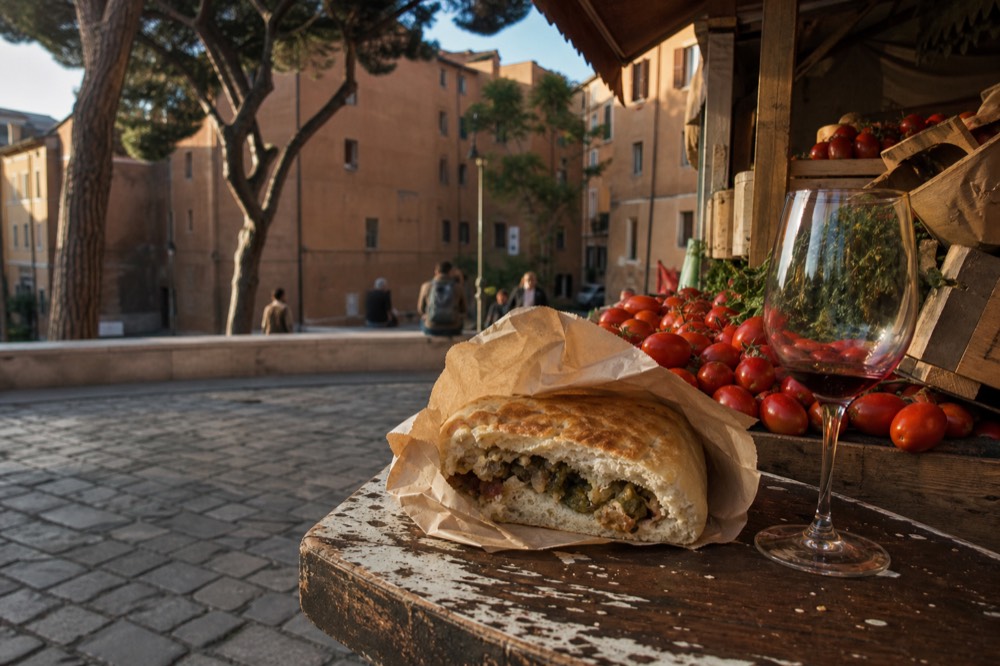
The neighbourhood around it is the reason to make the trip. Nuovo Mercato Testaccio is open Monday to Saturday from 07:00 to 15:30 and closed Sunday, with food stalls trading inside that window, so a morning at the market and a midday trapizzino is the natural Testaccio sequence. Volpetti, the deli on the same streets, is a walk-in counter with nothing standing between you and the cheese board. Trattorias that do want booking, Checchino with its six hours' notice, Flavio with its online book, are all within a few minutes' walk, which is why this quarter features so heavily in the planning on Best Restaurants in Rome, the site that ranks the city's tables by how hard they are to get into rather than by how famous they are.
| Counter | Neighbourhood | When | Booking |
|---|---|---|---|
| Trapizzino Testaccio | Testaccio | Every day, 12:00 to 23:00 | Walk-in, with table service in the room |
| Nuovo Mercato Testaccio stalls | Testaccio | Monday to Saturday, 07:00 to 15:30 | Walk-in |
| Volpetti deli | Testaccio | Weekday daytime, closed Sunday | Walk-in |
| Pizzarium Bonci | Prati, near the Vatican | Daytime through evening, standing counter | Walk-in, order on the spot |
A second way to compare the formats is by what each one demands of you before the first bite. The table below lines up the three breads against the planning they require, which is the practical question for a visitor with a fixed number of evenings.
| Format | Where it is strongest | Planning it needs | Best time of day |
|---|---|---|---|
| Trapizzino | Testaccio, Trastevere | None, walk in | Midday through late evening |
| Pizza al taglio | Prati, Campo de' Fiori, Trastevere | None, but queue at peak | Late morning and afternoon |
| Panino from a deli | Testaccio, Monti, the centre | None, counter service | Lunch |
One thing this site will not tell you is that a food tour gets you into any famous restaurant, because none of the walks on the roster do that. What they do is remove the planning problem: a fixed route, a fixed price and a set of counters already chosen. The five-fried-tastings walk in the historic centre, from $51.10 per person (checked September 2026) and rated 4.9 across 1,331 reviews, covers supplì, pizza, porchetta panini and fried artichoke in the same format.
Why The Trapizzino Matters To Roman Food Culture
The trapizzino matters because it is the clearest proof that Rome's street food and its trattoria tradition are one continuous cuisine rather than two separate experiences. It took the stews of the slaughterhouse quarter, dishes a visitor would normally need a reservation and a table to reach, and put them in a pocket anyone can walk in and buy, giving the quinto quarto tradition a street-level entry point that did not exist before.
That arc is worth walking consciously. Start at the market in the morning, where the butchers and produce stalls explain what the quarter was for. Pass the deli counters that sell the cured and aged end of the same tradition. End at a pocket of stew held in bread. In one afternoon, and mostly without a single reservation, you cover the whole logic of Roman cooking: the animal used entirely, the tough cuts cooked slowly, the bread baked fresh, and nothing wasted.
The trapizzino also explains something about how Rome's food culture changes, which is slowly and from inside. The invention did not import a foreign format or reinvent a dish. It re-housed existing Roman cooking in new bread, in the neighbourhood where that cooking was born, and the spread that followed came from the pocket being genuinely useful rather than from novelty. That is the pattern to look for elsewhere on this site: the city's best new food ideas are usually its oldest dishes wearing different clothes.
If the pocket has done its job and the quinto quarto tradition is now on your list, the natural next steps are a full what to eat in Rome plan, and a Trastevere evening routed around the counters rather than the reservation book, which the Rome food tours guide lays out option by option. The trio of walks below covers both quarters where street food is at its densest, and every one of them can be cancelled free if the itinerary shifts.
The short answers: a trapizzino is a pocket of pizza bianca filled with a slow-cooked Roman stew, invented in Testaccio by the pizzaiolo Stefano Callegari, sold as one fixed unit without booking, and eaten by hand from the pointed end toward the sauce-soaked base. The full questions and answers follow, including where the original counter sits and what the law says about eating it on monument steps.
Common Questions About The Trapizzino In Rome
What Is A Trapizzino?
A trapizzino is a triangular pocket of pizza bianca, the plain Roman flatbread, split open and filled with a slow-cooked Roman stew. It was invented in Testaccio by the pizzaiolo Stefano Callegari, and it is eaten by hand, with the stew pooling in the thick base of the pocket.
Who Invented The Trapizzino?
Stefano Callegari, a pizzaiolo with a pizza al taglio counter in Testaccio, Rome's old slaughterhouse quarter. The invention year is disputed across sources, so no date is given here, but the creator and the neighbourhood are consistently attested.
What Is Inside A Trapizzino?
The fillings are the classic slow-cooked Roman stews, and they rotate with the kitchen. The Testaccio counter's own material names pollo alla cacciatora among them. The general description is a stew-filled pocket rather than any fixed list of fillings.
Where Was The Trapizzino Invented?
In Testaccio, the quarter built around Rome's former municipal slaughterhouse and the home of the quinto quarto, the offal and slow-stew cooking tradition. The original Trapizzino Testaccio shop is open every day from 12:00 to 23:00 and takes no booking, with table service in the room.
How Is A Trapizzino Different From A Panino?
A trapizzino is a pocket of pizza bianca filled with a wet, slow-cooked stew, while a panino is a roll or sliced loaf with dry fillings such as sliced meats and cheese. A trapizzino is one fixed pocket per order; pizza al taglio is sold by weight and cut to the piece you choose.
Can I Eat A Trapizzino While Walking Around Rome?
You can eat it by hand, but not sitting on monuments, fountains or their steps, which Rome's public-order regulation prohibits, including while eating, and patrols enforce the rule. The Testaccio shop has table service, so the pocket comes with somewhere to sit.