Eating In Rome On A Budget: What Is Genuinely Free And What Just Looks Cheap
Rome has one walking tour that costs whatever you decide it was worth, drinking fountains running free across the whole city, and covered markets that charge nothing to enter. Everything else on a budget page is a mechanic, not a price list.
Short answer
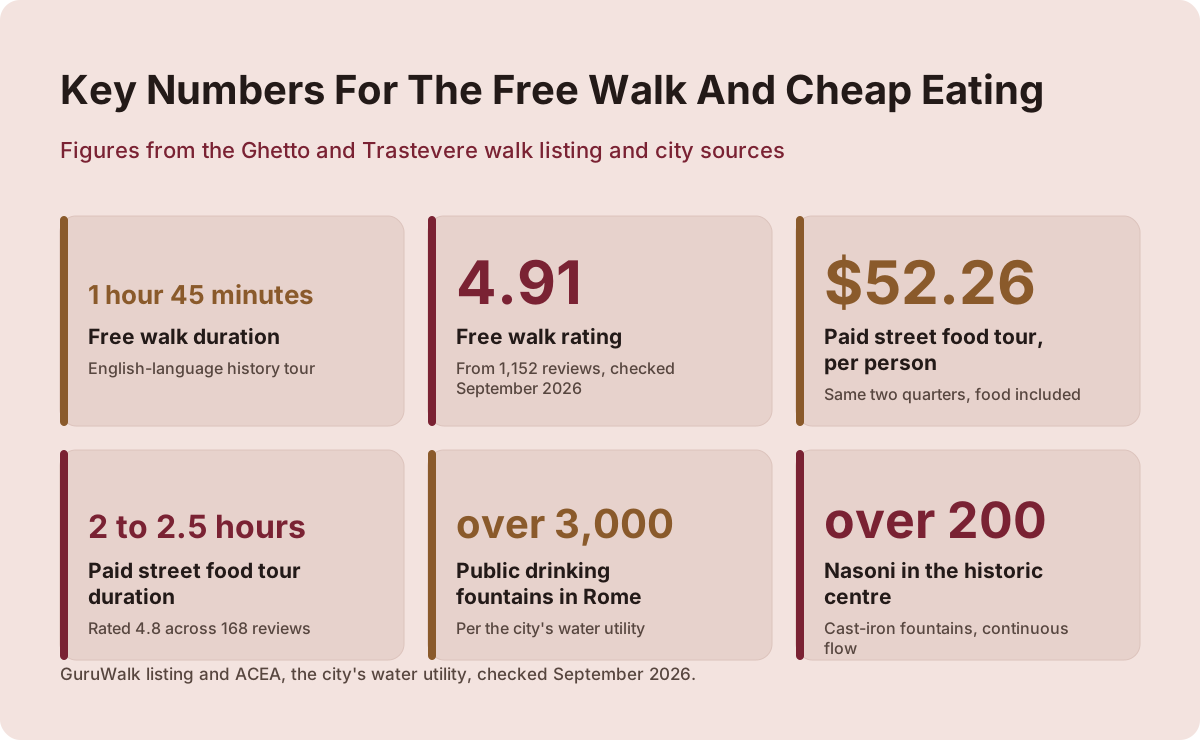
The genuinely free layer is real: a pay-what-you-want walking tour of the Jewish Ghetto and Trastevere rated 4.91 from 1,152 reviews (checked September 2026), over 3,000 public drinking fountains, and markets that cost nothing to walk into. The cheapest eating upgrade is a street food walk of the same two quarters from $52.26 per person.
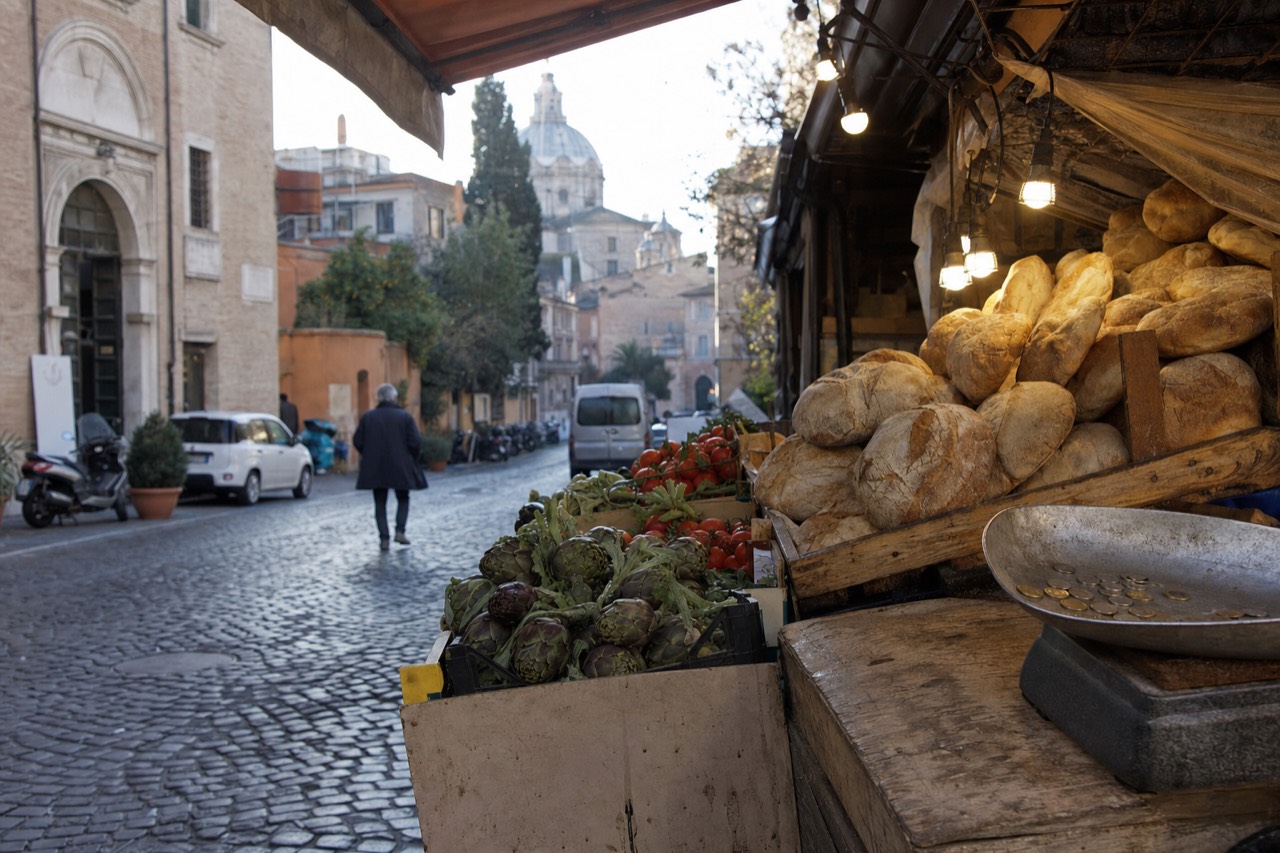
Rome is expensive in the places people write down and cheap almost everywhere else, and the difference between the two is mostly mechanics rather than money. Pizza al taglio is sold by weight, so the cost follows the size of the piece you point at. Coffee is priced one way at the counter and another at a table. Markets cost nothing to enter. The city runs over 3,000 public drinking fountains, so a water bottle is a budget tool before it is a sustainability one. This page is the honest budget companion to all of that: what genuinely costs nothing, what the pay-what-you-want model actually asks of you, and the single paid upgrade that makes sense if the free layer leaves you hungry. Eating cheaply in Rome is a real skill, and the city rewards it: pizza al taglio, market stalls and trattorias in Testaccio or San Lorenzo all feed you well for the price of a coffee in the centre.
What The Pay-What-You-Want Ghetto And Trastevere Walk Actually Includes
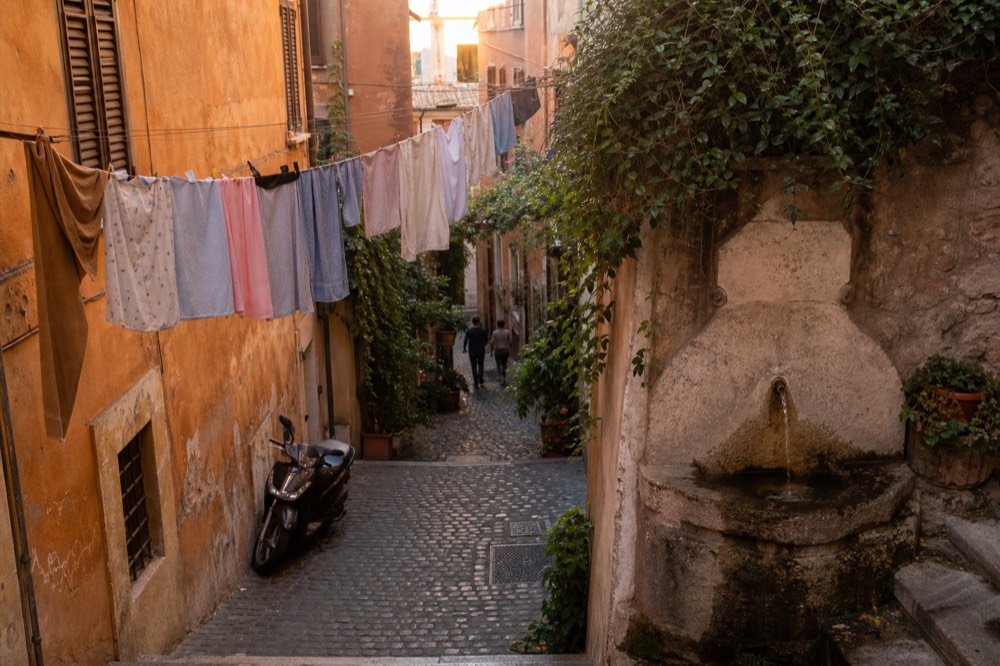
The walk is a 1 hour 45 minute English-language history tour through the Jewish Ghetto and Trastevere, rated 4.91 from 1,152 reviews (checked September 2026) on GuruWalk, meeting at the Fountain of Turtles in Piazza Mattei. It costs nothing up front: each person pays the guide what they think the walk was worth at the end. It includes no food, no tasting and no entry to anything.
The listing is called Highlights of Jewish Ghetto and Trastevere Free Walking Tour, run by a guide account that has been guiding since 2021, and it is a walking tour run by an independent local guide, listed on GuruWalk, which is an independent walking-tour platform and not this site's product. The published stops are the Ebraico Ghetto of Rome, the Portico d'Ottavia and the Theater of Marcellus. The meeting point is the Fountain of Turtles, at Piazza Mattei, where the guide holds a sign with the tour's name on it. The tour runs with a minimum of five participants, so a very quiet day can in principle leave it short, though a listing running on more than a thousand reviews is not usually short of takers.
What the listing's own fine print says matters as much as the itinerary. The Additional costs field reads, in full, "The tour does not require payment for entries or additional expenses." In other words: nothing on the route charges admission, and there is no equipment, no headset and no skip-the-line pass inflating the price, because there is no price. The model is pay-what-you-want, which means there is no fixed fee and no amount a participant is obliged to hand over. The guide is paid by the collective judgement of the group at the end of the walk.
The honesty clause, stated plainly, because it is the most important sentence on this page: the walk includes no food. No tasting, no counter, no market interior, no table, no shop. It is a history and neighbourhood walk through two quarters that happen to eat extraordinarily well. No genuinely free food tasting exists anywhere in Rome: every market stall, bar and walk expects you to buy something. The walk shows you the streets where the eating happens. It does not feed you. If you want the version where you eat, there is exactly one sensible upgrade, and it is covered lower down.
The listing itself is the fullest source for dates, start times and the guide's own description of the route, so it is worth a look before you commit a morning to it: See this free tour on GuruWalk, and note the meeting point details while you are there.
How The Pay-What-You-Want Model Works In Practice
You book a place on the listing the way you book anything else, turn up at the fountain at the stated time, and pay nothing until the walk ends. At the end, each person gives the guide the amount they think the walk was worth. There is no fixed price, no minimum and no card charged at booking.
The booking itself is ordinary: the listing on GuruWalk has a calendar, a start time and a group, and booking ahead secures your place in it, which is worth doing because the walk needs a minimum of five participants to run and the meeting point is a fixed public square. Nothing is charged when you book. The platform's model is that the tour is free to join and the guide is compensated by tips alone, decided after the experience rather than before it. That inversion is the whole mechanism: you have already seen whether the guide was good before any money changes hands.
The awkward question everyone has is how much to give, and the honest answer is that the number is yours, not the tour's. A useful way to think about it is to compare against the paid alternative in the same neighbourhood: the street food walk of the same two quarters costs from $52.26 per person (checked September 2026) with food included. A history walk of nearly two hours that cost you nothing at the door is reasonably benchmarked against what a paid guide of similar length would charge, scaled by how much you got out of it. Nobody counts your coins at the fountain. Under-tipping a good guide is the one genuine breach of etiquette the model has.
One more mechanic worth knowing before you rely on this for your whole budget plan: the walk is in English, runs about 1 hour 45 minutes, and ends back in the area it covers, so it slots neatly into a morning or the start of an evening in Trastevere. It is a foundation, not a programme. Build the eating around it at the counters the next sections describe.
What The Walk Does Not Cover, And Why That Matters
The walk passes the counters, bakeries and market squares of the Ghetto and Trastevere without stopping at any of them. No food is served, nothing is tasted, no market interior is visited and no venue is entered. That gap is deliberate, and it is exactly the seam between the free layer and the paid one.
Rome's Jewish Ghetto and Trastevere are two of the densest eating quarters in the city. The Ghetto holds the kosher bakery with the permanent line and the fried artichokes; Trastevere holds the trattorias that refuse every booking, the supplì counter, the biscuit workshop and the by-weight bakery ovens. The free walk's route moves through the middle of all of it, naming the history of the streets, the Portico d'Ottavia, the Theater of Marcellus. The food is scenery. This is the trade the model makes with you: geography, architecture and story for nothing, calories for money.
There is a second reason the gap matters, and it is about honesty rather than appetite. A page that implied a free walk fed you would be selling a thing that does not exist in Rome. No genuinely free food tasting exists anywhere in the city, no free market sample, no complimentary counter. Cheap, yes, constantly. Free food, no. The honest exception a reader will find is that GuruWalk lists two food-themed walks in its pay-what-you-want format, called Lunch tour: Pasta, Tiramisu and Coffee and Lunch tour: Pizza, Gelato and Coffee. They are free to join and you tip the guide at the end, but you buy your own food at each stop, and the listing itself describes that as about half what the same meal would cost sitting down in a restaurant. So they are cheap, not free, and they are not free meals. There is also a gluten-free walk visiting venues certified by the Italian Celiac Association, useful to know for coeliac readers, though it carries a single review and no track record. The only things a food lover can genuinely do in Rome for nothing are listed in full in the section on markets and fountains below, and none of them are tastings.
So the shape of a cheap day is this: the walk in the morning for whatever you choose to tip, drinking water from the public fountains as you go, then lunch built from the by-weight and by-the-piece mechanics at the counters of the same two quarters. Everything after the walk is a decision about where the money goes, and Rome gives you a wide spread of answers to that.
That tile is the one paid option this page mentions, and it appears here because this is the section that draws the line it sits on: the free walk shows the quarters, the paid walk feeds you in them. Everything else below stays on the free side of that line until the upgrade section returns to the comparison in full.
How Cheap Eating In Rome Actually Works
Cheap eating in Rome is a set of mechanics, not a list of prices. Pizza al taglio is weighed, supplì are bought one at a time at a counter, the bar posts one price for standing and another for sitting, and markets are morning-only. Learn the mechanics and the budget takes care of itself.
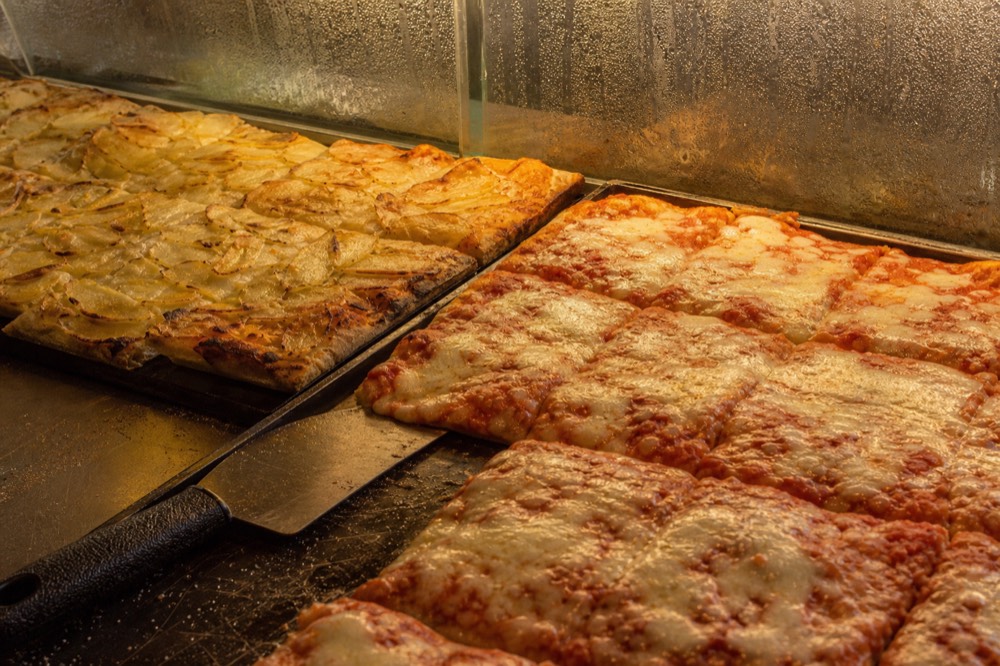
Pizza al taglio is sold by weight. You point at the tray, the counter cuts the piece you want with scissors, it goes on the scale, and the price follows from the weight. Different toppings carry different per-kilo prices at the same counter, so a plain slice of pizza rossa costs a fraction of a loaded special. The control is entirely yours: a small pointed-at piece is a snack, a large one is lunch, and nothing about the transaction is a surprise if you understand the scale is the bill. A minority of counters sell fixed pre-cut pieces at a flat price instead, which is the one case where you know the number before anything is cut.
Supplì, the fried rice balls with the molten cheese centre, work the same way as a mechanic: they are fried to order and bought one at a time at a counter, cash in hand, and two of them with a slice of pizza is a working Roman lunch. The coffee mechanic is even simpler. Italian bars post two prices for the same drink, one for standing at the counter and one for sitting at a table, and you choose which you are buying before you sit. In the province of Rome, the counter price stays below the national average, cheaper than in most big Italian cities. Standing is not a compromise in Rome; it is how the bar works.
The third mechanic is timing. The covered markets trade in the morning: Testaccio's whole market runs 07:00 to 15:30, and at Trionfale the produce stalls shut at 14:00 on most days though the eating stalls run to 23:00 Tuesday to Saturday. A picnic built from a morning market plus a fountain is close to the floor of what eating in Rome can cost, and the street and bench rules from the earlier section are the only legal constraint on where you eat it. For a deeper map of the cheap counter culture, the Rome street food guide walks the fried, by-weight and by-the-piece foods one by one, and the Rome food markets guide covers the market layer in full.
What A Food Lover Can Genuinely Do In Rome For Nothing
Three things in Rome cost nothing: walking into any of the covered markets during trading hours, drinking from the public fountains, and the pay-what-you-want walk itself. Everything else a budget page usually lists is cheap rather than free, and the distinction is worth keeping sharp.
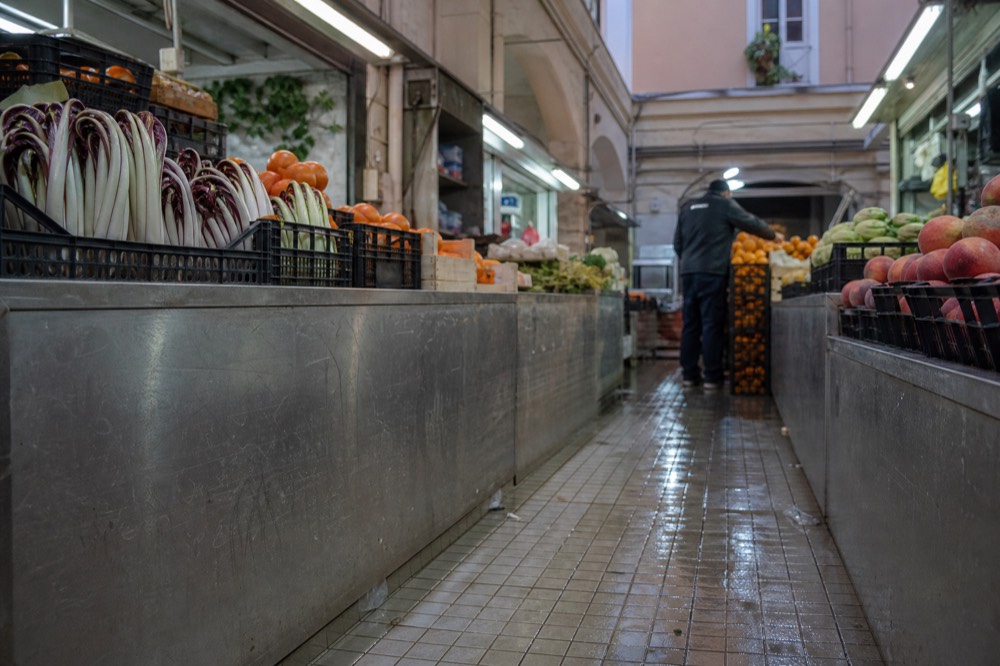
The Nuovo Mercato di Testaccio is a covered market that charges no admission and publishes its own hours: Monday to Saturday, 07:00 to 15:30, closed Sunday. Inside it, produce, butchers and the food stalls that made the market a lunch destination trade in one shared window, and walking the aisles costs the same as breathing. The market's official page states the hours plainly. Mercato Centrale, inside Termini, is a food hall rather than a produce market, and it is likewise free to enter, every day from 07:30 to 23:30, per its own site. It is a three-level hall of artisan counters with seating, open from breakfast to late.
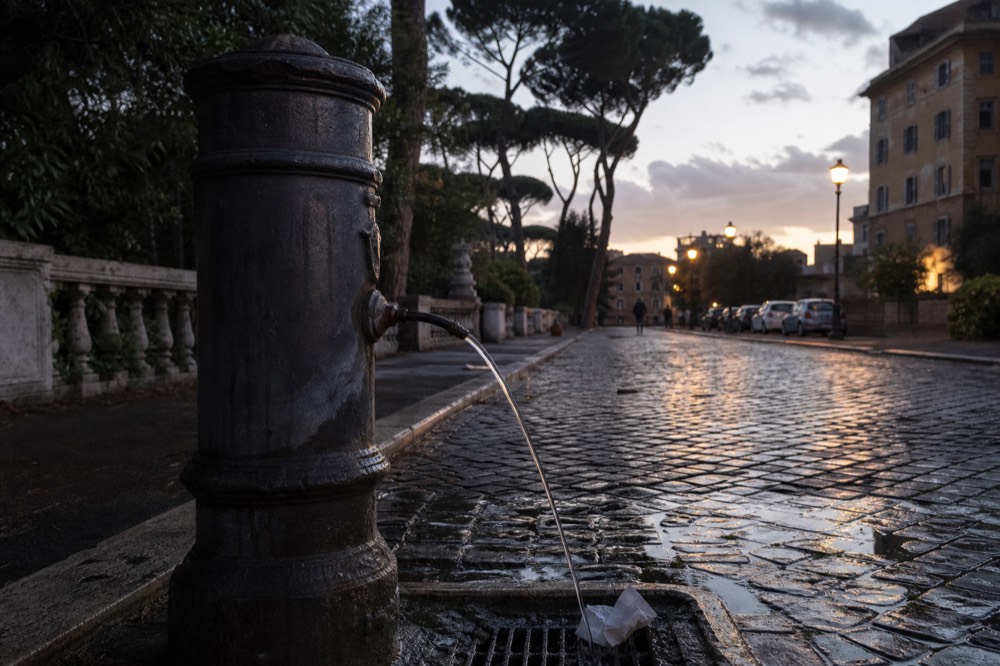
Then there is the water. Rome runs over 3,000 public drinking fountains across the city, and the historic centre alone has more than 200 of the cast-iron nasoni, per the city's water utility. They run continuously, the water is drinking water, and filling a bottle at one is the single most reliable zero-cost act in the whole city. A traveller with a bottle and a map of the fountains has solved hydration for an entire trip.
The third free thing is the walk already described. Beyond those three, the honest list ends. Campo de' Fiori's market square is free to walk through, but it publishes no official hours or closing days, so no times are given here. Sitting down is free where it is allowed, and it is not allowed everywhere: Rome's public-order regulation prohibits sitting, including while eating, on monuments, fountains, their steps and archaeological remains, and patrols do enforce it. The prohibition is printable; the fine figure is not. Eat standing at a counter, or on a bench in an ordinary piazza, and none of this touches you.
The Free And Near-Free Layer
| Option | What it costs | Hours as published | Where the fact comes from |
|---|---|---|---|
| Pay-what-you-want Ghetto and Trastevere walk | Nothing up front, tip at the end | 1 hour 45 minutes, English | GuruWalk listing, 4.91 from 1,152 reviews (checked September 2026) |
| Nuovo Mercato di Testaccio | Free to enter | Monday to Saturday 07:00 to 15:30, closed Sunday | The market's own site |
| Mercato Centrale, Termini | Free to enter | Every day 07:30 to 23:30 | The food hall's own site |
| Nasoni drinking fountains | Free, always | Continuous flow, no hours | Rome's water utility |
The Public Drinking Water Facts
| Fact | Figure | Source |
|---|---|---|
| Drinking fountains across all of Rome | over 3,000 | ACEA, the city's water utility |
| Nasoni in the historic centre alone | over 200 | ACEA, the city's water utility |
| Cost of filling a bottle at one | nothing | The fountains run public drinking water |
The One Upgrade Worth Making From The Free Layer
The paid walk that matches the free one exactly is the Trastevere and Jewish Ghetto street food tour: the same two quarters, the same walking format, from $52.26 per person (checked September 2026), rated 4.8 across 168 reviews, running 2 to 2.5 hours, except that you eat at the counters instead of walking past them. That is the whole difference, and it is the only honest sales pitch this page can make.
Consider the shape of the two days. The free walk gives you the Portico d'Ottavia, the Theater of Marcellus and the story of the Ghetto, and leaves you outside every kitchen. The street food walk covers the same geography in a private format, small enough that the group moves together, and stops at the counters: three or five street-food tastings depending on the option, with drinks on the premium options. Free cancellation is available, and the meeting point varies by option, with pickup available. The tour is booked in advance like any other ticket, which is also the honest way to describe what a tour buys you in Rome at all: it removes the reservation problem and covers several counters in one outing at a price fixed before you go. No food tour listed on this page enters any famous restaurant, and nothing here implies this one does.
Whether the upgrade is worth it depends on one question: do you want to eat the quarters or see them? If the day's budget is already tight, the mechanic stack from the earlier section, by-weight pizza, single supplì, counter coffee, a market morning and fountain water, will feed you well for the cost of a couple of tastings. If instead you want the food explained while you eat it, in the two quarters the free walk already showed you, the paid walk is the bridge, and it is the only tour this page mentions because it is the only one that maps onto the free layer this exactly.
The Two Walks Of The Same Two Quarters
| Pay-what-you-want history walk | Street food walking tour | |
|---|---|---|
| Format | Walking history tour, minimum 5 participants | Private walking street food tour |
| Duration | 1 hour 45 minutes | 2 to 2.5 hours |
| Language | English | As booked |
| What you consume | Nothing: no food, no entries, no extras | Three or five street-food tastings, drinks on premium options |
| Cost | Nothing up front, tip at the end | From $52.26 per person (checked September 2026) |
| Rating | 4.91 across 1,152 reviews | 4.8 across 168 reviews |
| Quarters covered | Jewish Ghetto and Trastevere | Trastevere and the Jewish Ghetto |
The table is the whole argument in one glance: identical quarters, near-identical durations, and the single difference being what passes your lips. Whichever side of it you land on, the rest of the page still holds, because the free layer and the mechanic stack work with or without the paid walk.
Planning The Cheap Day Around The Free Layer
A realistic zero-to-cheap day in Rome runs: the pay-what-you-want walk in the morning, fountain water all day, a by-weight or by-the-piece lunch in Trastevere or the Ghetto, an afternoon in a free covered market, and an evening at a pizzeria that takes no bookings. The pieces are all real, and none of them depends on a queue, a booking system or a card guarantee.
Start at the Fountain of Turtles in Piazza Mattei at the walk's start time, with a bottle that is already full from any of the more than 200 historic-centre nasoni. The walk ends back in the area after 1 hour 45 minutes, which lands you in the Ghetto or Trastevere right as the serious lunch counters are at their best. The by-weight mechanics take over from there. Walk, eat standing, walk again. In the afternoon, Testaccio's market trades until 15:30 and Mercato Centrale runs to 23:30 inside Termini, so the free indoor layer is available in some form for most of the day.
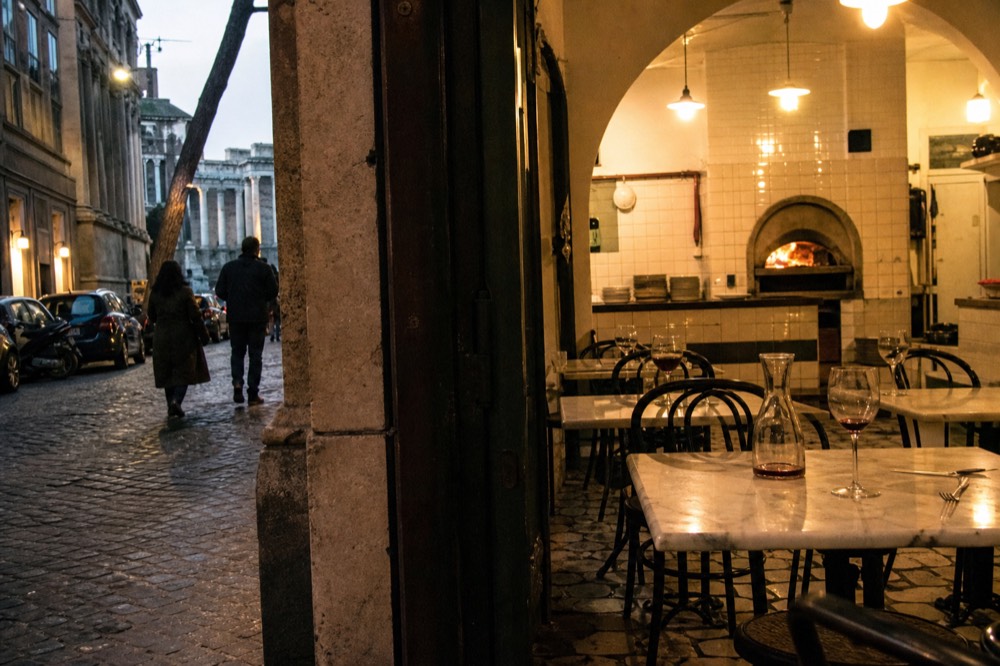
The evening is where the no-booking pizzerias come in, and they are the cheapest sit-down rooms in the city precisely because there is no reservation system to fail at. You queue, you sit, you eat, and the price of the table is your time rather than a booking mechanism. For the pattern of which trattorias and counters refuse bookings entirely, and how to work the walk-in layer instead of fighting it, where locals eat in Rome is the companion page, and the day-by-day money question, what to allow per person across a whole trip, is handled in the daily food budget breakdown.
Rome has no single honest figure for what a meal costs, because prices swing hard between neighbourhoods, and any page quoting one flat number is guessing (see Aperol Spritz Prices). The floor is easier to pin down: a walk that costs a tip, water that costs nothing, markets that cost nothing to enter, and a by-weight counter culture where the size of the piece you point at sets the bill. The rest of the budget is arithmetic you do yourself, on the spot, with the scale in front of you.
If the day above still ends with you hungry in the best possible way, the street food walk is the one move that converts the same streets into a meal, and it is worth weighing against a second cheap day of pure mechanics.
For the full picture of what the paid side of Rome's food walk ecosystem looks like, the format-by-format comparison, durations, group sizes and tasting counts, is in the Rome food tours overview. This page is the budget half of that story, and it sits within the wider Best Restaurants in Rome library, where the restaurant, market and neighbourhood guides cover everything the free layer walks past. The layer that costs a tip and a water bottle, the mechanics that keep the counters cheap, and the one paid walk that picks up exactly where the free one leaves off, at the counter instead of the kerb.
The honest answers are short: the walk is free to join but tipped, not free of charge; no free food tasting exists anywhere in Rome; the covered markets cost nothing to enter; and the public fountains make water the one thing in the city that is genuinely unlimited and genuinely free. Each question below gets the facts, and nothing else.
Common Questions About Eating In Rome On A Budget
Is The Ghetto And Trastevere Walking Tour Really Free?
You pay nothing to book and nothing on the day. The model is pay-what-you-want: each person gives the guide what they think the walk was worth at the end. It is free to join, and it is not free of charge in the sense of costing the guide nothing to run, which is why the tip is expected rather than optional in practice.
How Much Should You Tip The Guide?
There is no fixed amount and nobody checks. A reasonable benchmark is a paid guided walk of similar length in the same city, scaled by how much you got out of it. The street food version of the same two quarters costs from $52.26 per person (checked September 2026) with the food included, which gives you a sense of the paid bracket the walk sits outside of.
Do You Need To Book Ahead On GuruWalk?
Yes, booking secures your place through the listing's calendar. The walk runs with a minimum of five participants, so a booked place also helps the tour reach that minimum. Nothing is charged when you book.
Are There Free Food Tastings In Rome?
No. No genuinely free food tasting exists anywhere in Rome; every tasting, market stall included, is a purchase. Cheap tastings, by-weight counters and market food are everywhere, but free food is not among them, and any page claiming otherwise is guessing.
Is A Market Free To Walk Into?
Yes. The covered markets charge no admission. Nuovo Mercato di Testaccio is open Monday to Saturday 07:00 to 15:30, and Mercato Centrale at Termini is open every day 07:30 to 23:30. Trionfale's produce stalls close at 14:00 on most days, though its eating stalls run to 23:00 Tuesday to Saturday.
Can You Drink From The Public Fountains?
Yes. Rome runs over 3,000 public drinking fountains, with more than 200 nasoni in the historic centre alone, supplying drinking water continuously. Filling a bottle at one is free and it is the most reliable zero-cost act in the city.
Is It OK To Eat Sitting On The Street In Rome?
Only in the right places. Rome's public-order regulation prohibits sitting, including while eating, on monuments, fountains and their steps, and patrols enforce it. A bench in an ordinary piazza or a counter where you eat standing is fine. No reliable figure for the fine exists, so none is printed here.